



















The Leisure Media Company Ltd
Follow Health Club Management on Twitter Like Health Club Management on Facebook Join the discussion with Health Club Management on LinkedIn
FITNESS, HEALTH, WELLNESS

features

Behaviour change: It's a goal!

Setting goals with your members, based on an understanding of their underlying motivations, is a vital step in ensuring exercise adherence. Dr Paul Bedford reports

By Dr Paul Bedford PhD, Retention Guru | Published in Health Club Management 2013 issue 8

We all talk about setting goals with our members, but how many health club operators sit down with each and every individual to ensure they have clear targets?

This article will focus on understanding the role that goals play in influencing day-to-day behaviour, motivation, values and beliefs – and how health clubs can use this information when it comes to coaching, supporting members and programme design.

Changing behaviours
Sustaining exercise as a regular behaviour is not easy. Numerous theories and models of behaviour change exist, but the challenge I’ve always focused on is how to get individuals to maintain new lifestyle behaviours once started.

As a gym instructor, I was always encouraged by the numbers of new people starting to exercise in the club where I worked. Each day I would conduct inductions for those starting out on their new exercise behaviour, as well as spending time chatting to those who were my regulars – people who had already added going to the gym as an activity choice. Over time, however, I realised that many of those who started so enthusiastically just weeks before were unable to maintain this new behaviour. They eventually disappeared from the club.

Having studied exercise psychology, I was aware that many of the new members I spoke to had goals they wished to achieve – but these were rarely the long-term motivators of behaviour. Many of their stated goals I now describe as general aims or outcome goals: things like lose weight, tone up, get fit. These are very general and often require little consideration, because all of the rationalisation as to why they want to exercise has been done before the question is even asked. You could think of it like preparing an answer to a standard question – what’s your favourite colour, your favourite food, your favourite film? – whereby the answer is stored and ready to be rolled out on request.

Although being physically active on a regular basis has obvious health benefits, it’s important to remember that not everyone who joins a gym is actually seeking health as an outcome for their efforts. Indeed, Eccles et al (2002) suggested that the goals individuals select for exercising are influenced and then endorsed by cultural values and social pressures, such as ‘lose weight’ and ‘tone up’ for women, and ‘build muscle’ for men – a stereotypical view I know, but this is his research, not mine.

But whatever the external or internal influences, people coming to the gym know they will be asked questions about their reasons for wanting to exercise, and so prepare an answer they feel is ‘correct’. Yes, they do want the outcome, but little thought goes into what needs to be done on a daily and weekly basis in order to get it, or what the underlying motivator or driver for that outcome might be.

Setting goals
If we look at goal-setting theory, we discover that individuals are motivated to change because they want to reduce the perceived gap between their desired state and their actual state – in their own minds, people conduct some form of basic gap analysis between current and desired states. Goal-setting then creates a framework through which an appropriate behaviour can be identified and attached to the goal in order for it to be achieved.

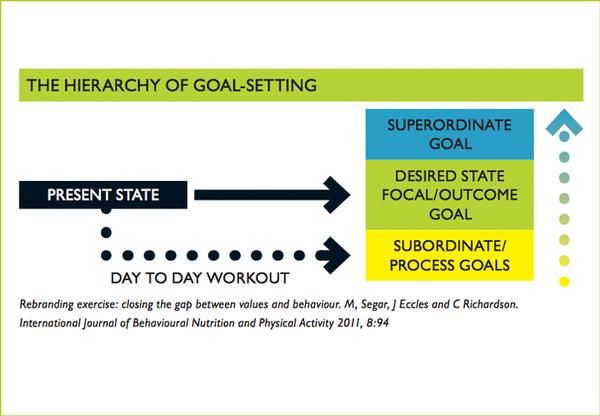
Carver and Scheier (1990) have identified that goals have multiple hierarchical levels – levels they have named the focal goal, superordinate goal and subordinate goal. The focal goal is commonly referred to in the fitness industry as the outcome goal – the result the individual is striving for, such weight loss or muscle growth – and is the type of goal we’re most familiar with.

The subordinate goal is a lower order goal – one we would usually describe as a process goal. Process goals are the day-to-day activities required to reach the outcome goal. For someone looking to lose weight, a subordinate goal might be to get their training kit ready to go the night before, learning how to programme the treadmill without supervision, or identifying a workout goal like adding two minutes of CV time.

Subordinate goals are often overlooked in the fitness industry, but are a vital part of goal achievement. Setting process goals provides an opportunity for celebrating successes well in advance of achieving the outcome goal. These processes goals can also serve to build confidence and self-efficacy, both strongly associated with exercise adherence.

The superordinate goal is more abstract than the previous two, which may be why fitness professionals have avoided making use of it. A variety of names could be attached to the superordinate goal, including ‘motivator’ or ‘driver’, but for the purposes of this article it’s the why. These ‘why’ goals are linked to an individual’s values, beliefs and behaviours. By understanding and delivering on the why – the superordinate goals – we can better help people achieve their outcomes.

Do not confuse asking “why do you want to exercise?” – which so often gives us the bland answers of “to lose weight, tone up, get fit” – with asking “why is that important to you?” or “why is that of value to you?” Both of these ‘why’ questions require a consideration of the superordinate goal, and then a justification of the behaviour, and can be followed by more probing questions like “what will that do for you?”, and then “and what else will that do for you?”

It’s not uncommon at this stage to get a blank stare in response. People will not be expecting this level of questioning, and if you’ve failed to establish and maintain rapport, you will often be given an answer they have already given, but this time repeated with a questioning tone or the blank stare. If you’ve asked the questions with the correct tone of voice, you will get a pause, a glance up and to the left, followed by a glance down to the left, before you get a verbal response. Give the person time and don’t rush to speak if they are obviously thinking about the question you asked.

What does this mean for us?
In the time-limited environment of many health club inductions, it can be tricky to complete all of the tasks required and deliver something meaningful to members. However, understanding what motivates them is critical to success and failure – both theirs and ours.

Ask them: What do you want to get from your exercise programme? What will that do for you? What else will it do for you? Why is that important? Why is that of value? Thinking about the future for a minute, when you have reached your goal of [whatever their goal might be], what will life be like?

People exercise on different days for different reasons: on Monday their workout might be motivated by guilt from eating too much at the weekend, or mid-week it might be to create some ‘me time’ away from the office. However, all of the reasons are ultimately driven by a desire to achieve the abstract superordinate goal – the why – and this is what health and fitness clubs must help their members to identify and verbalise.

If we want to increase exercise adherence and goal achievement, we may need to revise the approach we use during the goal-setting process. We need to stop using the restaurant process of order-taking and replace it with an exploration of motivators and drivers of behaviour.

We also need to reconsider where and how these conversations take place. Current research on consumer behaviour is leaning towards asking the questions while individuals are actually consuming or buying the goods and services in question, rather than asking them to predict their behaviour using focus groups or recalling their motives in questionnaires. Given the relatively brief, conversational nature of the questions outlined above, gym-based goal-setting discussions could actually be made much less intrusive, conducted by any member of staff at any point during the club visit. Asking about a behaviour once, in an environment other than the gym floor where the behaviour takes place, will not provide the insight required to support a lasting change.

The Role Of The Superordinate Goal

Many people receiving a gym induction have been drawn into focusing on a limited number of health- and weight-related benefits: research has shown that 75 per cent of outcome goals relate to weight loss and health benefits. Further studies suggest that 40 per cent of women over 45 exercise solely to improve body shape and appearance.

As social pressures have led individuals to have these sorts of health/weight goals, it’s logical that health is frequently cited as a reason for exercising. Yet despite health and shape being a commonly cited value, a growing body of research is suggesting that outcome goals focusing on health and weight are not in fact the optimal goals to drive exercise adherence.

A study by Huberty et al (2008) investigated exercise adherence in two groups of women over a 12-week period. It was found those who did not adhere were motivated solely to lose weight, whereas those who adhered did so for superordinate reasons – not wanting to be judged badly by people at a big upcoming event, for example.

About the Author

Paul Bedford PhD has worked in the fitness industry for more than 20 years. His business, Retention Guru, helps health club operators increase retention, reduce attrition and improve member loyalty. 

Email paul-retentionguru.co.uk
Twitter @guru_paul
Linkedin Paul Bedford

Sign up here to get HCM's weekly ezine and every issue of HCM magazine free on digital.
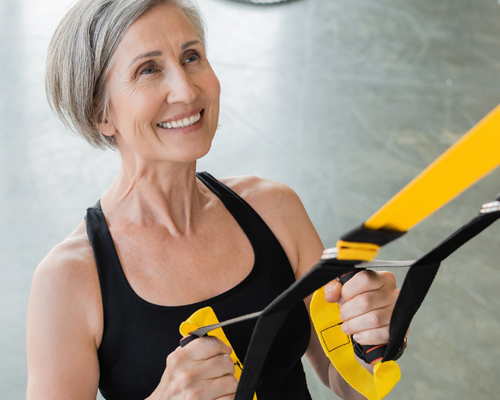
General goals like ‘tone up’ are rarely the long-term motivators of behaviour / © shutterstock.com
The Hierarchy of GoaL-setting
Clubs must help members verbalise why they exercise / © shutterstock.com
https://www.leisureopportunities.co.uk/images/HCM2013_8change.gif
Setting goals with members based on an understanding of their underlying motivations – their superordinate goals – is a vital to ensuring adherence, says Dr Paul Bedford
Dr Paul Bedford,Behaviour change, goals, motivations, superordinate, subordinate, retention
HCM magazine
Raphael Cuomo explores the powerful link between addiction, health and behaviour change
HCM magazine
Strength training is evolving, driven by changing consumer preferences. Julie Cramer talks to innovators about how their products are meeting this demand
HCM magazine
As the entrepreneur who started Wexer, Fresh Fitness, Fitness DK and Repeat, as well as being a former elite athlete, Rasmus Ingerslev’s life looked perfect from the outside, but onthe inside it was a different story. He talks to Kath Hudson about healing old wounds
HCM magazine
For every member with a tripod and a big following, there are others irritated at the way equipment is being hogged or wary they’ll be in the background on someone’s Insta feed. Do influencers offer valuable, free marketing or are they just a nuisance? Kath Hudson finds out how operators are responding
HCM magazine
I experienced a blissful feeling of joy I hadn’t felt since I was a kid
HCM promotional features
Sponsored
Greg Bradley looks at the shift towards strength training in gyms and advises on how operators can create the ultimate training environment
HCM promotional features
Sponsored
Third Space partnered with IndigoFitness to deliver a bespoke training space for its new club at The Whiteley
HCM promotional features
Sponsored
David Lloyd is stepping up its commitment to women’s health as it continues to explore what fit-for-purpose looks like for the female population
HCM promotional features
Sponsored
SnowDome Fitness has added 50 per cent more space with cutting-edge Technogym solutions
HCM promotional features
Sponsored
Starpool supports Olympic champion Marcell Jacobs, says Riccardo Turri
HCM promotional features
Sponsored
Find out how your gym can tap into the corporate wellness boom
HCM promotional features
Sponsored
EGYM has opened a new HQ in Paternoster Square, London and revealed a range of new launches
HCM promotional features
Sponsored
Pulse Fitness has created a new health club delivering an elevated wellness experience
HCM promotional features
Sponsored
Active IQ is calling for greater accountability in online fitness advice with the launch of a new trustmark
HCM promotional features
Latest News
Nuffield Health has told HCM that it takes its responsibilities towards its colleagues seriously and ...
Latest News
Technogym has announced the launch of the Run X World Treadmill Championship, the first world ...
Latest News
Shocked by the UK loneliness statistics, charitable trust Mytime Active has been doubling down on ...
Latest News
Portugal’s leading operator, SC Fitness, is celebrating a milestone by reaching 100 gyms.  The company ...
Latest News
Australia’s fast-growing fitness network, Viva Leisure, is adding a low-cost gym brand to its already ...
Latest News
Speedflex has launched a strength training programme for 10 to 16-year-olds, to make it safer, ...
Latest News
Tewinbury Farm Hotel in Hertfordshire, UK is expanding its premium leisure proposition with the launch ...
Latest News

Work is underway in Madrid on one of Europe’s most significant multi-functional complexes, ...

Opinion
promotion
Strength training has moved from the margins to the mainstream.
Opinion: Building smarter strength spaces for today’s operators
Featured supplier news
Featured supplier news: Reaching the people most gyms miss: Bedford Gym & Swim Campaign delivers 410 new members
One of the biggest mistakes the fitness industry still makes is advertising almost exclusively to people who already look and live like gym members.
Featured supplier news
Featured supplier news: Supporting long-term health: why whole body vibration belongs in clinical settings
As healthcare continues to shift towards prevention, there’s a growing focus on helping people stay active, independent and feeling good for longer.
Company profiles
Company profile: Fitbench
Fitbench creates modular training solutions designed to support efficient, high-quality workouts in a wide range ...
Company profiles
Company profile: WellnessSpace Brands
WellnessSpace Brands provides innovative wellness solutions like HydroMassage, CryoLounge+, and RelaxSpace Pods— designed for convenient, ...
Supplier Showcases
Supplier Showcase - From nightclub to health club
Supplier Showcases
Supplier Showcase - Future-proofing
Catalogue Gallery
Click on a catalogue to view it online
Featured press releases
GYMNATION press release: Massive ‘Good Luck’ message appears in Saudi Desert as Green Falcons head to World Cup
Passengers flying out of Riyadh this week have been treated to an extraordinary sight from the skies after GymNation unveiled a giant desert sand mural supporting the Saudi Arabia National Football Team ahead of the FIFA World Cup in the United States.
Featured press releases
BLK BOX press release: BLK BOX strengthens European growth with the appointment of Germany country manager Timo Garrels
BLK BOX is proud to welcome Timo Garrels as Germany country manager, marking another important step in the brand’s continued growth across Europe.
Directory
Spa and beauty equipment
Oakworks Inc: Spa and beauty equipment
Lockers
Crown Sports Lockers: Lockers
Water experiences and hydrotherapy solutions
Aquaform s.r.l.: Water experiences and hydrotherapy solutions
Hot tubs
MSpa International Ltd: Hot tubs
Industrial washing machines
Miele Company Limited: Industrial washing machines
Fitness tracking platform
SpiviTech: Fitness tracking platform
Property & Tenders
Stratford, East London.
Lee Valley Regional Park Authority
Property & Tenders
Y Felinheli, LL56 4QN
Newmark
Property & Tenders
Diary dates
13-13 Jun 2026
Worldwide, Various,
Diary dates
21-24 Sep 2026
The Langham Huntington Pasadena , Pasadena, United States
Diary dates
06-08 Oct 2026
Messe Stuttgart, Stuttgart, Germany
Diary dates
22-22 Oct 2026
QEII Conference Centre, London,
Diary dates
26-29 Oct 2027
Koelnmesse Exhibition Centre, Cologne, Germany
Diary dates

features

Behaviour change: It's a goal!

Setting goals with your members, based on an understanding of their underlying motivations, is a vital step in ensuring exercise adherence. Dr Paul Bedford reports

By Dr Paul Bedford PhD, Retention Guru | Published in Health Club Management 2013 issue 8

We all talk about setting goals with our members, but how many health club operators sit down with each and every individual to ensure they have clear targets?

This article will focus on understanding the role that goals play in influencing day-to-day behaviour, motivation, values and beliefs – and how health clubs can use this information when it comes to coaching, supporting members and programme design.

Changing behaviours
Sustaining exercise as a regular behaviour is not easy. Numerous theories and models of behaviour change exist, but the challenge I’ve always focused on is how to get individuals to maintain new lifestyle behaviours once started.

As a gym instructor, I was always encouraged by the numbers of new people starting to exercise in the club where I worked. Each day I would conduct inductions for those starting out on their new exercise behaviour, as well as spending time chatting to those who were my regulars – people who had already added going to the gym as an activity choice. Over time, however, I realised that many of those who started so enthusiastically just weeks before were unable to maintain this new behaviour. They eventually disappeared from the club.

Having studied exercise psychology, I was aware that many of the new members I spoke to had goals they wished to achieve – but these were rarely the long-term motivators of behaviour. Many of their stated goals I now describe as general aims or outcome goals: things like lose weight, tone up, get fit. These are very general and often require little consideration, because all of the rationalisation as to why they want to exercise has been done before the question is even asked. You could think of it like preparing an answer to a standard question – what’s your favourite colour, your favourite food, your favourite film? – whereby the answer is stored and ready to be rolled out on request.

Although being physically active on a regular basis has obvious health benefits, it’s important to remember that not everyone who joins a gym is actually seeking health as an outcome for their efforts. Indeed, Eccles et al (2002) suggested that the goals individuals select for exercising are influenced and then endorsed by cultural values and social pressures, such as ‘lose weight’ and ‘tone up’ for women, and ‘build muscle’ for men – a stereotypical view I know, but this is his research, not mine.

But whatever the external or internal influences, people coming to the gym know they will be asked questions about their reasons for wanting to exercise, and so prepare an answer they feel is ‘correct’. Yes, they do want the outcome, but little thought goes into what needs to be done on a daily and weekly basis in order to get it, or what the underlying motivator or driver for that outcome might be.

Setting goals
If we look at goal-setting theory, we discover that individuals are motivated to change because they want to reduce the perceived gap between their desired state and their actual state – in their own minds, people conduct some form of basic gap analysis between current and desired states. Goal-setting then creates a framework through which an appropriate behaviour can be identified and attached to the goal in order for it to be achieved.

Carver and Scheier (1990) have identified that goals have multiple hierarchical levels – levels they have named the focal goal, superordinate goal and subordinate goal. The focal goal is commonly referred to in the fitness industry as the outcome goal – the result the individual is striving for, such weight loss or muscle growth – and is the type of goal we’re most familiar with.

The subordinate goal is a lower order goal – one we would usually describe as a process goal. Process goals are the day-to-day activities required to reach the outcome goal. For someone looking to lose weight, a subordinate goal might be to get their training kit ready to go the night before, learning how to programme the treadmill without supervision, or identifying a workout goal like adding two minutes of CV time.

Subordinate goals are often overlooked in the fitness industry, but are a vital part of goal achievement. Setting process goals provides an opportunity for celebrating successes well in advance of achieving the outcome goal. These processes goals can also serve to build confidence and self-efficacy, both strongly associated with exercise adherence.

The superordinate goal is more abstract than the previous two, which may be why fitness professionals have avoided making use of it. A variety of names could be attached to the superordinate goal, including ‘motivator’ or ‘driver’, but for the purposes of this article it’s the why. These ‘why’ goals are linked to an individual’s values, beliefs and behaviours. By understanding and delivering on the why – the superordinate goals – we can better help people achieve their outcomes.

Do not confuse asking “why do you want to exercise?” – which so often gives us the bland answers of “to lose weight, tone up, get fit” – with asking “why is that important to you?” or “why is that of value to you?” Both of these ‘why’ questions require a consideration of the superordinate goal, and then a justification of the behaviour, and can be followed by more probing questions like “what will that do for you?”, and then “and what else will that do for you?”

It’s not uncommon at this stage to get a blank stare in response. People will not be expecting this level of questioning, and if you’ve failed to establish and maintain rapport, you will often be given an answer they have already given, but this time repeated with a questioning tone or the blank stare. If you’ve asked the questions with the correct tone of voice, you will get a pause, a glance up and to the left, followed by a glance down to the left, before you get a verbal response. Give the person time and don’t rush to speak if they are obviously thinking about the question you asked.

What does this mean for us?
In the time-limited environment of many health club inductions, it can be tricky to complete all of the tasks required and deliver something meaningful to members. However, understanding what motivates them is critical to success and failure – both theirs and ours.

Ask them: What do you want to get from your exercise programme? What will that do for you? What else will it do for you? Why is that important? Why is that of value? Thinking about the future for a minute, when you have reached your goal of [whatever their goal might be], what will life be like?

People exercise on different days for different reasons: on Monday their workout might be motivated by guilt from eating too much at the weekend, or mid-week it might be to create some ‘me time’ away from the office. However, all of the reasons are ultimately driven by a desire to achieve the abstract superordinate goal – the why – and this is what health and fitness clubs must help their members to identify and verbalise.

If we want to increase exercise adherence and goal achievement, we may need to revise the approach we use during the goal-setting process. We need to stop using the restaurant process of order-taking and replace it with an exploration of motivators and drivers of behaviour.

We also need to reconsider where and how these conversations take place. Current research on consumer behaviour is leaning towards asking the questions while individuals are actually consuming or buying the goods and services in question, rather than asking them to predict their behaviour using focus groups or recalling their motives in questionnaires. Given the relatively brief, conversational nature of the questions outlined above, gym-based goal-setting discussions could actually be made much less intrusive, conducted by any member of staff at any point during the club visit. Asking about a behaviour once, in an environment other than the gym floor where the behaviour takes place, will not provide the insight required to support a lasting change.

The Role Of The Superordinate Goal

Many people receiving a gym induction have been drawn into focusing on a limited number of health- and weight-related benefits: research has shown that 75 per cent of outcome goals relate to weight loss and health benefits. Further studies suggest that 40 per cent of women over 45 exercise solely to improve body shape and appearance.

As social pressures have led individuals to have these sorts of health/weight goals, it’s logical that health is frequently cited as a reason for exercising. Yet despite health and shape being a commonly cited value, a growing body of research is suggesting that outcome goals focusing on health and weight are not in fact the optimal goals to drive exercise adherence.

A study by Huberty et al (2008) investigated exercise adherence in two groups of women over a 12-week period. It was found those who did not adhere were motivated solely to lose weight, whereas those who adhered did so for superordinate reasons – not wanting to be judged badly by people at a big upcoming event, for example.

About the Author

Paul Bedford PhD has worked in the fitness industry for more than 20 years. His business, Retention Guru, helps health club operators increase retention, reduce attrition and improve member loyalty. 

Email paul-retentionguru.co.uk
Twitter @guru_paul
Linkedin Paul Bedford
Sign up here to get HCM's weekly ezine and every issue of HCM magazine free on digital.
General goals like ‘tone up’ are rarely the long-term motivators of behaviour / © shutterstock.com
The Hierarchy of GoaL-setting
Clubs must help members verbalise why they exercise / © shutterstock.com
https://www.leisureopportunities.co.uk/images/HCM2013_8change.gif
Setting goals with members based on an understanding of their underlying motivations – their superordinate goals – is a vital to ensuring adherence, says Dr Paul Bedford
Dr Paul Bedford,Behaviour change, goals, motivations, superordinate, subordinate, retention
Latest News
Nuffield Health has told HCM that it takes its responsibilities towards its colleagues seriously and ...
Latest News
Technogym has announced the launch of the Run X World Treadmill Championship, the first world ...
Latest News
Shocked by the UK loneliness statistics, charitable trust Mytime Active has been doubling down on ...
Latest News
Portugal’s leading operator, SC Fitness, is celebrating a milestone by reaching 100 gyms.  The company ...
Latest News
Australia’s fast-growing fitness network, Viva Leisure, is adding a low-cost gym brand to its already ...
Latest News
Speedflex has launched a strength training programme for 10 to 16-year-olds, to make it safer, ...
Latest News
Tewinbury Farm Hotel in Hertfordshire, UK is expanding its premium leisure proposition with the launch ...
Latest News

Work is underway in Madrid on one of Europe’s most significant multi-functional complexes, ...

Latest News
PureGym is encouraging people to step away from their screens and go for a walk, ...
Latest News
Small improvements to sleep, diet quality, and physical activity, made in combination lead to a ...
Latest News
Therme Manchester’s 28-acre development, which will include interconnected glass pavilions that measure 65,000sq m, will ...
Opinion
promotion
Strength training has moved from the margins to the mainstream.
Opinion: Building smarter strength spaces for today’s operators
Featured supplier news
Featured supplier news: Reaching the people most gyms miss: Bedford Gym & Swim Campaign delivers 410 new members

One of the biggest mistakes the fitness industry still makes is advertising almost exclusively to people who already look and live like gym members.

Featured supplier news
Featured supplier news: Supporting long-term health: why whole body vibration belongs in clinical settings
As healthcare continues to shift towards prevention, there’s a growing focus on helping people stay active, independent and feeling good for longer.
Company profiles
Company profile: Fitbench
Fitbench creates modular training solutions designed to support efficient, high-quality workouts in a wide range ...
Company profiles
Company profile: WellnessSpace Brands
WellnessSpace Brands provides innovative wellness solutions like HydroMassage, CryoLounge+, and RelaxSpace Pods— designed for convenient, ...
Supplier Showcases
Supplier Showcase - From nightclub to health club
Supplier Showcases
Supplier Showcase - Future-proofing
Catalogue Gallery
Click on a catalogue to view it online
Featured press releases
GYMNATION press release: Massive ‘Good Luck’ message appears in Saudi Desert as Green Falcons head to World Cup
Passengers flying out of Riyadh this week have been treated to an extraordinary sight from the skies after GymNation unveiled a giant desert sand mural supporting the Saudi Arabia National Football Team ahead of the FIFA World Cup in the United States.
Featured press releases
BLK BOX press release: BLK BOX strengthens European growth with the appointment of Germany country manager Timo Garrels
BLK BOX is proud to welcome Timo Garrels as Germany country manager, marking another important step in the brand’s continued growth across Europe.
Directory
Spa and beauty equipment
Oakworks Inc: Spa and beauty equipment
Lockers
Crown Sports Lockers: Lockers
Water experiences and hydrotherapy solutions
Aquaform s.r.l.: Water experiences and hydrotherapy solutions
Hot tubs
MSpa International Ltd: Hot tubs
Industrial washing machines
Miele Company Limited: Industrial washing machines
Fitness tracking platform
SpiviTech: Fitness tracking platform
Property & Tenders
Stratford, East London.
Lee Valley Regional Park Authority
Property & Tenders
Y Felinheli, LL56 4QN
Newmark
Property & Tenders
Diary dates
13-13 Jun 2026
Worldwide, Various,
Diary dates
21-24 Sep 2026
The Langham Huntington Pasadena , Pasadena, United States
Diary dates
06-08 Oct 2026
Messe Stuttgart, Stuttgart, Germany
Diary dates
22-22 Oct 2026
QEII Conference Centre, London,
Diary dates
26-29 Oct 2027
Koelnmesse Exhibition Centre, Cologne, Germany
Diary dates
Search news, features & products:
Find a supplier:
The Leisure Media Company Ltd
Partner sites