
























EGYM
EGYM
EGYM
Follow Health Club Management on Twitter Like Health Club Management on Facebook Join the discussion with Health Club Management on LinkedIn
FITNESS, HEALTH, WELLNESS

features

Talking point: The mid-market

For the past decade, since the advent of low-cost clubs, there’s been talk of the mid-market disappearing. These clubs are still hanging on, but for how much longer? Kath Hudson reports

By Kath Hudson | Published in Health Club Management 2016 issue 10
Creating a ‘club within a club’ is one way for mid-market operators to build a USP / PHOTO: SHUTTERSTOCK.COM

As low-cost brands such as Pure Gym and The Gym Group launched and then expanded across the UK, offering clean, spacious self-service gyms, open around the clock, without contracts and for half the price of a standard private health club membership, brands like Fitness First and LA fitness – which were still locking members in with contracts – started to feel the pinch.

Yes they offered more facilities, but for those who only used the gym, this didn’t really matter.

Despite bringing in management from the hospitality sector, investing in research and creating some innovative new formats such as BEAT and a High Performance Club in Australia, Fitness First – formerly the leading global health club chain – couldn’t turn things around fast enough. The UK estate has just been sold to DW Fitness; some of the clubs will be sold on to other operators and presumably rebranded.

Another of the UK industry’s original brands, LA fitness – which occupied the mid-market space, in spite of launching a handful of higher-end LAX clubs in London – was sold to Pure Gym in 2015.

Meanwhile, mid-market operator Bannatyne’s is now heading upmarket, aiming to reposition itself as a premium operator by placing more focus on the customer journey and improving synergies with its spa and hotel brands.

Virgin Active has also adjusted its strategy, selling 35 clubs – one-third of its estate – to Nuffield, so it can invest in and focus on its high-end Collection clubs, family clubs and racquets clubs.

Does all this activity mean the mid-market is finally disappearing, or can operators in this segment of the market evolve to survive? We ask the experts…

Ray Algar,

Managing director,

Oxygen Consulting

Ray Algar
Ray Algar

Mid-market clubs were very slow to respond when low-cost gyms entered the market and disrupted the status quo. Now, unless they can offer something more compelling, it will only be a matter of time before more of these generic health clubs start to close.  

In the last couple of years, we’ve seen a disproportionate number of mid-market independents close as membership stagnated, membership prices remained flat and insufficient funds were generated to reinvest into refreshing the experience.

The low-cost and premium markets are both well defined, but historically the mid-market brands have deliberately been more generic. Neither one thing or the other. Could the former management team of LA fitness clearly define what was distinctive about their clubs?

The remaining legacy brands need to take stock and now jettison things which no longer serve them, or their members, and rediscover their core excellence. Similar offerings may be good enough when there’s significant geographic distance between clubs, but can be disastrous as the distance between health clubs shortens.

Mid-market clubs need to become experts, and build a reputation, in an area they really care about. Active4Less in Stevenage is an interesting example of a small town independent club which became low-cost, found it couldn’t compete with the purpose-built low-cost chains, and is now heading back to mid-market. Its USP is group exercise and it’s presenting itself as a gym with personality, where the character of the owner and staff shine through.

Meanwhile, an example of a mid-market brand that’s thriving is Anytime Fitness. The model is sometimes mistaken as a low-cost brand, with its 24/7 opening hours, but the operator clearly sees its future sitting between premium and low-cost offerings.

Anytime Fitness has confidence in its brand story: small, convenient neighbourhood gyms, with a personal and intimate atmosphere. And with its clubs having fewer than 900 members, it has the potential to provide a very supportive membership experience.

"Historically, the mid-market brands have deliberately been generic. Could the former management team of LA fitness clearly define what was distinctive about their clubs? "– Ray Algar

Michael Clark,

Owner,

Creative Fitness UK

Michael Clark
Michael Clark

As an industry, I think we can obsess too much about what we call our market segments, when ultimately most consumers don’t understand the nuances between budget or mid-market. They just see a gym, and then question why one costs £20 and another £60 or more.

Unless it’s a premium or destination club, most consumers will categorise the remainder of gyms as much the same and, as consumer research continues to tell us, they will choose to the join the most convenient one for them. If they have a choice when it comes to convenience, with two or more clubs in similar striking distance, then price becomes more of a factor. This tilts the tables in favour of the budget operators.

That said, big box mid-market clubs do have numerous offensive strategies available to them to counter the cost differential. One is to address the ongoing consumer frustration of having to pay for all the club’s services and facilities when they only use one or two areas. This can be achieved by breaking out popular formats – for example, some group exercise genres – into a boutique-style ‘club within a club’, with a separate pay as you go fee structure.

However, it’s essential that a concept like this is executed immaculately – ideally with a heightened look, feel, sound, touch and potentially a separate entrance. The price and differentiation of the offering must be clear, so members are willing to sign up to it, and so it’s able to attract a new type of consumer.

Another option is to pursue virtual membership, by engaging with technology to reach all those consumers who want to be more active but either don’t have access to gyms, or don’t feel the gym is for them. By offering virtual memberships and live-streamed pay per view events, operators could make members of people without them ever walking through their doors.

Going forward, I feel it will be all about how mid-market operators can articulate their differentiation and how they can attract new markets using technology and other services. A good location alone won’t be enough to stop consumers comparing on price and choosing what they see as a cheaper like-for-like option.

"We obsess too much about market segments, when ultimately most consumers just see a gym, and then question why one costs £20 and another £60 or more" – Michael Clark

Richard Millman,

CEO,

Total Fitness

Richard Millman
Richard Millman

We’re continuing to see a bifurcation of the marketplace in terms of proposition, consumers and price, and we look likely to be entering another round of acquisitions and consolidation. At one end are the low-cost clubs, which attract a younger, urban, more transient market and a high percentage of gym first-timers. They have a smaller footprint, with dry facilities, some group exercise and a monthly membership of around £20.

The full-service clubs have a broader range of facilities and product offering, along with higher customer service levels, and appeal to a more settled, mature and suburban market, with memberships of £45 and upwards in our geography in the north of England.

 Total Fitness sits in the full-service category and, when a low-cost club opens near us, we typically lose a few hundred members – mainly the younger male members and some younger females. In response, we’ve strategically defocused our sales and marketing approach from those types of consumers, focusing instead on winning them back in a few years’ time when they mature.

 Mid-market clubs generally have a smaller footprint than full-service clubs, so can be limited in how much they can change their proposition. However, it’s important they don’t stand still: they have to make the call one way or the other. They need a clear strategy and proposition for the consumer, differentiating on quality of product and service. They need to find their point of difference, both as a chain and as individual clubs.

Going upmarket – as some mid-market operators are trying or have tried to do – presents a marketing challenge. It’s easier to do if you have just one club than a chain, because to successfully make this move, operators must really understand their local marketplace – what their USP is locally – and how to capture new groups of customers. There are still lots of new audiences out there, provided clubs can define their proposition and find something unique to offer their particular geographic and consumer market.

Total Fitness is a full-service brand that appeals to a more mature, suburban market
Sign up here to get HCM's weekly ezine and every issue of HCM magazine free on digital.
Matrix show
Matrix show
https://www.leisureopportunities.co.uk/images/166643_683226.jpg
How much longer can mid-market health clubs hang on?
Kath Hudson, Journalist Ray Algar, Managing director, Oxygen Consulting Michael Clark, Owner, Creative Fitness UK Richard Millman, CEO, Total Fitness,Low cost fitness, mid market fitness, Pure Gym, the Gym Group, Fitness First, LA Fitness, Bannatyne, Virgin Active, Nuffield, Ray Algar, Oxygen Consulting, Anytime Fitness, Michael Clark, Creative Fitness UK, virtual membership, Richard Millman, Total Fitness,
HCM magazine
Strength training is evolving, driven by changing consumer preferences. Julie Cramer talks to innovators about how their products are meeting this demand
HCM magazine
HCM People

Stephen Price

Founder, SP&Co Group
Working in public health over the last few years has lit up parts of my brain again
HCM magazine
Collaborations with the medical profession and greater aspirations around wellbeing are creating a need for more experts in our sector. It’s time to reboot our thinking around the workforce
HCM magazine
If the health service is to survive, we must recognise that it is a disease service – and that wellbeing rests with us, says the activity advocate and healthy ageing champion. He talks to Kate Cracknell
HCM magazine
I experienced a blissful feeling of joy I hadn’t felt since I was a kid
HCM promotional features
Sponsored
Greg Bradley looks at the shift towards strength training in gyms and advises on how operators can create the ultimate training environment
HCM promotional features
Sponsored
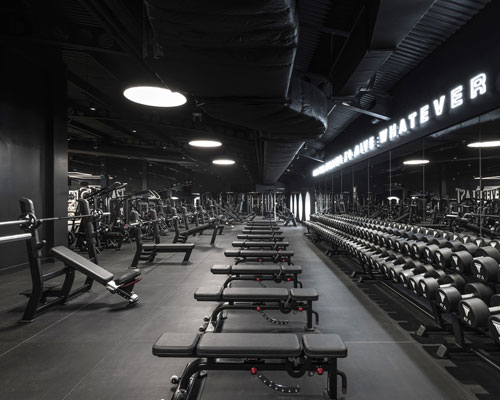
Third Space partnered with IndigoFitness to deliver a bespoke training space for its new club at The Whiteley
HCM promotional features
Sponsored
David Lloyd is stepping up its commitment to women’s health as it continues to explore what fit-for-purpose looks like for the female population
HCM promotional features
Sponsored
Find out how your gym can tap into the corporate wellness boom
HCM promotional features
Sponsored
Starpool supports Olympic champion Marcell Jacobs, says Riccardo Turri
HCM promotional features
Sponsored
SnowDome Fitness has added 50 per cent more space with cutting-edge Technogym solutions
HCM promotional features
Sponsored
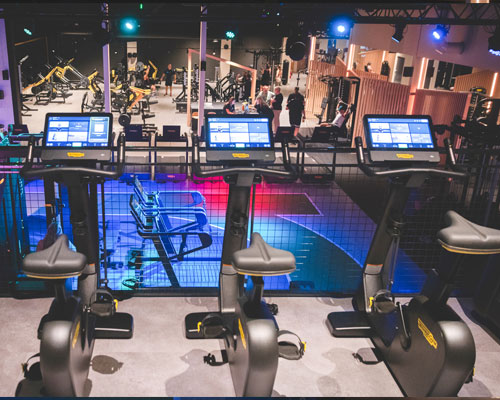
EGYM has opened a new HQ in Paternoster Square, London and revealed a range of new launches
HCM promotional features
Sponsored
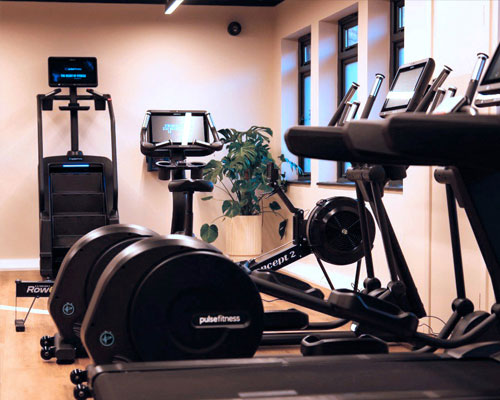
Pulse Fitness has created a new health club delivering an elevated wellness experience
HCM promotional features
Sponsored
The industry is embracing consumer-facing tech. Now it’s time to streamline back-of-house systems with Orbit4, says Daniel Jones
HCM promotional features
Latest News
Crunch Fitness has announced the launch of Crunch Reform Pilates – its own reformer concept ...
Latest News
The 20th State of the Industry Report reveals a resilient, expanding and competitive sector, the ...
Latest News
Purpose Brands has announced its entry into the Italian market, having sold the franchise rights ...
Latest News
Fitness First UK is integrating red light therapy into its yoga and Pilates classes through ...
Latest News
Nuffield Health has told HCM that it takes its responsibilities towards its colleagues seriously and ...
Latest News
Technogym has announced the launch of the Run X World Treadmill Championship, the first world ...
Latest News
Shocked by the UK loneliness statistics, charitable trust Mytime Active has been doubling down on ...
Latest News
Portugal’s leading operator, SC Fitness, is celebrating a milestone by reaching 100 gyms.  The company ...
Opinion
promotion
Strength training has moved from the margins to the mainstream.
Opinion: Building smarter strength spaces for today’s operators
Featured supplier news
Featured supplier news: Reaching the people most gyms miss: Bedford Gym & Swim Campaign delivers 410 new members
One of the biggest mistakes the fitness industry still makes is advertising almost exclusively to people who already look and live like gym members.
Featured supplier news
Featured supplier news: W3Fit EMEA celebrates its fifth anniversary
Celebrating its milestone 5th anniversary, W3Fit EMEA returns in 2026 with an unmissable gathering of the Health & Fitness industry’s most influential leaders.
Company profiles
Company profile: Swim England
Swim England was the only governing body of swimming in the world when it was ...
Company profiles
Company profile: Safe Space Lockers
We provide a full turn-key solution for clients from design and consultation, through to bespoke ...
Supplier Showcases
Supplier Showcase - Future-proofing
Catalogue Gallery
Click on a catalogue to view it online
Featured press releases
MyZone press release: Myzone global data reveals the building blocks of consistent exercise habits
A major new report from Myzone, the global leader in motivation technology for fitness, reveals how motivation becomes habit and how that transformation drives member retention and long-term business growth.
Featured press releases
GLL press release: GLL highlights the importance of drowning prevention to kids nationally as summer holidays near
School assemblies and water safety messages as part of swim lessons.   The UK's largest public pools and swim school operator, GLL, is providing timely activities during Drowning Prevention Week (13-20 June 2026) to raise awareness of water safety ahead of kids breaking up for the summer holidays.
Directory
Water experiences and hydrotherapy solutions
Aquaform s.r.l.: Water experiences and hydrotherapy solutions
Fitness tracking platform
SpiviTech: Fitness tracking platform
Industrial washing machines
Miele Company Limited: Industrial washing machines
Hot tubs
MSpa International Ltd: Hot tubs
Lockers
Crown Sports Lockers: Lockers
Spa and beauty equipment
Living Earth Crafts: Spa and beauty equipment
Property & Tenders
Stratford, East London.
Lee Valley Regional Park Authority
Property & Tenders
Y Felinheli, LL56 4QN
Newmark
Property & Tenders
Diary dates
13-13 Jun 2026
Worldwide, Various,
Diary dates
21-24 Sep 2026
The Langham Huntington Pasadena , Pasadena, United States
Diary dates
06-08 Oct 2026
Messe Stuttgart, Stuttgart, Germany
Diary dates
22-22 Oct 2026
QEII Conference Centre, London,
Diary dates
26-29 Oct 2027
Koelnmesse Exhibition Centre, Cologne, Germany
Diary dates

features

Talking point: The mid-market

For the past decade, since the advent of low-cost clubs, there’s been talk of the mid-market disappearing. These clubs are still hanging on, but for how much longer? Kath Hudson reports

By Kath Hudson | Published in Health Club Management 2016 issue 10
Creating a ‘club within a club’ is one way for mid-market operators to build a USP / PHOTO: SHUTTERSTOCK.COM

As low-cost brands such as Pure Gym and The Gym Group launched and then expanded across the UK, offering clean, spacious self-service gyms, open around the clock, without contracts and for half the price of a standard private health club membership, brands like Fitness First and LA fitness – which were still locking members in with contracts – started to feel the pinch.

Yes they offered more facilities, but for those who only used the gym, this didn’t really matter.

Despite bringing in management from the hospitality sector, investing in research and creating some innovative new formats such as BEAT and a High Performance Club in Australia, Fitness First – formerly the leading global health club chain – couldn’t turn things around fast enough. The UK estate has just been sold to DW Fitness; some of the clubs will be sold on to other operators and presumably rebranded.

Another of the UK industry’s original brands, LA fitness – which occupied the mid-market space, in spite of launching a handful of higher-end LAX clubs in London – was sold to Pure Gym in 2015.

Meanwhile, mid-market operator Bannatyne’s is now heading upmarket, aiming to reposition itself as a premium operator by placing more focus on the customer journey and improving synergies with its spa and hotel brands.

Virgin Active has also adjusted its strategy, selling 35 clubs – one-third of its estate – to Nuffield, so it can invest in and focus on its high-end Collection clubs, family clubs and racquets clubs.

Does all this activity mean the mid-market is finally disappearing, or can operators in this segment of the market evolve to survive? We ask the experts…

Ray Algar,

Managing director,

Oxygen Consulting

Ray Algar
Ray Algar

Mid-market clubs were very slow to respond when low-cost gyms entered the market and disrupted the status quo. Now, unless they can offer something more compelling, it will only be a matter of time before more of these generic health clubs start to close.  

In the last couple of years, we’ve seen a disproportionate number of mid-market independents close as membership stagnated, membership prices remained flat and insufficient funds were generated to reinvest into refreshing the experience.

The low-cost and premium markets are both well defined, but historically the mid-market brands have deliberately been more generic. Neither one thing or the other. Could the former management team of LA fitness clearly define what was distinctive about their clubs?

The remaining legacy brands need to take stock and now jettison things which no longer serve them, or their members, and rediscover their core excellence. Similar offerings may be good enough when there’s significant geographic distance between clubs, but can be disastrous as the distance between health clubs shortens.

Mid-market clubs need to become experts, and build a reputation, in an area they really care about. Active4Less in Stevenage is an interesting example of a small town independent club which became low-cost, found it couldn’t compete with the purpose-built low-cost chains, and is now heading back to mid-market. Its USP is group exercise and it’s presenting itself as a gym with personality, where the character of the owner and staff shine through.

Meanwhile, an example of a mid-market brand that’s thriving is Anytime Fitness. The model is sometimes mistaken as a low-cost brand, with its 24/7 opening hours, but the operator clearly sees its future sitting between premium and low-cost offerings.

Anytime Fitness has confidence in its brand story: small, convenient neighbourhood gyms, with a personal and intimate atmosphere. And with its clubs having fewer than 900 members, it has the potential to provide a very supportive membership experience.

"Historically, the mid-market brands have deliberately been generic. Could the former management team of LA fitness clearly define what was distinctive about their clubs? "– Ray Algar

Michael Clark,

Owner,

Creative Fitness UK

Michael Clark
Michael Clark

As an industry, I think we can obsess too much about what we call our market segments, when ultimately most consumers don’t understand the nuances between budget or mid-market. They just see a gym, and then question why one costs £20 and another £60 or more.

Unless it’s a premium or destination club, most consumers will categorise the remainder of gyms as much the same and, as consumer research continues to tell us, they will choose to the join the most convenient one for them. If they have a choice when it comes to convenience, with two or more clubs in similar striking distance, then price becomes more of a factor. This tilts the tables in favour of the budget operators.

That said, big box mid-market clubs do have numerous offensive strategies available to them to counter the cost differential. One is to address the ongoing consumer frustration of having to pay for all the club’s services and facilities when they only use one or two areas. This can be achieved by breaking out popular formats – for example, some group exercise genres – into a boutique-style ‘club within a club’, with a separate pay as you go fee structure.

However, it’s essential that a concept like this is executed immaculately – ideally with a heightened look, feel, sound, touch and potentially a separate entrance. The price and differentiation of the offering must be clear, so members are willing to sign up to it, and so it’s able to attract a new type of consumer.

Another option is to pursue virtual membership, by engaging with technology to reach all those consumers who want to be more active but either don’t have access to gyms, or don’t feel the gym is for them. By offering virtual memberships and live-streamed pay per view events, operators could make members of people without them ever walking through their doors.

Going forward, I feel it will be all about how mid-market operators can articulate their differentiation and how they can attract new markets using technology and other services. A good location alone won’t be enough to stop consumers comparing on price and choosing what they see as a cheaper like-for-like option.

"We obsess too much about market segments, when ultimately most consumers just see a gym, and then question why one costs £20 and another £60 or more" – Michael Clark

Richard Millman,

CEO,

Total Fitness

Richard Millman
Richard Millman

We’re continuing to see a bifurcation of the marketplace in terms of proposition, consumers and price, and we look likely to be entering another round of acquisitions and consolidation. At one end are the low-cost clubs, which attract a younger, urban, more transient market and a high percentage of gym first-timers. They have a smaller footprint, with dry facilities, some group exercise and a monthly membership of around £20.

The full-service clubs have a broader range of facilities and product offering, along with higher customer service levels, and appeal to a more settled, mature and suburban market, with memberships of £45 and upwards in our geography in the north of England.

 Total Fitness sits in the full-service category and, when a low-cost club opens near us, we typically lose a few hundred members – mainly the younger male members and some younger females. In response, we’ve strategically defocused our sales and marketing approach from those types of consumers, focusing instead on winning them back in a few years’ time when they mature.

 Mid-market clubs generally have a smaller footprint than full-service clubs, so can be limited in how much they can change their proposition. However, it’s important they don’t stand still: they have to make the call one way or the other. They need a clear strategy and proposition for the consumer, differentiating on quality of product and service. They need to find their point of difference, both as a chain and as individual clubs.

Going upmarket – as some mid-market operators are trying or have tried to do – presents a marketing challenge. It’s easier to do if you have just one club than a chain, because to successfully make this move, operators must really understand their local marketplace – what their USP is locally – and how to capture new groups of customers. There are still lots of new audiences out there, provided clubs can define their proposition and find something unique to offer their particular geographic and consumer market.

Total Fitness is a full-service brand that appeals to a more mature, suburban market
Sign up here to get HCM's weekly ezine and every issue of HCM magazine free on digital.

Matrix show
Matrix show
https://www.leisureopportunities.co.uk/images/166643_683226.jpg
How much longer can mid-market health clubs hang on?
Kath Hudson, Journalist Ray Algar, Managing director, Oxygen Consulting Michael Clark, Owner, Creative Fitness UK Richard Millman, CEO, Total Fitness,Low cost fitness, mid market fitness, Pure Gym, the Gym Group, Fitness First, LA Fitness, Bannatyne, Virgin Active, Nuffield, Ray Algar, Oxygen Consulting, Anytime Fitness, Michael Clark, Creative Fitness UK, virtual membership, Richard Millman, Total Fitness,
Latest News
Crunch Fitness has announced the launch of Crunch Reform Pilates – its own reformer concept ...
Latest News
The 20th State of the Industry Report reveals a resilient, expanding and competitive sector, the ...
Latest News
Purpose Brands has announced its entry into the Italian market, having sold the franchise rights ...
Latest News
Fitness First UK is integrating red light therapy into its yoga and Pilates classes through ...
Latest News
Nuffield Health has told HCM that it takes its responsibilities towards its colleagues seriously and ...
Latest News
Technogym has announced the launch of the Run X World Treadmill Championship, the first world ...
Latest News
Shocked by the UK loneliness statistics, charitable trust Mytime Active has been doubling down on ...
Latest News
Portugal’s leading operator, SC Fitness, is celebrating a milestone by reaching 100 gyms.  The company ...
Latest News
Australia’s fast-growing fitness network, Viva Leisure, is adding a low-cost gym brand to its already ...
Latest News
Speedflex has launched a strength training programme for 10 to 16-year-olds, to make it safer, ...
Latest News
Tewinbury Farm Hotel in Hertfordshire, UK is expanding its premium leisure proposition with the launch ...
Opinion
promotion
Strength training has moved from the margins to the mainstream.
Opinion: Building smarter strength spaces for today’s operators
Featured supplier news
Featured supplier news: Reaching the people most gyms miss: Bedford Gym & Swim Campaign delivers 410 new members
One of the biggest mistakes the fitness industry still makes is advertising almost exclusively to people who already look and live like gym members.
Featured supplier news
Featured supplier news: W3Fit EMEA celebrates its fifth anniversary
Celebrating its milestone 5th anniversary, W3Fit EMEA returns in 2026 with an unmissable gathering of the Health & Fitness industry’s most influential leaders.
Company profiles
Company profile: Swim England
Swim England was the only governing body of swimming in the world when it was ...
Company profiles
Company profile: Safe Space Lockers
We provide a full turn-key solution for clients from design and consultation, through to bespoke ...
Supplier Showcases
Supplier Showcase - Future-proofing
Catalogue Gallery
Click on a catalogue to view it online
Featured press releases
MyZone press release: Myzone global data reveals the building blocks of consistent exercise habits
A major new report from Myzone, the global leader in motivation technology for fitness, reveals how motivation becomes habit and how that transformation drives member retention and long-term business growth.
Featured press releases
GLL press release: GLL highlights the importance of drowning prevention to kids nationally as summer holidays near
School assemblies and water safety messages as part of swim lessons.   The UK's largest public pools and swim school operator, GLL, is providing timely activities during Drowning Prevention Week (13-20 June 2026) to raise awareness of water safety ahead of kids breaking up for the summer holidays.
Directory
Water experiences and hydrotherapy solutions
Aquaform s.r.l.: Water experiences and hydrotherapy solutions
Fitness tracking platform
SpiviTech: Fitness tracking platform
Industrial washing machines
Miele Company Limited: Industrial washing machines
Hot tubs
MSpa International Ltd: Hot tubs
Lockers
Crown Sports Lockers: Lockers
Spa and beauty equipment
Living Earth Crafts: Spa and beauty equipment
Property & Tenders
Stratford, East London.
Lee Valley Regional Park Authority
Property & Tenders
Y Felinheli, LL56 4QN
Newmark
Property & Tenders
Diary dates
13-13 Jun 2026
Worldwide, Various,
Diary dates
21-24 Sep 2026
The Langham Huntington Pasadena , Pasadena, United States
Diary dates
06-08 Oct 2026
Messe Stuttgart, Stuttgart, Germany
Diary dates
22-22 Oct 2026
QEII Conference Centre, London,
Diary dates
26-29 Oct 2027
Koelnmesse Exhibition Centre, Cologne, Germany
Diary dates
Search news, features & products:
Find a supplier:
EGYM
EGYM
Partner sites