



GET HCM
magazine
Sign up for the FREE digital edition of HCM magazine and also get the HCM ezine and breaking news email alerts.
Not right now, thanksclose this window I've already subscribed!
Elevate Arena
Elevate Arena
Elevate Arena
Follow Health Club Management on Twitter Like Health Club Management on Facebook Join the discussion with Health Club Management on LinkedIn
FITNESS, HEALTH, WELLNESS

features

People profile: Helen Quirk

Exercise psychology researcher, Sheffield Hallam University

Published in Health Club Management 2017 issue 10
Quirk develops techniques to help people live an active life
A fitness club can have everything on paper to make it the best in the business, but its longevity depends on how well it understands the basic psychological needs of its members

What does an exercise psychologist do?
As a researcher in exercise psychology, I use psychological principles to help understand how to promote and maintain physical activity and exercise participation in people across the population. I’m interested in what people think about physical activity and exercise, their experience of taking part and developing evidence-based techniques to help people initiate and maintain an active lifestyle.

My current research projects involve developing ways to promote physical activity among patients with type I diabetes, exploring the ways that physical activity is experienced by people living with a serious mental illness, and helping to bring the benefits of Parkrun to more people with long-term health conditions.

You played an advisory role with fitness studio TRIB3. Tell us more about that
When the boutique HIIT concept TRIB3 first opened its doors in Sheffield and boasted to be the ‘hardest workout in the north’, there was little doubt I wanted in on the action. This was a fitness studio that had paid attention to every detail of its members’ journey. Although I wasn’t directly involved in the design of the TRIB3 studio, I initially spoke with the CEO, Kevin Yates, about his creation and the psychological principles underlying TRIB3’s concept development. I’ve since helped reinforce why the TRIB3 member journey works, hosted a psychology evening for members and have written psychology blogs for the company’s website.

As TRIB3 continues to expand, keeping in mind the fundamental needs of its members will ensure the essence of its flagship Sheffield studio is replicated for the rest of the world to enjoy.

How can clubs benefit from using psychological principles during the design process?
Getting inside the mind of members should be the driving force behind the design of fitness clubs. A club can have everything on paper to make it the best in the business but its longevity depends on how well it understands the basic psychological needs of its members. Who is your target audience, what are their fundamental needs and how can you satisfy them?

At a basic level, people have three psychological needs; the need to feel competent, the need to feel autonomous and the need to feel connected. Fitness clubs that carefully consider these needs in every aspect of the member journey will offer clients a unique and enjoyable experience that differs from competitors.

Building design, furnishing, décor, sounds, smells and staff all contribute to this experience. It means creating an environment in which members enter feeling optimistic, excited, motivated, enthusiastic, connected with others and that they belong. If they’re enjoying the journey, they’re more likely to keep coming back.

Fitness club designs fail when members enter the facility feeling demotivated, intimidated, disconnected from others, uncomfortable and insecure.

How else can gym operators use psychology to help their health and fitness businesses?
Looking at group dynamics in order to understand behaviour is beneficial, as feeling like we belong to a group satisfies our psychological need for connectedness. Gym operators should consider their club’s community and focus on creating a culture in which new members feel a sense of belonging to that group.

Clubs with a strong culture notice that whilst members may not know each other, as a group they have a shared purpose and are in pursuit of a common goal. Members with a strong connection to the group will then want to be branded with the group name.

Another way to strengthen community spirit is to encourage a lively online community too. A research study assessing the impact of promotional messages and motivational videos on exercise participation, compared to anonymous online peer group support found that the promotional messages had almost no long-term effect on exercise participation. The peer group was more effective at motivating people to exercise and the effect became stronger over time. These findings suggest that more time should be invested into social groups than mass promotional materials and campaigns.

What are your thoughts on using psychology to get more people moving?
As kids, our default behaviour was to play. We would run, skip, jump, throw and lift without even thinking about it and without a single care about what we looked like! We did it simply because it was fun.

As adults, we have a very different relationship with these behaviours. Exercise often becomes something we feel we ‘should’ do more of. Somewhere along the line from childhood to adulthood, physical activity loses its enjoyment. Psychologists can help address this problem by helping people to understand themselves.

A great place to start is with ‘why’– why do you exercise? Once we know this, we can begin to understand our motivations, what’s driving us, and how this is helping or hindering our exercise goals. If exercise is something we think we should do, we can’t expect to sustain it for a long time. But if it’s something we want to do, then this is more likely to lead to long-term behaviour change.

Maybe the answer to getting people moving more is to go back to basics – do what you enjoy, enjoy what you do!
Sign up here to get HCM's weekly ezine and every issue of HCM magazine free on digital.
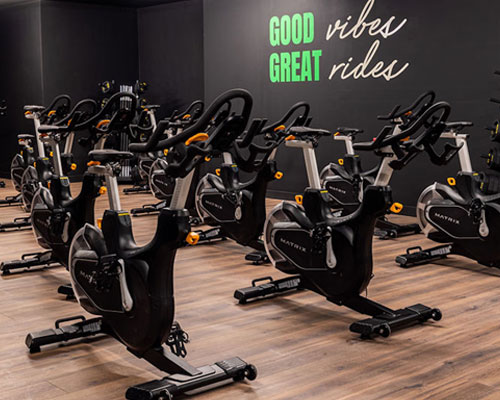
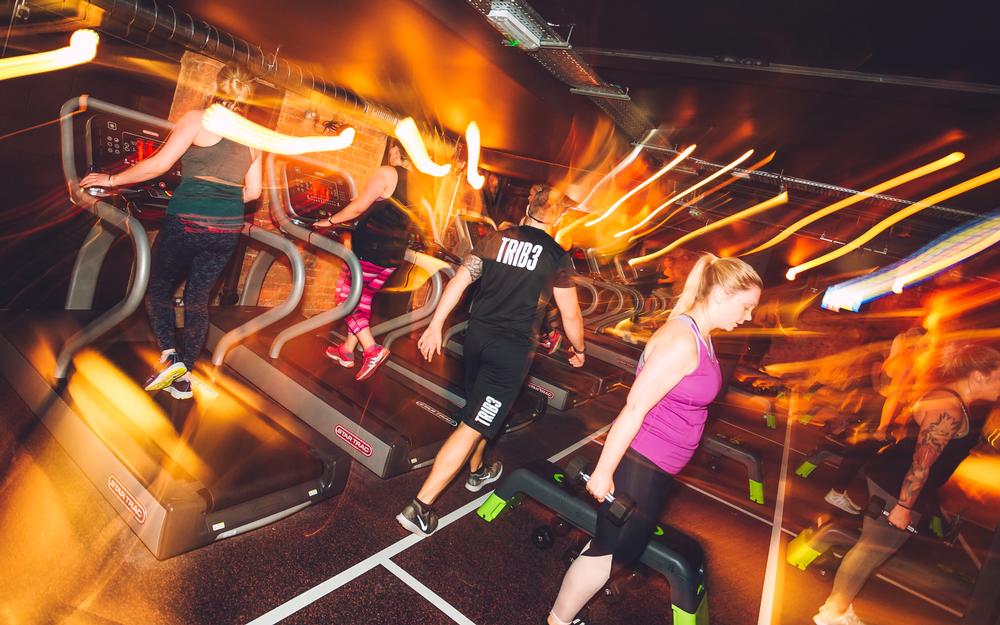
TRIB3 has applied psychological principles to its fitness concept
https://www.leisureopportunities.co.uk/images/455879_567455.jpg
Exercise psychologist Helen Quirk explains how psychological principles should be incorporated into gym design
Helen QUirk, PhD, Exercise psychology researcher, Sheffield Hallam University,exercise psychology, gym design
HCM magazine
Strength training is evolving, driven by changing consumer preferences. Julie Cramer talks to innovators about how their products are meeting this demand
HCM magazine
If the health service is to survive, we must recognise that it is a disease service – and that wellbeing rests with us, says the activity advocate and healthy ageing champion. He talks to Kate Cracknell
HCM magazine
Collaborations with the medical profession and greater aspirations around wellbeing are creating a need for more experts in our sector. It’s time to reboot our thinking around the workforce
HCM magazine
As the entrepreneur who started Wexer, Fresh Fitness, Fitness DK and Repeat, as well as being a former elite athlete, Rasmus Ingerslev’s life looked perfect from the outside, but onthe inside it was a different story. He talks to Kath Hudson about healing old wounds
HCM magazine
For every member with a tripod and a big following, there are others irritated at the way equipment is being hogged or wary they’ll be in the background on someone’s Insta feed. Do influencers offer valuable, free marketing or are they just a nuisance? Kath Hudson finds out how operators are responding
HCM promotional features
Sponsored
Greg Bradley looks at the shift towards strength training in gyms and advises on how operators can create the ultimate training environment
HCM promotional features
Sponsored
SnowDome Fitness has added 50 per cent more space with cutting-edge Technogym solutions
HCM promotional features
Sponsored
David Lloyd is stepping up its commitment to women’s health as it continues to explore what fit-for-purpose looks like for the female population
HCM promotional features
Sponsored
Find out how your gym can tap into the corporate wellness boom
HCM promotional features
Sponsored
Third Space partnered with IndigoFitness to deliver a bespoke training space for its new club at The Whiteley
HCM promotional features
Sponsored
Starpool supports Olympic champion Marcell Jacobs, says Riccardo Turri
HCM promotional features
Sponsored
EGYM has opened a new HQ in Paternoster Square, London and revealed a range of new launches
HCM promotional features
Sponsored
Pulse Fitness has created a new health club delivering an elevated wellness experience
HCM promotional features
Sponsored
New launch, Salus House, elevates boutique wellness with high service levels and a partnership with Technogym
HCM promotional features
Latest News
Global group exercise specialist, Les Mills, is inviting operators to sign up to its Workout ...
Latest News
Global luxury hospitality brand, Six Senses, has partnered with longevity healthcare provider, HUM2N, to launch ...
Latest News
Premium London health club, KX Chelsea, is gearing up to unveil its most significant redevelopment ...
Latest News
Researchers in the US have identified an antibody which could greatly reduce the loss of ...
Latest News
Peloton has made the strategic acquisition of Pilates start-up, Skōp, to support the expansion of ...
Latest News
Crunch Fitness has announced the launch of Crunch Reform Pilates – its own reformer concept ...
Latest News
The 20th State of the Industry Report from LeisureDB has revealed a resilient, expanding and ...
Latest News
Purpose Brands has announced its entry into the Italian market, having sold the franchise rights ...
Opinion
promotion
Strength training has moved from the margins to the mainstream.
Opinion: Building smarter strength spaces for today’s operators
Featured supplier news
Featured supplier news: Reaching the people most gyms miss: Bedford Gym & Swim Campaign delivers 410 new members
One of the biggest mistakes the fitness industry still makes is advertising almost exclusively to people who already look and live like gym members.
Featured supplier news
Featured supplier news: Supporting long-term health: why whole body vibration belongs in clinical settings
As healthcare continues to shift towards prevention, there’s a growing focus on helping people stay active, independent and feeling good for longer.
Company profiles
Company profile: Wattbike
Wattbike’s mission is to make Wattbike the ultimate training partner for improving health and performance. ...
Company profiles
Company profile: D2F Fitness
D2F Fitness specialises in providing fitness equipment tailored to your gym’s needs, but goes further ...
Supplier Showcases
Supplier Showcase - From nightclub to health club
Supplier Showcases
Supplier Showcase - Future-proofing
Catalogue Gallery
Click on a catalogue to view it online
Featured press releases
ukactive press release: UK Active launches next phase of Digital Futures to support digital maturity across the physical activity sector
UK Active has announced the next phase of its Digital Futures programme, supporting organisations across the physical activity sector to develop their digital capability.
Featured press releases
The Fitness Group press release: The Fitness Group partners with Serco Leisure to deliver education and career pathways across UK leisure facilities
The Fitness Group, the UK's leading fitness education training provider, has announced a strategic partnership with Serco Leisure, one of the UK's leading national operators of leisure centres, destination venues and elite sporting facilities.
Directory
Hot tubs
MSpa International Ltd: Hot tubs
Fitness tracking platform
SpiviTech: Fitness tracking platform
Water experiences and hydrotherapy solutions
Aquaform s.r.l.: Water experiences and hydrotherapy solutions
Lockers
Crown Sports Lockers: Lockers
Spa and beauty equipment
Living Earth Crafts: Spa and beauty equipment
Industrial washing machines
Miele Company Limited: Industrial washing machines
Property & Tenders
Stratford, East London.
Lee Valley Regional Park Authority
Property & Tenders
Y Felinheli, LL56 4QN
Newmark
Property & Tenders
Diary dates
21-24 Sep 2026
The Langham Huntington Pasadena , Pasadena, United States
Diary dates
06-08 Oct 2026
Messe Stuttgart, Stuttgart, Germany
Diary dates
22-22 Oct 2026
QEII Conference Centre, London,
Diary dates
26-29 Oct 2027
Koelnmesse Exhibition Centre, Cologne, Germany
Diary dates

features

People profile: Helen Quirk

Exercise psychology researcher, Sheffield Hallam University

Published in Health Club Management 2017 issue 10
Quirk develops techniques to help people live an active life
A fitness club can have everything on paper to make it the best in the business, but its longevity depends on how well it understands the basic psychological needs of its members

What does an exercise psychologist do?
As a researcher in exercise psychology, I use psychological principles to help understand how to promote and maintain physical activity and exercise participation in people across the population. I’m interested in what people think about physical activity and exercise, their experience of taking part and developing evidence-based techniques to help people initiate and maintain an active lifestyle.

My current research projects involve developing ways to promote physical activity among patients with type I diabetes, exploring the ways that physical activity is experienced by people living with a serious mental illness, and helping to bring the benefits of Parkrun to more people with long-term health conditions.

You played an advisory role with fitness studio TRIB3. Tell us more about that
When the boutique HIIT concept TRIB3 first opened its doors in Sheffield and boasted to be the ‘hardest workout in the north’, there was little doubt I wanted in on the action. This was a fitness studio that had paid attention to every detail of its members’ journey. Although I wasn’t directly involved in the design of the TRIB3 studio, I initially spoke with the CEO, Kevin Yates, about his creation and the psychological principles underlying TRIB3’s concept development. I’ve since helped reinforce why the TRIB3 member journey works, hosted a psychology evening for members and have written psychology blogs for the company’s website.

As TRIB3 continues to expand, keeping in mind the fundamental needs of its members will ensure the essence of its flagship Sheffield studio is replicated for the rest of the world to enjoy.

How can clubs benefit from using psychological principles during the design process?
Getting inside the mind of members should be the driving force behind the design of fitness clubs. A club can have everything on paper to make it the best in the business but its longevity depends on how well it understands the basic psychological needs of its members. Who is your target audience, what are their fundamental needs and how can you satisfy them?

At a basic level, people have three psychological needs; the need to feel competent, the need to feel autonomous and the need to feel connected. Fitness clubs that carefully consider these needs in every aspect of the member journey will offer clients a unique and enjoyable experience that differs from competitors.

Building design, furnishing, décor, sounds, smells and staff all contribute to this experience. It means creating an environment in which members enter feeling optimistic, excited, motivated, enthusiastic, connected with others and that they belong. If they’re enjoying the journey, they’re more likely to keep coming back.

Fitness club designs fail when members enter the facility feeling demotivated, intimidated, disconnected from others, uncomfortable and insecure.

How else can gym operators use psychology to help their health and fitness businesses?
Looking at group dynamics in order to understand behaviour is beneficial, as feeling like we belong to a group satisfies our psychological need for connectedness. Gym operators should consider their club’s community and focus on creating a culture in which new members feel a sense of belonging to that group.

Clubs with a strong culture notice that whilst members may not know each other, as a group they have a shared purpose and are in pursuit of a common goal. Members with a strong connection to the group will then want to be branded with the group name.

Another way to strengthen community spirit is to encourage a lively online community too. A research study assessing the impact of promotional messages and motivational videos on exercise participation, compared to anonymous online peer group support found that the promotional messages had almost no long-term effect on exercise participation. The peer group was more effective at motivating people to exercise and the effect became stronger over time. These findings suggest that more time should be invested into social groups than mass promotional materials and campaigns.

What are your thoughts on using psychology to get more people moving?
As kids, our default behaviour was to play. We would run, skip, jump, throw and lift without even thinking about it and without a single care about what we looked like! We did it simply because it was fun.

As adults, we have a very different relationship with these behaviours. Exercise often becomes something we feel we ‘should’ do more of. Somewhere along the line from childhood to adulthood, physical activity loses its enjoyment. Psychologists can help address this problem by helping people to understand themselves.

A great place to start is with ‘why’– why do you exercise? Once we know this, we can begin to understand our motivations, what’s driving us, and how this is helping or hindering our exercise goals. If exercise is something we think we should do, we can’t expect to sustain it for a long time. But if it’s something we want to do, then this is more likely to lead to long-term behaviour change.

Maybe the answer to getting people moving more is to go back to basics – do what you enjoy, enjoy what you do!

Sign up here to get HCM's weekly ezine and every issue of HCM magazine free on digital.
TRIB3 has applied psychological principles to its fitness concept
https://www.leisureopportunities.co.uk/images/455879_567455.jpg
Exercise psychologist Helen Quirk explains how psychological principles should be incorporated into gym design
Helen QUirk, PhD, Exercise psychology researcher, Sheffield Hallam University,exercise psychology, gym design
Latest News
Global group exercise specialist, Les Mills, is inviting operators to sign up to its Workout ...
Latest News
Global luxury hospitality brand, Six Senses, has partnered with longevity healthcare provider, HUM2N, to launch ...
Latest News
Premium London health club, KX Chelsea, is gearing up to unveil its most significant redevelopment ...
Latest News
Researchers in the US have identified an antibody which could greatly reduce the loss of ...
Latest News
Peloton has made the strategic acquisition of Pilates start-up, Skōp, to support the expansion of ...
Latest News
Crunch Fitness has announced the launch of Crunch Reform Pilates – its own reformer concept ...
Latest News
The 20th State of the Industry Report from LeisureDB has revealed a resilient, expanding and ...
Latest News
Purpose Brands has announced its entry into the Italian market, having sold the franchise rights ...
Latest News
Fitness First UK is integrating red light therapy into its yoga and Pilates classes through ...
Latest News
Nuffield Health has told HCM that it takes its responsibilities towards its colleagues seriously and ...
Latest News
Technogym has announced the launch of the Run X World Treadmill Championship, the first world ...
Opinion
promotion
Strength training has moved from the margins to the mainstream.
Opinion: Building smarter strength spaces for today’s operators
Featured supplier news
Featured supplier news: Reaching the people most gyms miss: Bedford Gym & Swim Campaign delivers 410 new members
One of the biggest mistakes the fitness industry still makes is advertising almost exclusively to people who already look and live like gym members.
Featured supplier news
Featured supplier news: Supporting long-term health: why whole body vibration belongs in clinical settings
As healthcare continues to shift towards prevention, there’s a growing focus on helping people stay active, independent and feeling good for longer.
Company profiles
Company profile: Wattbike
Wattbike’s mission is to make Wattbike the ultimate training partner for improving health and performance. ...
Company profiles
Company profile: D2F Fitness
D2F Fitness specialises in providing fitness equipment tailored to your gym’s needs, but goes further ...
Supplier Showcases
Supplier Showcase - From nightclub to health club
Supplier Showcases
Supplier Showcase - Future-proofing
Catalogue Gallery
Click on a catalogue to view it online
Featured press releases
ukactive press release: UK Active launches next phase of Digital Futures to support digital maturity across the physical activity sector
UK Active has announced the next phase of its Digital Futures programme, supporting organisations across the physical activity sector to develop their digital capability.
Featured press releases
The Fitness Group press release: The Fitness Group partners with Serco Leisure to deliver education and career pathways across UK leisure facilities
The Fitness Group, the UK's leading fitness education training provider, has announced a strategic partnership with Serco Leisure, one of the UK's leading national operators of leisure centres, destination venues and elite sporting facilities.
Directory
Hot tubs
MSpa International Ltd: Hot tubs
Fitness tracking platform
SpiviTech: Fitness tracking platform
Water experiences and hydrotherapy solutions
Aquaform s.r.l.: Water experiences and hydrotherapy solutions
Lockers
Crown Sports Lockers: Lockers
Spa and beauty equipment
Living Earth Crafts: Spa and beauty equipment
Industrial washing machines
Miele Company Limited: Industrial washing machines
Property & Tenders
Stratford, East London.
Lee Valley Regional Park Authority
Property & Tenders
Y Felinheli, LL56 4QN
Newmark
Property & Tenders
Diary dates
21-24 Sep 2026
The Langham Huntington Pasadena , Pasadena, United States
Diary dates
06-08 Oct 2026
Messe Stuttgart, Stuttgart, Germany
Diary dates
22-22 Oct 2026
QEII Conference Centre, London,
Diary dates
26-29 Oct 2027
Koelnmesse Exhibition Centre, Cologne, Germany
Diary dates
Search news, features & products:
Find a supplier:
Elevate Arena
Elevate Arena
Partner sites