

















GET HCM
magazine
Sign up for the FREE digital edition of HCM magazine and also get the HCM ezine and breaking news email alerts.
Not right now, thanksclose this window I've already subscribed!
Follow Health Club Management on Twitter Like Health Club Management on Facebook Join the discussion with Health Club Management on LinkedIn
FITNESS, HEALTH, WELLNESS

features

Global fitness market

By Kristen Walsh, IHRSA | Published in Leisure Handbook 2014 issue 1
At the high end, spas and resorts are flourishing. At the budget end, operations are expanding. Clubs in the middle are at the greatest risk.

The health club industry continues to exhibit strong performance, especially in light of ongoing economic uncertainty. Globally, it generates an estimated US$75.7bn in annual revenue annually from more than 150,000 clubs.

Roughly 132m members belong to health clubs worldwide. These figures are expanded on in The 2013 IHRSA Global Report, published by IHRSA in May 2013.

“The global health club industry continues to expand, thanks to strong growth in Latin America, Germany, and China, coupled with a solid performance in the US – which is home to more health clubs than any other single country,” said Jay Ablondi, IHRSA’s executive vice president of global products. “Worldwide, consumers are demonstrating an increased demand for health club services and club operators are responding with conveniently located facilities and a wide range of different amenities.”

While, for the most part, the key health club performance numbers have all been moving in the right direction since the global economic downturn, there is, of course, room for improvement. Certain markets – most notably Latin America – appear to be ripe for growth in the coming years. Other countries, especially those in Europe, face serious challenges. Globally, more consolidation is expected, as is the continued proliferation of franchises.

Europe
The economy in Europe continues to challenge markets in Spain, Italy, and Portugal. Preliminary estimates show a decline of up to 20per cent in market size, club count, and memberships. Key performance indicators are also estimated to have declined by roughly 10 per cent in Greece and Ireland.

The health club industry in the UK and Germany has remained stable, with growth in select sectors. Total club count and membership increased slightly in the UK as 5,900 clubs attracted 7.6m members. The UK has seen notable growth in the low-cost segment, as well as strong member loyalty at independent facilities. The total number of members in Germany held strong as nearly 7.9m Germans belonged to more than 7,500 health clubs. Chains claim nearly half of the country’s health club members as 3.5m belong to a multi-site health club or fitness centre.

Overall, the European health club industry remains the most lucrative region with the greatest number of health clubs. Europe generates roughly US$32bn in revenue from more than 45,000 clubs. Nearly 41.9m members belong to health clubs in Europe.

Competition
IHRSA board member and Danish entrepreneur Rasmus Ingerslev, the CEO of low-cost chain Fresh Fitness, sees the industry evolving quickly, and competition intensifying. “As a result, there will be even more segmentation, which will create clear value propositions in the niche, low-, mid-, and high-end markets,” he predicted. “On the positive side, I believe this will help attract more members, growing the overall market. My concern is that we’ll see bubbles in segments that grow too fast, specifically the low-cost sector, and collapses in the middle-market.”

Asia-Pacific
The health club industry shows particular potential the a growing Asia-Pacific region. The region serves 17m members at more than 21,000 health clubs. Asia generates roughly USUS$11.5 billion in revenue from more than 18,000 clubs serving 14.6m members. With nearly 3,000 businesses, the industry is Australia and New Zealand generates around USUS$2.1 billion in revenue from some 2.3m members.

According to The Australian Fitness Industry Report, nearly one out of five Australians (18per cent) participate in fitness activities. This number is expected to exceed 7m by 2020, as fitness activities represent the second most popular exercise after walking. The Australian fitness industry draws from a range of successful business models which engage consumers: fitness studios, 24-hour facilities, full-service gyms, and outdoor personal training.

In the Asia-Pacific region, China attracted nearly 3.5m members to more than 2,600 health clubs last year and Hong Kong, alone, has approximately 600 clubs.

In addition to posting strong performance in China, the Asia-Pacific is home to key leading club operators. Central Sports, Renaissance, and Konami Sports & Life – all in Japan – often rank among the top 25 club companies worldwide in terms of revenue, club count, and number of memberships.

IHRSA senior research manager Melissa Rodriquez anticipates rapid growth in?2013 in India and China, two of the world’s largest economies. “Anytime Fitness and Snap Fitness have each expanded their franchise network to India,” she said. “And as the second-largest global economic power, the Chinese market is also ripe for development.”

The Americas
In the US, the health club industry held steady in 2012, although successful club operators reported improved performance. Industry-wide, revenue reached an estimated US$21.8 billion in 2012. Comparable to 2011 results, more than 50m card-carrying members belonged to 30,500 U.S. health clubs in 2012.

In Canada, 6,242 clubs generated US$2.6bn last year by serving 5.7m members. Canada ranks ninth worldwide in terms of industry revenue.

Looking south, Mexico generated an estimated US$1.5bn, serving 2.7m members in 2012. Its 7,826 clubs rank the nation third globally in terms of number of facilities, behind the US and Brazil.

Latin america
In Latin America, the industry is robust with opportunities for growth. According to The IHRSA Latin American Report, health clubs generate an estimated US$5.5bn in revenue from more than 46,000 health clubs in fifteen Latin American markets. Brazil leads all Latin American markets in revenue (US$2.4bn), club count (23,398), and members (7m). Mexico and Argentina represent the second and third largest markets in the region. Mexico generates an estimated US$1.5bn in revenue from more than 7,800 health clubs serving 2.7m members. Nearly 6per cent of Argentinians belong to a health club as the market attracts 2.3m members.

Low membership penetration rates and increasing health awareness present opportunities for industry growth in Latin America. On average, 1.7per cent of Latin Americans belong to a health club. According to Gallup, only 53per cent of Latin Americans exercise at least once a week. Club operators in Latin America are uniquely positioned to address inactivity, rising obesity rates, stress, and other lifestyle indicators.

The IHRSA Index – which demonstrates the financial performance of the commercial health club industry in the United States – has shown improved year-over-year performance for three consecutive years. Improvements were recorded from 2011 to 2012 in all nine performance indicators measured, most notably non-dues revenue and EBITDAR. Overall, revenue grew by 8.1per cent from 2011 to 2012 as total membership dues revenue rose by 6.7per cent. Same-store units also reported improvements of 2.9per cent and 2.5per cent, respectively, in total sales and non-dues revenue.

According to the most recent edition of IHRSA’s Profiles of Success, which was published in December 2012 and analyses club financial and operational benchmarks for 2011, participating clubs saw their?net membership increase by 3.1per cent and their revenues increase by 3.6per cent during that year.

Opportunities Abound
While such modest growth might not?normally be considered a great success,?coming as it does on the heels of five years of unpredictable – often stormy – economic conditions, it’s viewed by industry leaders as confirmation?of the industry’s resilience and potential.

Consumer trends, particularly “the consumer hour- glass,” introduce both challenges and opportunities for the future. “As customers gravitate toward the higher and lower ends of the market, middle-market players will come under pressure,” said industry consultant Bryan O’Rourke, who is the cofounder and CEO of Integerus. “At the high end, spa and resort facilities are flourishing, along with experiential niche models, such as cycling and mind/body studios. At the budget end, operations with business models like that of Planet Fitness are expanding. Many clubs in the middle are trying to be everything to everyone, but they’re at the greatest risk.”

The health club industry is ripe for consolidation, according to Rick Caro, the president of Management Vision, Inc., a club consulting company based in New York. “The theme for over?16 years from the financial community is that the health club industry is one of the most fragmented that they have ever studied,” he explained. “Beginning in late 2011 and for all of 2012, several major club companies were sold to other club companies.” At the end of the day, however, less than 1per cent of all of the US clubs were consolidated, he added.

The 2013 IHRSA Global Report

The 2013 IHRSA Global Report is available in print or as a PDF at ihrsa.org/ihrsa-global-report for $139.95 ($69.95 for IHRSA members). Contact [email protected] with questions.
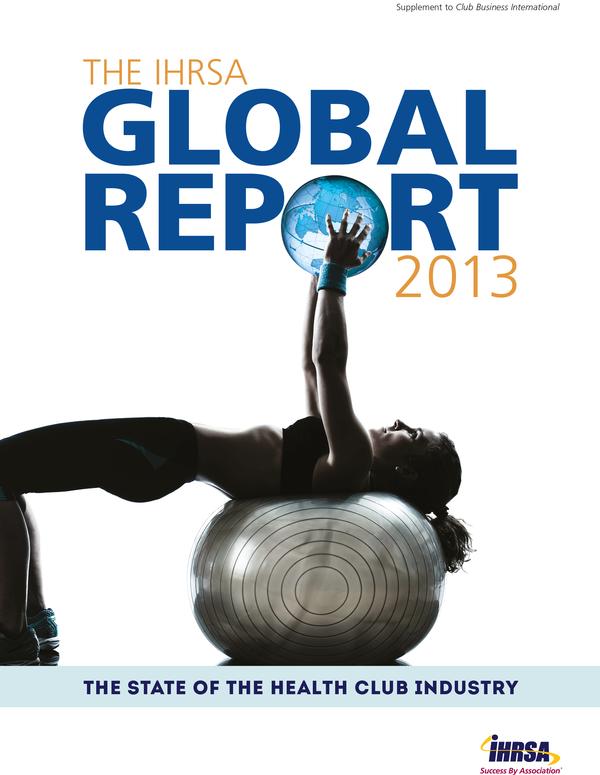
The 2013 IHRSA Global Report

ABOUT THE AUTHOR

Kristen Walsh is Associate Publisher at IHRSA – the International Health, Racquet & Sportsclub Association
EMAIL: [email protected]
TEL: + 1 617.951.0055 ext 117

Sign up here to get HCM's weekly ezine and every issue of HCM magazine free on digital.
The market for fitness in Germany and the UK is stable and growing in areas such as budget gyms / © Monkey Business Images/shutterstock.com
The Asian industry must focus on building stronger customer relationships / © Odua Images/shutterstock.com
Analysts expect there to be continued consolidation of the health and fitness industry worldwide / © tankist276/shutterstock.com
https://www.leisureopportunities.co.uk/images/LH2014_IHRSA.gif
IHRSA keeps track of the numbers
Kristen Walsh, Associate Publisher, IHRSA,health club industry, 2013 IHRSA Global Report,
HCM magazine
For every member with a tripod and a big following, there are others irritated at the way equipment is being hogged or wary they’ll be in the background on someone’s Insta feed. Do influencers offer valuable, free marketing or are they just a nuisance? Kath Hudson finds out how operators are responding
HCM magazine
Collaborations with the medical profession and greater aspirations around wellbeing are creating a need for more experts in our sector. It’s time to reboot our thinking around the workforce
HCM magazine
If the health service is to survive, we must recognise that it is a disease service – and that wellbeing rests with us, says the activity advocate and healthy ageing champion. He talks to Kate Cracknell
HCM magazine
Strength training is evolving, driven by changing consumer preferences. Julie Cramer talks to innovators about how their products are meeting this demand
HCM magazine
As the entrepreneur who started Wexer, Fresh Fitness, Fitness DK and Repeat, as well as being a former elite athlete, Rasmus Ingerslev’s life looked perfect from the outside, but onthe inside it was a different story. He talks to Kath Hudson about healing old wounds
HCM promotional features
Sponsored
Greg Bradley looks at the shift towards strength training in gyms and advises on how operators can create the ultimate training environment
HCM promotional features
Sponsored
Find out how your gym can tap into the corporate wellness boom
HCM promotional features
Sponsored
Third Space partnered with IndigoFitness to deliver a bespoke training space for its new club at The Whiteley
HCM promotional features
Sponsored
SnowDome Fitness has added 50 per cent more space with cutting-edge Technogym solutions
HCM promotional features
Sponsored
David Lloyd is stepping up its commitment to women’s health as it continues to explore what fit-for-purpose looks like for the female population
HCM promotional features
Sponsored
Starpool supports Olympic champion Marcell Jacobs, says Riccardo Turri
HCM promotional features
Sponsored
EGYM has opened a new HQ in Paternoster Square, London and revealed a range of new launches
HCM promotional features
Promotion
BLK BOX has been reimagining elite performance spaces for more than a decade. Founder and former athlete, Greg Bradley, tells us what it takes
HCM promotional features
Sponsored
Pulse Fitness has created a new health club delivering an elevated wellness experience
HCM promotional features
Latest News
People taking GLP-1 weight loss medications such as Ozempic, Wegovy, Mounjaro and Zepbound may be ...
Latest News
In a milestone moment, mental health has become a core part of CIMSPA’s occupational professional ...
Latest News
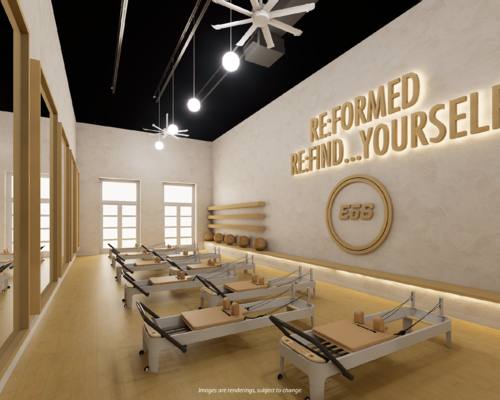
US high-value, low-price chain, Eos Fitness, has announced plans to pilot reformer Pilates in three ...
Latest News
Preventive healthcare company Neko Health has added body composition analysis to its full-body health scan ...
Latest News
Chequan Lewis is the new CEO of Crunch Fitness, taking over from Jim Rowley, who ...
Latest News
Sea Lanes Canary Wharf has officially opened. The 50-metre, six-lane pool, which uses the natural ...
Latest News
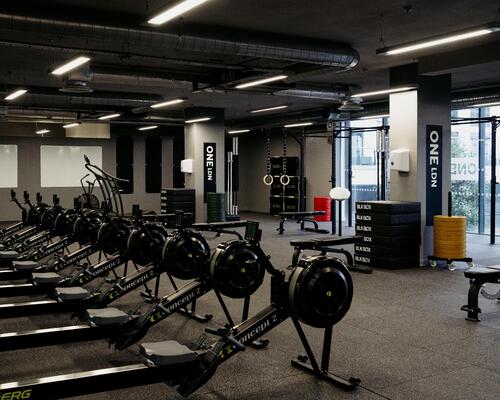
London-based high-performance fitness club, ONE LDN, is raising funds for a multi-site expansion across London, ...
Latest News
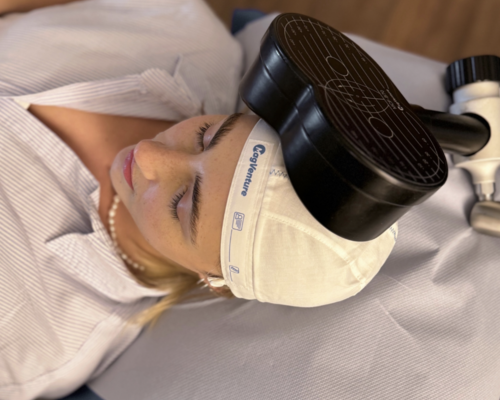
A new brain clinic has opened in London, which uses non-invasive brain stimulation to treat ...
Opinion
promotion
Strength training has moved from the margins to the mainstream.
Opinion: Building smarter strength spaces for today’s operators
Featured supplier news
Featured supplier news: Reaching the people most gyms miss: Bedford Gym & Swim Campaign delivers 410 new members
One of the biggest mistakes the fitness industry still makes is advertising almost exclusively to people who already look and live like gym members.
Featured supplier news
Featured supplier news: CoverMe extends matching service to personal training, rewriting how members and personal trainers connect
CoverMe, the global leader in fitness workforce management, today launches CoverMe PT, an on-demand personal training platform that connects the right personal trainer to the right client in under 10 seconds.
Company profiles
Company profile: Fitbench
Fitbench creates modular training solutions designed to support efficient, high-quality workouts in a wide range ...
Company profiles
Company profile: Life Fitness/Hammer Strength
Life Fitness, Hammer Strength, and ICG are global leaders in premium fitness solutions, trusted by ...
Supplier Showcases
Supplier Showcase - Future-proofing
Catalogue Gallery
Click on a catalogue to view it online
Featured press releases
CoverMe Ltd press release: CoverMe and Jobs In. Fitness partner to create end-to-end talent solution
CoverMe, the UK’s leading fitness workforce management and recruitment platform, has partnered with Jobs In. Fitness, the specialist executive search and advisory firm for the fitness and wellbeing sector, to give operators a single route to talent at every level – from frontline staffing to C-suite.
Featured press releases
BLK BOX press release: Inside the build: Salt 
To bring their concept to life, Salt partnered with BLK BOX to design and equip a facility that would deliver a premium training experience while supporting the needs of a diverse and growing community.
Directory
Water experiences and hydrotherapy solutions
Aquaform s.r.l.: Water experiences and hydrotherapy solutions
Spa and beauty equipment
Oakworks Inc: Spa and beauty equipment
Lockers
Crown Sports Lockers: Lockers
Fitness tracking platform
SpiviTech: Fitness tracking platform
Industrial washing machines
Miele Company Limited: Industrial washing machines
Hot tubs
MSpa International Ltd: Hot tubs
Property & Tenders
Stratford, East London.
Lee Valley Regional Park Authority
Property & Tenders
Y Felinheli, LL56 4QN
Newmark
Property & Tenders
Diary dates
21-24 Sep 2026
The Langham Huntington Pasadena , Pasadena, United States
Diary dates
06-08 Oct 2026
Messe Stuttgart, Stuttgart, Germany
Diary dates
22-22 Oct 2026
QEII Conference Centre, London,
Diary dates
26-29 Oct 2027
Koelnmesse Exhibition Centre, Cologne, Germany
Diary dates

features

Global fitness market

By Kristen Walsh, IHRSA | Published in Leisure Handbook 2014 issue 1
At the high end, spas and resorts are flourishing. At the budget end, operations are expanding. Clubs in the middle are at the greatest risk.

The health club industry continues to exhibit strong performance, especially in light of ongoing economic uncertainty. Globally, it generates an estimated US$75.7bn in annual revenue annually from more than 150,000 clubs.

Roughly 132m members belong to health clubs worldwide. These figures are expanded on in The 2013 IHRSA Global Report, published by IHRSA in May 2013.

“The global health club industry continues to expand, thanks to strong growth in Latin America, Germany, and China, coupled with a solid performance in the US – which is home to more health clubs than any other single country,” said Jay Ablondi, IHRSA’s executive vice president of global products. “Worldwide, consumers are demonstrating an increased demand for health club services and club operators are responding with conveniently located facilities and a wide range of different amenities.”

While, for the most part, the key health club performance numbers have all been moving in the right direction since the global economic downturn, there is, of course, room for improvement. Certain markets – most notably Latin America – appear to be ripe for growth in the coming years. Other countries, especially those in Europe, face serious challenges. Globally, more consolidation is expected, as is the continued proliferation of franchises.

Europe
The economy in Europe continues to challenge markets in Spain, Italy, and Portugal. Preliminary estimates show a decline of up to 20per cent in market size, club count, and memberships. Key performance indicators are also estimated to have declined by roughly 10 per cent in Greece and Ireland.

The health club industry in the UK and Germany has remained stable, with growth in select sectors. Total club count and membership increased slightly in the UK as 5,900 clubs attracted 7.6m members. The UK has seen notable growth in the low-cost segment, as well as strong member loyalty at independent facilities. The total number of members in Germany held strong as nearly 7.9m Germans belonged to more than 7,500 health clubs. Chains claim nearly half of the country’s health club members as 3.5m belong to a multi-site health club or fitness centre.

Overall, the European health club industry remains the most lucrative region with the greatest number of health clubs. Europe generates roughly US$32bn in revenue from more than 45,000 clubs. Nearly 41.9m members belong to health clubs in Europe.

Competition
IHRSA board member and Danish entrepreneur Rasmus Ingerslev, the CEO of low-cost chain Fresh Fitness, sees the industry evolving quickly, and competition intensifying. “As a result, there will be even more segmentation, which will create clear value propositions in the niche, low-, mid-, and high-end markets,” he predicted. “On the positive side, I believe this will help attract more members, growing the overall market. My concern is that we’ll see bubbles in segments that grow too fast, specifically the low-cost sector, and collapses in the middle-market.”

Asia-Pacific
The health club industry shows particular potential the a growing Asia-Pacific region. The region serves 17m members at more than 21,000 health clubs. Asia generates roughly USUS$11.5 billion in revenue from more than 18,000 clubs serving 14.6m members. With nearly 3,000 businesses, the industry is Australia and New Zealand generates around USUS$2.1 billion in revenue from some 2.3m members.

According to The Australian Fitness Industry Report, nearly one out of five Australians (18per cent) participate in fitness activities. This number is expected to exceed 7m by 2020, as fitness activities represent the second most popular exercise after walking. The Australian fitness industry draws from a range of successful business models which engage consumers: fitness studios, 24-hour facilities, full-service gyms, and outdoor personal training.

In the Asia-Pacific region, China attracted nearly 3.5m members to more than 2,600 health clubs last year and Hong Kong, alone, has approximately 600 clubs.

In addition to posting strong performance in China, the Asia-Pacific is home to key leading club operators. Central Sports, Renaissance, and Konami Sports & Life – all in Japan – often rank among the top 25 club companies worldwide in terms of revenue, club count, and number of memberships.

IHRSA senior research manager Melissa Rodriquez anticipates rapid growth in?2013 in India and China, two of the world’s largest economies. “Anytime Fitness and Snap Fitness have each expanded their franchise network to India,” she said. “And as the second-largest global economic power, the Chinese market is also ripe for development.”

The Americas
In the US, the health club industry held steady in 2012, although successful club operators reported improved performance. Industry-wide, revenue reached an estimated US$21.8 billion in 2012. Comparable to 2011 results, more than 50m card-carrying members belonged to 30,500 U.S. health clubs in 2012.

In Canada, 6,242 clubs generated US$2.6bn last year by serving 5.7m members. Canada ranks ninth worldwide in terms of industry revenue.

Looking south, Mexico generated an estimated US$1.5bn, serving 2.7m members in 2012. Its 7,826 clubs rank the nation third globally in terms of number of facilities, behind the US and Brazil.

Latin america
In Latin America, the industry is robust with opportunities for growth. According to The IHRSA Latin American Report, health clubs generate an estimated US$5.5bn in revenue from more than 46,000 health clubs in fifteen Latin American markets. Brazil leads all Latin American markets in revenue (US$2.4bn), club count (23,398), and members (7m). Mexico and Argentina represent the second and third largest markets in the region. Mexico generates an estimated US$1.5bn in revenue from more than 7,800 health clubs serving 2.7m members. Nearly 6per cent of Argentinians belong to a health club as the market attracts 2.3m members.

Low membership penetration rates and increasing health awareness present opportunities for industry growth in Latin America. On average, 1.7per cent of Latin Americans belong to a health club. According to Gallup, only 53per cent of Latin Americans exercise at least once a week. Club operators in Latin America are uniquely positioned to address inactivity, rising obesity rates, stress, and other lifestyle indicators.

The IHRSA Index – which demonstrates the financial performance of the commercial health club industry in the United States – has shown improved year-over-year performance for three consecutive years. Improvements were recorded from 2011 to 2012 in all nine performance indicators measured, most notably non-dues revenue and EBITDAR. Overall, revenue grew by 8.1per cent from 2011 to 2012 as total membership dues revenue rose by 6.7per cent. Same-store units also reported improvements of 2.9per cent and 2.5per cent, respectively, in total sales and non-dues revenue.

According to the most recent edition of IHRSA’s Profiles of Success, which was published in December 2012 and analyses club financial and operational benchmarks for 2011, participating clubs saw their?net membership increase by 3.1per cent and their revenues increase by 3.6per cent during that year.

Opportunities Abound
While such modest growth might not?normally be considered a great success,?coming as it does on the heels of five years of unpredictable – often stormy – economic conditions, it’s viewed by industry leaders as confirmation?of the industry’s resilience and potential.

Consumer trends, particularly “the consumer hour- glass,” introduce both challenges and opportunities for the future. “As customers gravitate toward the higher and lower ends of the market, middle-market players will come under pressure,” said industry consultant Bryan O’Rourke, who is the cofounder and CEO of Integerus. “At the high end, spa and resort facilities are flourishing, along with experiential niche models, such as cycling and mind/body studios. At the budget end, operations with business models like that of Planet Fitness are expanding. Many clubs in the middle are trying to be everything to everyone, but they’re at the greatest risk.”

The health club industry is ripe for consolidation, according to Rick Caro, the president of Management Vision, Inc., a club consulting company based in New York. “The theme for over?16 years from the financial community is that the health club industry is one of the most fragmented that they have ever studied,” he explained. “Beginning in late 2011 and for all of 2012, several major club companies were sold to other club companies.” At the end of the day, however, less than 1per cent of all of the US clubs were consolidated, he added.

The 2013 IHRSA Global Report

The 2013 IHRSA Global Report is available in print or as a PDF at ihrsa.org/ihrsa-global-report for $139.95 ($69.95 for IHRSA members). Contact [email protected] with questions.

The 2013 IHRSA Global Report

ABOUT THE AUTHOR

Kristen Walsh is Associate Publisher at IHRSA – the International Health, Racquet & Sportsclub Association
EMAIL: [email protected]
TEL: + 1 617.951.0055 ext 117

Sign up here to get HCM's weekly ezine and every issue of HCM magazine free on digital.
The market for fitness in Germany and the UK is stable and growing in areas such as budget gyms / © Monkey Business Images/shutterstock.com
The Asian industry must focus on building stronger customer relationships / © Odua Images/shutterstock.com
Analysts expect there to be continued consolidation of the health and fitness industry worldwide / © tankist276/shutterstock.com
https://www.leisureopportunities.co.uk/images/LH2014_IHRSA.gif
IHRSA keeps track of the numbers
Kristen Walsh, Associate Publisher, IHRSA,health club industry, 2013 IHRSA Global Report,
Latest News
People taking GLP-1 weight loss medications such as Ozempic, Wegovy, Mounjaro and Zepbound may be ...
Latest News
In a milestone moment, mental health has become a core part of CIMSPA’s occupational professional ...
Latest News
US high-value, low-price chain, Eos Fitness, has announced plans to pilot reformer Pilates in three ...
Latest News
Preventive healthcare company Neko Health has added body composition analysis to its full-body health scan ...
Latest News
Chequan Lewis is the new CEO of Crunch Fitness, taking over from Jim Rowley, who ...
Latest News
Sea Lanes Canary Wharf has officially opened. The 50-metre, six-lane pool, which uses the natural ...
Latest News
London-based high-performance fitness club, ONE LDN, is raising funds for a multi-site expansion across London, ...
Latest News
A new brain clinic has opened in London, which uses non-invasive brain stimulation to treat ...
Latest News
Good Boost’s digital exercise programmes are helping adults with MSK at a lower cost than ...
Latest News
With Prime Minister, Keir Starmer, announcing his resignation this morning and Andy Burnham as a ...
Latest News
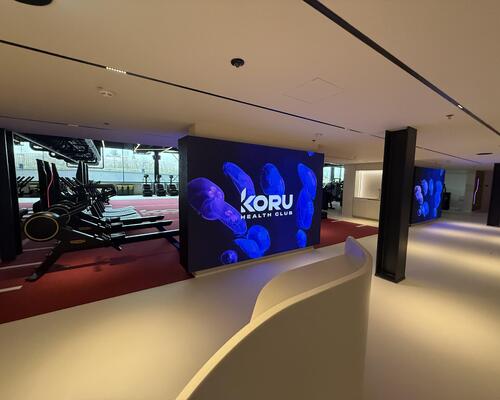
Koru Health Club launched recently within Luxembourg’s multi-experience destination, GRID X, which combines culture, retail ...
Opinion
promotion
Strength training has moved from the margins to the mainstream.
Opinion: Building smarter strength spaces for today’s operators
Featured supplier news
Featured supplier news: Reaching the people most gyms miss: Bedford Gym & Swim Campaign delivers 410 new members
One of the biggest mistakes the fitness industry still makes is advertising almost exclusively to people who already look and live like gym members.
Featured supplier news
Featured supplier news: CoverMe extends matching service to personal training, rewriting how members and personal trainers connect
CoverMe, the global leader in fitness workforce management, today launches CoverMe PT, an on-demand personal training platform that connects the right personal trainer to the right client in under 10 seconds.
Company profiles
Company profile: Fitbench
Fitbench creates modular training solutions designed to support efficient, high-quality workouts in a wide range ...
Company profiles
Company profile: Life Fitness/Hammer Strength
Life Fitness, Hammer Strength, and ICG are global leaders in premium fitness solutions, trusted by ...
Supplier Showcases
Supplier Showcase - Future-proofing
Catalogue Gallery
Click on a catalogue to view it online
Featured press releases
CoverMe Ltd press release: CoverMe and Jobs In. Fitness partner to create end-to-end talent solution
CoverMe, the UK’s leading fitness workforce management and recruitment platform, has partnered with Jobs In. Fitness, the specialist executive search and advisory firm for the fitness and wellbeing sector, to give operators a single route to talent at every level – from frontline staffing to C-suite.
Featured press releases
BLK BOX press release: Inside the build: Salt 
To bring their concept to life, Salt partnered with BLK BOX to design and equip a facility that would deliver a premium training experience while supporting the needs of a diverse and growing community.
Directory
Water experiences and hydrotherapy solutions
Aquaform s.r.l.: Water experiences and hydrotherapy solutions
Spa and beauty equipment
Oakworks Inc: Spa and beauty equipment
Lockers
Crown Sports Lockers: Lockers
Fitness tracking platform
SpiviTech: Fitness tracking platform
Industrial washing machines
Miele Company Limited: Industrial washing machines
Hot tubs
MSpa International Ltd: Hot tubs
Property & Tenders
Stratford, East London.
Lee Valley Regional Park Authority
Property & Tenders
Y Felinheli, LL56 4QN
Newmark
Property & Tenders
Diary dates
21-24 Sep 2026
The Langham Huntington Pasadena , Pasadena, United States
Diary dates
06-08 Oct 2026
Messe Stuttgart, Stuttgart, Germany
Diary dates
22-22 Oct 2026
QEII Conference Centre, London,
Diary dates
26-29 Oct 2027

Koelnmesse Exhibition Centre, Cologne, Germany
Diary dates
Search news, features & products:
Find a supplier:
Partner sites