






















Elevate Arena
Elevate Arena
Elevate Arena
Follow Health Club Management on Twitter Like Health Club Management on Facebook Join the discussion with Health Club Management on LinkedIn
FITNESS, HEALTH, WELLNESS

features

Rugby League

Rugby league is the more popular code of rugby in places such as Australia, but the sport is still considered to be playing second fiddle to rugby union in the UK. That could change following a successful World Cup this year and plans to grow the sport’s grassroots
Published in Sports Management 2013 issue 4
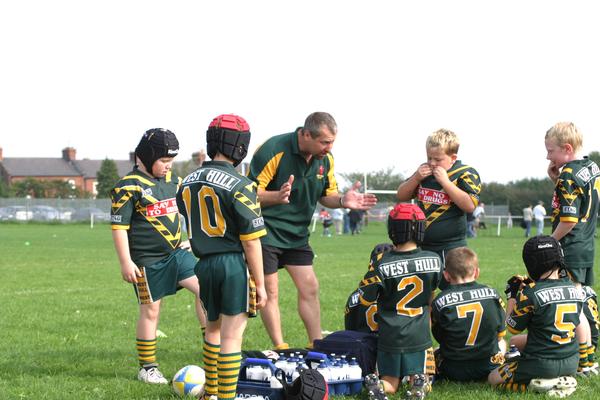
The RFL’s programmes include those designed for primary school children
it’s critical for us to maintain clubs in the more non-traditional areas in the south of england

The year 2013 has been a big one for rugby league in England. The World Cup, the sport’s premier event, returned to these shores for the first time since 2000. As the tournament – co-hosted by England, France, Ireland and Wales – is part of the UK’s “Golden Decade of Sport”, it received unprecedented media attention. England’s games were shown live on BBC and viewing figures were phenomenal with 2.3m tuning in to see England’s semi-final loss to New Zealand.

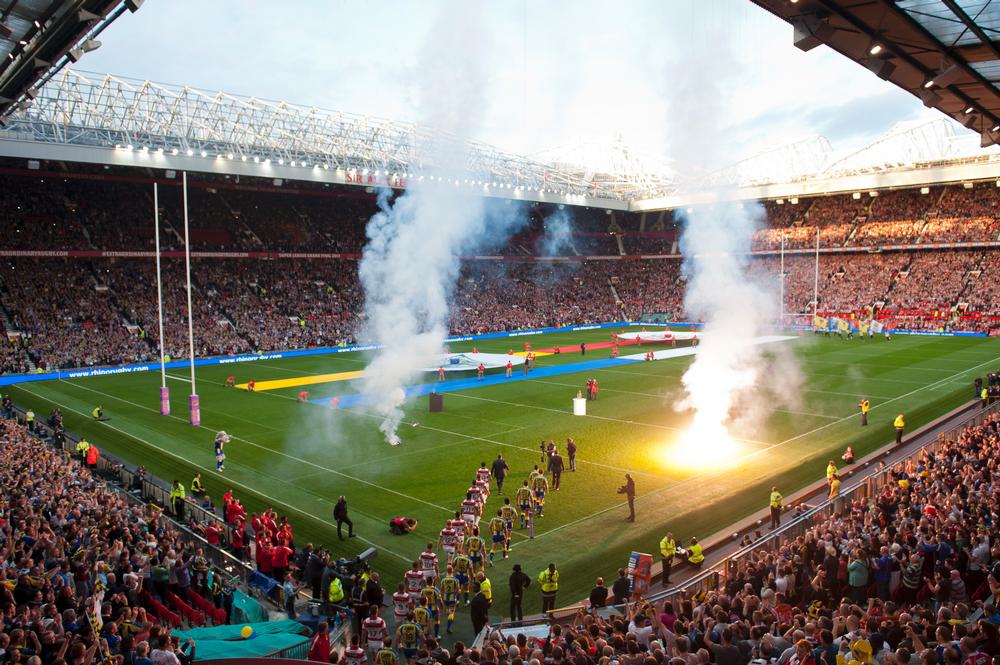
Ticket sales were encouraging too, with nearly 500,000 tickets being sold for the 28 games which were played across 21 venues (15 in England, three in Wales, two in France and one in Ireland). The 74,468 crowd for the final at Old Trafford was the largest ever for a rugby league international. Perhaps more tellingly, 10,000 tickets were sold for a game at Leigh between minnows Tonga and the Cook Islands – proof that the sport captured the public’s imagination. There was success on the pitch too; England came within 20 seconds of reaching the final, playing a brand of rugby which was a genuine advert for the game, especially for those unfamiliar with the pace and power of rugby league.

Brian Barwick, chair of the Rugby Football League (RFL), said the tournament was a success both commercially and due to the effect it had on improving the sport’s profile. “The World Cup exceeded our expectations in terms of people going to games and the media interest it received,” he said. “I think it’s partly the legacy of the London 2012 Olympic Games – people have got into the habit of going to events.”

Building on success
RFL director of participation, David Gent, predicts that the World Cup will leave a lasting legacy which will see more people playing rugby league more often than ever before. The 14-nation tournament in October and November coincided with the ending of the season for grassroots rugby. This year, 2013, was only the second season that the amateur and youth leagues were run predominantly as a summer sport, following a decision by the RFL to change from a winter sport in 2011. Gent expects the timing of the tournament to enhance the effect it will have on participation.

“2013 will be massive for the sport at grassroots level and we hope that the World Cup will inspire the next generation of rugby league players,” he says. “The build up to the World Cup during the summer bode well for the sport’s second March to November season. Everyone learnt a lot from the first summer season (in 2012) and we’re confident that this season we will have seen even more people playing rugby.” Matt Birkett, head of community game programmes, adds that the tournament was a great vehicle to introduce the game to the masses. “We had large numbers of people attending the World Cup games who’d never been to a rugby league game before,” he said. “I believe around 60 per cent of tickets were bought by people who hadn’t purchased a ticket from the RFL before.

“In terms of the wider opportunities, there are obviously participating opportunities threaded within having increased the profile of the game – and the inspiration of watching a game.

“Let’s also not forget the commercial side of things; encouraging commercial partners to the game through an international tournament and then hopefully being able to build on those relationships – whether that’s within the professional sport or indeed with grassroots sport – in terms of their engagement and competition.”

Get them playing
According to Sport England’s Active People Survey (ASP), there were 51,100 people playing rugby league at least once a week during the year to October 2012. The figure made it the 24th most popular sport played in England – someway behind rugby union, which was 13th on the list with 183,000 regular players. A quick study of the ASP figures reveals there was a decline in rugby league participation since ASP 2 (October 2008), when 82,000 people were playing the sport on a regular basis.

The decline, however, has been stemmed over the past 18 months, partly thanks to a comprehensive consultation process which the RFL conducted with its stakeholders – led by interim chair Maurice Watkins. The findings of the Watkins Review of Rugby League Governance were published in July 2012 and among the report’s recommendations was a call for further investigation to be made into the appropriate level of RFL support for clubs, youth development and player production systems.

Currently, all RFL’s grassroots projects designed to increase participation are divided into seven different programme areas – touch and tag rugby; community clubs; competitions and leagues; primary rugby league (all rugby taking place under the age of 11); secondary schools; colleges; and universities. Within each programme area there are individual products, services and intervention initiatives to increase participation.

One of the recent campaigns, launched during the World Cup to maximise its reach, is the Play Touch Rugby League initiative, which sits within the “touch and tag” group of RFL programmes. Designed for people over the age of 14, the format is based on a minimal contact version of the sport and is marketed as a fast, skilful, action-packed activity played in a fun and social atmosphere. According to Gent, the idea is to make it attractive to those who have never played the sport of rugby before – and to attract new operators wanting to add rugby to their range of activities.

“With touch rugby we’re hoping to attract delivery partners from outside our immediate rugby league community,” he said. “The game can be played both indoors and outdoors in an area about the size of a five-a-side football pitch. Leisure centres with sports halls or artificial turf pitches are ideal venues. The pilot programmes have been extremely successful, with venues regularly attracting 150 players on a weekly basis.”

All Play Touch Rugby League activities are delivered on a licence basis, and according to Birkett, the scheme has been well received, having already reached its target of 50 venues.

“We hold the license for the brand and sell them to a wide range of partners,” Birkett says. “These include professional clubs, community clubs, colleges and universities and we’ve also signed a deal with five-a-side football operator Powerleague, which will see ‘Play Touch Rugby League’ programmes delivered at 22 of its facilities across England. The licences provide quite a significant amount of central support, so the delivery partners are given an opportunity to generate income from touch rugby.”

The RFL is also working hard to introduce the sport to younger children. It recently launched a primary school rugby league campaign which it developed in partnership with the Youth Sport Trust (YST) and a number of other national governing bodies. It is based on YST’s Start to Move programme – ensuring best practice in child development and physical literacy. The scheme covers years one to six, although the earlier years are delivered as multi-sport programmes and rugby league-specific activities aren’t introduced fully until year five.

Looking ahead, the RFL has set itself ambitious participation targets. From the base figure of 51,100 in 2012, it aims to increase the number of regular players (those who play at least once a week) to 56,100 by October 2014 and to 66,100 by October 2017. It’s well on its way – the October 2013 APS figures show that 53,500 are now playing the sport.

Facilities
There are around 350 community rugby league clubs in England, with another 100+ clubs and teams run by universities, colleges, schools and the armed forces. While the majority of clubs are based in the north of England, the RFL is keen to grow the sport in the south – where rugby union is the more dominant code.

Dan Steel, RFL’s national club manager, says: “Most of our clubs are in the north, but it’s critical for us to sustain clubs in the more non-traditional areas. The number of clubs in the north east, London and the Midlands has grown significantly over the last four years and it will be vital for our sport to continue to grow in these areas.”

The growth of any sport will be greatly helped by easy access to maintained, safe facilities. RFL’s Community Facilities Strategy focuses on a number of key issues – with improving existing pitches a priority. According to Carol Doran, RFL’s national facilities manager, there is room for improvement when it comes to community facilities and pitches.

“Many rugby league pitches are in a poor condition which impacts on their playing capacity,” she says. “A good quality pitch can accommodate around three matches a week, while a poor quality only one. With a limited capital budget we don’t have the option of building lots of new clubhouses.

“We are, however, working with Sport England on the design of a modular facility which will be a more affordable option. So we’re focusing most of the investment into improving the quality and capacity of existing pitches rather than identifying new ones.”

HISTORY OF RUGBY LEAGUE

The two codes of rugby were born out of a disagreement, in the 1890s, over whether players should be paid compensation for missing work for match commitments. The clubs in favour of paying players – all in the north of England – formed the Northern Rugby Football Union (NRFU) in 1895. The move eventually led to the NRFU clubs severing their ties with the London-based Rugby Football Union (RFU), which was determined to run rugby as an amateur sport. Initially the NRFU continued to play under existing RFU laws, but over time made changes to the rules which today means that a game of rugby league is played at a quicker pace with fewer disruptions than rugby union. One of the major changes was made in 1907 when the number of players in a rugby league team was changed from 15 to 13.
Sign up here to get HCM's weekly ezine and every issue of HCM magazine free on digital.
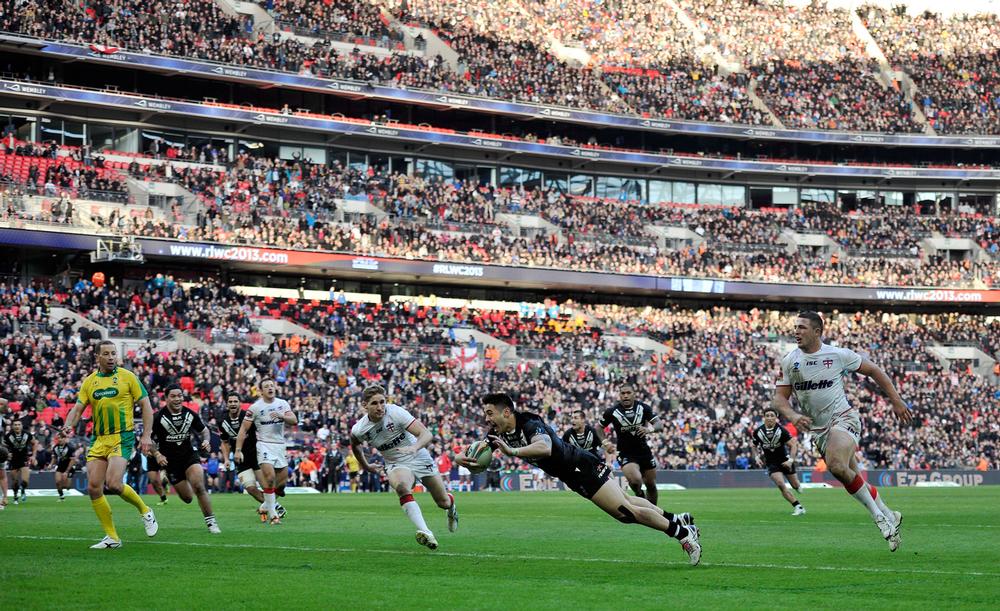
England’s World Cup games were shown live, with 2.3m viewers tuning into see the semi-final against New Zealand
The latest Sport England figures show that 55,700 people play rugby league on a regular basis
https://www.leisureopportunities.co.uk/images/393843_236321.jpg
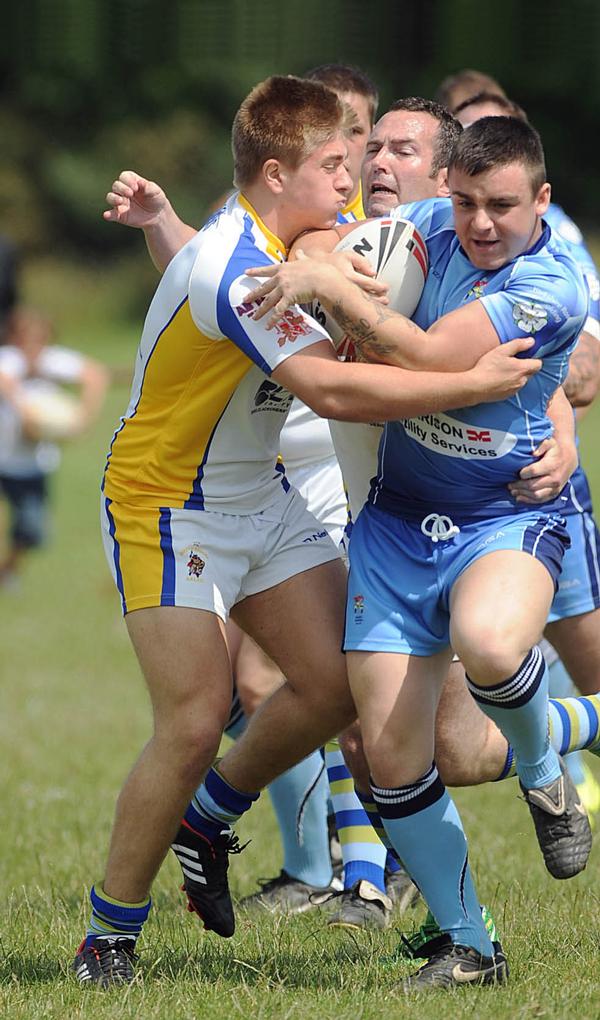
England co-hosted the Rugby League World Cup this year. The sport’s national governing body, the RFL, is looking to benefit from the increased media exposure to build up grassroots rugby
Rugby league, RFL,,Rugby league, England, governing body, the RFL,
HCM magazine
HCM People

Jamie Clements

The Breath Coach
I experienced a blissful feeling of joy I hadn’t felt since I was a kid
HCM magazine
As the entrepreneur who started Wexer, Fresh Fitness, Fitness DK and Repeat, as well as being a former elite athlete, Rasmus Ingerslev’s life looked perfect from the outside, but onthe inside it was a different story. He talks to Kath Hudson about healing old wounds
HCM magazine
HCM People

Stephen Price

Founder, SP&Co Group
Working in public health over the last few years has lit up parts of my brain again
HCM magazine
Collaborations with the medical profession and greater aspirations around wellbeing are creating a need for more experts in our sector. It’s time to reboot our thinking around the workforce
HCM magazine
Small improvements to sleep, diet and physical activity have major benefits for the heart, according to new research from the University of Sydney
HCM promotional features
Sponsored
Third Space partnered with IndigoFitness to deliver a bespoke training space for its new club at The Whiteley
HCM promotional features
Sponsored
David Lloyd is stepping up its commitment to women’s health as it continues to explore what fit-for-purpose looks like for the female population
HCM promotional features
Sponsored
Starpool supports Olympic champion Marcell Jacobs, says Riccardo Turri
HCM promotional features
Sponsored
Greg Bradley looks at the shift towards strength training in gyms and advises on how operators can create the ultimate training environment
HCM promotional features
Sponsored
SnowDome Fitness has added 50 per cent more space with cutting-edge Technogym solutions
HCM promotional features
Sponsored
Find out how your gym can tap into the corporate wellness boom
HCM promotional features
Sponsored
EGYM has opened a new HQ in Paternoster Square, London and revealed a range of new launches
HCM promotional features
Sponsored
New launch, Salus House, elevates boutique wellness with high service levels and a partnership with Technogym
HCM promotional features
Sponsored
The industry is embracing consumer-facing tech. Now it’s time to streamline back-of-house systems with Orbit4, says Daniel Jones
HCM promotional features
Latest News
Australia’s fast-growing fitness network, Viva Leisure, is adding a low-cost gym brand to its already ...
Latest News
Speedflex has launched a strength training programme for 10 to 16-year-olds, to make it safer, ...
Latest News
Tewinbury Farm Hotel in Hertfordshire, UK is expanding its premium leisure proposition with the launch ...
Latest News

Work is underway in Madrid on one of Europe’s most significant multi-functional complexes, ...

Latest News
PureGym is encouraging people to step away from their screens and go for a walk, ...
Latest News
Small improvements to sleep, diet quality, and physical activity, made in combination lead to a ...
Latest News
Therme Manchester’s 28-acre development, which will include interconnected glass pavilions that measure 65,000sq m, will ...
Latest News
The Yard Gym (TYG) is to become Nike Training’s official global training partner in a ...
Opinion
promotion
Strength training has moved from the margins to the mainstream.
Opinion: Building smarter strength spaces for today’s operators
Featured supplier news
Featured supplier news: W3Fit EMEA celebrates its fifth anniversary
Celebrating its milestone 5th anniversary, W3Fit EMEA returns in 2026 with an unmissable gathering of the Health & Fitness industry’s most influential leaders.
Featured supplier news
Featured supplier news: Supporting long-term health: why whole body vibration belongs in clinical settings
As healthcare continues to shift towards prevention, there’s a growing focus on helping people stay active, independent and feeling good for longer.
Company profiles
Company profile: Gladstone Software
Gladstone’s software is built to streamline operations, reduce admin burden, and boost engagement. Operators can ...
Company profiles
Company profile: Matrix Fitness
Matrix provides equipment to facilities in all market sectors including private health clubs, residential housing, ...
Supplier Showcases
Supplier Showcase - Future-proofing
Catalogue Gallery
Click on a catalogue to view it online
Featured press releases
ukactive press release: Are they Fit for Office? UK Active and Technogym throw down the gauntlet to MPs
Hundreds of staff, MPs and Peers from across Westminster have signed up for the Fit for Office parliamentary physical activity challenge, which takes place throughout June and is hosted by ukactive and Technogym.
Featured press releases
Innerva press release: Lex Leisure’s power-assisted exercise suite smashes targets in record time
Crook Log Leisure Centre has more than doubled the membership target for its new power- assisted exercise suite in less than six months.
Directory
Hot tubs
MSpa International Ltd: Hot tubs
Lockers
Crown Sports Lockers: Lockers
Fitness tracking platform
SpiviTech: Fitness tracking platform
Spa and beauty equipment
Living Earth Crafts: Spa and beauty equipment
Industrial washing machines
Miele Company Limited: Industrial washing machines
Water experiences and hydrotherapy solutions
Aquaform s.r.l.: Water experiences and hydrotherapy solutions
Property & Tenders
Stratford, East London.
Lee Valley Regional Park Authority
Property & Tenders
Y Felinheli, LL56 4QN
Newmark
Property & Tenders
Diary dates
13-13 Jun 2026
Worldwide, Various,
Diary dates
21-24 Sep 2026
The Langham Huntington Pasadena , Pasadena, United States
Diary dates
06-08 Oct 2026
Messe Stuttgart, Stuttgart, Germany
Diary dates
22-22 Oct 2026
QEII Conference Centre, London,
Diary dates
26-29 Oct 2027
Koelnmesse Exhibition Centre, Cologne, Germany
Diary dates

features

Rugby League

Rugby league is the more popular code of rugby in places such as Australia, but the sport is still considered to be playing second fiddle to rugby union in the UK. That could change following a successful World Cup this year and plans to grow the sport’s grassroots

Published in Sports Management 2013 issue 4
The RFL’s programmes include those designed for primary school children
it’s critical for us to maintain clubs in the more non-traditional areas in the south of england

The year 2013 has been a big one for rugby league in England. The World Cup, the sport’s premier event, returned to these shores for the first time since 2000. As the tournament – co-hosted by England, France, Ireland and Wales – is part of the UK’s “Golden Decade of Sport”, it received unprecedented media attention. England’s games were shown live on BBC and viewing figures were phenomenal with 2.3m tuning in to see England’s semi-final loss to New Zealand.

Ticket sales were encouraging too, with nearly 500,000 tickets being sold for the 28 games which were played across 21 venues (15 in England, three in Wales, two in France and one in Ireland). The 74,468 crowd for the final at Old Trafford was the largest ever for a rugby league international. Perhaps more tellingly, 10,000 tickets were sold for a game at Leigh between minnows Tonga and the Cook Islands – proof that the sport captured the public’s imagination. There was success on the pitch too; England came within 20 seconds of reaching the final, playing a brand of rugby which was a genuine advert for the game, especially for those unfamiliar with the pace and power of rugby league.

Brian Barwick, chair of the Rugby Football League (RFL), said the tournament was a success both commercially and due to the effect it had on improving the sport’s profile. “The World Cup exceeded our expectations in terms of people going to games and the media interest it received,” he said. “I think it’s partly the legacy of the London 2012 Olympic Games – people have got into the habit of going to events.”

Building on success
RFL director of participation, David Gent, predicts that the World Cup will leave a lasting legacy which will see more people playing rugby league more often than ever before. The 14-nation tournament in October and November coincided with the ending of the season for grassroots rugby. This year, 2013, was only the second season that the amateur and youth leagues were run predominantly as a summer sport, following a decision by the RFL to change from a winter sport in 2011. Gent expects the timing of the tournament to enhance the effect it will have on participation.

“2013 will be massive for the sport at grassroots level and we hope that the World Cup will inspire the next generation of rugby league players,” he says. “The build up to the World Cup during the summer bode well for the sport’s second March to November season. Everyone learnt a lot from the first summer season (in 2012) and we’re confident that this season we will have seen even more people playing rugby.” Matt Birkett, head of community game programmes, adds that the tournament was a great vehicle to introduce the game to the masses. “We had large numbers of people attending the World Cup games who’d never been to a rugby league game before,” he said. “I believe around 60 per cent of tickets were bought by people who hadn’t purchased a ticket from the RFL before.

“In terms of the wider opportunities, there are obviously participating opportunities threaded within having increased the profile of the game – and the inspiration of watching a game.

“Let’s also not forget the commercial side of things; encouraging commercial partners to the game through an international tournament and then hopefully being able to build on those relationships – whether that’s within the professional sport or indeed with grassroots sport – in terms of their engagement and competition.”

Get them playing
According to Sport England’s Active People Survey (ASP), there were 51,100 people playing rugby league at least once a week during the year to October 2012. The figure made it the 24th most popular sport played in England – someway behind rugby union, which was 13th on the list with 183,000 regular players. A quick study of the ASP figures reveals there was a decline in rugby league participation since ASP 2 (October 2008), when 82,000 people were playing the sport on a regular basis.

The decline, however, has been stemmed over the past 18 months, partly thanks to a comprehensive consultation process which the RFL conducted with its stakeholders – led by interim chair Maurice Watkins. The findings of the Watkins Review of Rugby League Governance were published in July 2012 and among the report’s recommendations was a call for further investigation to be made into the appropriate level of RFL support for clubs, youth development and player production systems.

Currently, all RFL’s grassroots projects designed to increase participation are divided into seven different programme areas – touch and tag rugby; community clubs; competitions and leagues; primary rugby league (all rugby taking place under the age of 11); secondary schools; colleges; and universities. Within each programme area there are individual products, services and intervention initiatives to increase participation.

One of the recent campaigns, launched during the World Cup to maximise its reach, is the Play Touch Rugby League initiative, which sits within the “touch and tag” group of RFL programmes. Designed for people over the age of 14, the format is based on a minimal contact version of the sport and is marketed as a fast, skilful, action-packed activity played in a fun and social atmosphere. According to Gent, the idea is to make it attractive to those who have never played the sport of rugby before – and to attract new operators wanting to add rugby to their range of activities.

“With touch rugby we’re hoping to attract delivery partners from outside our immediate rugby league community,” he said. “The game can be played both indoors and outdoors in an area about the size of a five-a-side football pitch. Leisure centres with sports halls or artificial turf pitches are ideal venues. The pilot programmes have been extremely successful, with venues regularly attracting 150 players on a weekly basis.”

All Play Touch Rugby League activities are delivered on a licence basis, and according to Birkett, the scheme has been well received, having already reached its target of 50 venues.

“We hold the license for the brand and sell them to a wide range of partners,” Birkett says. “These include professional clubs, community clubs, colleges and universities and we’ve also signed a deal with five-a-side football operator Powerleague, which will see ‘Play Touch Rugby League’ programmes delivered at 22 of its facilities across England. The licences provide quite a significant amount of central support, so the delivery partners are given an opportunity to generate income from touch rugby.”

The RFL is also working hard to introduce the sport to younger children. It recently launched a primary school rugby league campaign which it developed in partnership with the Youth Sport Trust (YST) and a number of other national governing bodies. It is based on YST’s Start to Move programme – ensuring best practice in child development and physical literacy. The scheme covers years one to six, although the earlier years are delivered as multi-sport programmes and rugby league-specific activities aren’t introduced fully until year five.

Looking ahead, the RFL has set itself ambitious participation targets. From the base figure of 51,100 in 2012, it aims to increase the number of regular players (those who play at least once a week) to 56,100 by October 2014 and to 66,100 by October 2017. It’s well on its way – the October 2013 APS figures show that 53,500 are now playing the sport.

Facilities
There are around 350 community rugby league clubs in England, with another 100+ clubs and teams run by universities, colleges, schools and the armed forces. While the majority of clubs are based in the north of England, the RFL is keen to grow the sport in the south – where rugby union is the more dominant code.

Dan Steel, RFL’s national club manager, says: “Most of our clubs are in the north, but it’s critical for us to sustain clubs in the more non-traditional areas. The number of clubs in the north east, London and the Midlands has grown significantly over the last four years and it will be vital for our sport to continue to grow in these areas.”

The growth of any sport will be greatly helped by easy access to maintained, safe facilities. RFL’s Community Facilities Strategy focuses on a number of key issues – with improving existing pitches a priority. According to Carol Doran, RFL’s national facilities manager, there is room for improvement when it comes to community facilities and pitches.

“Many rugby league pitches are in a poor condition which impacts on their playing capacity,” she says. “A good quality pitch can accommodate around three matches a week, while a poor quality only one. With a limited capital budget we don’t have the option of building lots of new clubhouses.

“We are, however, working with Sport England on the design of a modular facility which will be a more affordable option. So we’re focusing most of the investment into improving the quality and capacity of existing pitches rather than identifying new ones.”

HISTORY OF RUGBY LEAGUE

The two codes of rugby were born out of a disagreement, in the 1890s, over whether players should be paid compensation for missing work for match commitments. The clubs in favour of paying players – all in the north of England – formed the Northern Rugby Football Union (NRFU) in 1895. The move eventually led to the NRFU clubs severing their ties with the London-based Rugby Football Union (RFU), which was determined to run rugby as an amateur sport. Initially the NRFU continued to play under existing RFU laws, but over time made changes to the rules which today means that a game of rugby league is played at a quicker pace with fewer disruptions than rugby union. One of the major changes was made in 1907 when the number of players in a rugby league team was changed from 15 to 13.
Sign up here to get HCM's weekly ezine and every issue of HCM magazine free on digital.
England’s World Cup games were shown live, with 2.3m viewers tuning into see the semi-final against New Zealand
The latest Sport England figures show that 55,700 people play rugby league on a regular basis
https://www.leisureopportunities.co.uk/images/393843_236321.jpg
England co-hosted the Rugby League World Cup this year. The sport’s national governing body, the RFL, is looking to benefit from the increased media exposure to build up grassroots rugby
Rugby league, RFL,,Rugby league, England, governing body, the RFL,
Latest News
Australia’s fast-growing fitness network, Viva Leisure, is adding a low-cost gym brand to its already ...
Latest News
Speedflex has launched a strength training programme for 10 to 16-year-olds, to make it safer, ...
Latest News
Tewinbury Farm Hotel in Hertfordshire, UK is expanding its premium leisure proposition with the launch ...
Latest News

Work is underway in Madrid on one of Europe’s most significant multi-functional complexes, ...

Latest News
PureGym is encouraging people to step away from their screens and go for a walk, ...
Latest News
Small improvements to sleep, diet quality, and physical activity, made in combination lead to a ...
Latest News
Therme Manchester’s 28-acre development, which will include interconnected glass pavilions that measure 65,000sq m, will ...
Latest News
The Yard Gym (TYG) is to become Nike Training’s official global training partner in a ...
Latest News
Everlast Gyms' York site has reopened following a refurbishment to bring it up to the ...
Latest News
Luxury hospitality and wellness pioneer Jeremy McCarthy has launched Leisure Alchemy, a digital platform that ...
Latest News
A contrast therapy and breathwork facility called Reset has opened in Islington, London, in the ...
Opinion
promotion
Strength training has moved from the margins to the mainstream.
Opinion: Building smarter strength spaces for today’s operators
Featured supplier news
Featured supplier news: W3Fit EMEA celebrates its fifth anniversary
Celebrating its milestone 5th anniversary, W3Fit EMEA returns in 2026 with an unmissable gathering of the Health & Fitness industry’s most influential leaders.
Featured supplier news
Featured supplier news: Supporting long-term health: why whole body vibration belongs in clinical settings
As healthcare continues to shift towards prevention, there’s a growing focus on helping people stay active, independent and feeling good for longer.
Company profiles
Company profile: Gladstone Software
Gladstone’s software is built to streamline operations, reduce admin burden, and boost engagement. Operators can ...
Company profiles
Company profile: Matrix Fitness
Matrix provides equipment to facilities in all market sectors including private health clubs, residential housing, ...
Supplier Showcases
Supplier Showcase - Future-proofing
Catalogue Gallery
Click on a catalogue to view it online
Featured press releases
ukactive press release: Are they Fit for Office? UK Active and Technogym throw down the gauntlet to MPs
Hundreds of staff, MPs and Peers from across Westminster have signed up for the Fit for Office parliamentary physical activity challenge, which takes place throughout June and is hosted by ukactive and Technogym.
Featured press releases
Innerva press release: Lex Leisure’s power-assisted exercise suite smashes targets in record time
Crook Log Leisure Centre has more than doubled the membership target for its new power- assisted exercise suite in less than six months.
Directory
Hot tubs
MSpa International Ltd: Hot tubs
Lockers
Crown Sports Lockers: Lockers
Fitness tracking platform
SpiviTech: Fitness tracking platform
Spa and beauty equipment
Living Earth Crafts: Spa and beauty equipment
Industrial washing machines
Miele Company Limited: Industrial washing machines
Water experiences and hydrotherapy solutions
Aquaform s.r.l.: Water experiences and hydrotherapy solutions
Property & Tenders
Stratford, East London.
Lee Valley Regional Park Authority
Property & Tenders
Y Felinheli, LL56 4QN
Newmark
Property & Tenders
Diary dates
13-13 Jun 2026
Worldwide, Various,
Diary dates
21-24 Sep 2026
The Langham Huntington Pasadena , Pasadena, United States
Diary dates
06-08 Oct 2026
Messe Stuttgart, Stuttgart, Germany
Diary dates
22-22 Oct 2026
QEII Conference Centre, London,
Diary dates
26-29 Oct 2027
Koelnmesse Exhibition Centre, Cologne, Germany
Diary dates
Search news, features & products:
Find a supplier:
Elevate Arena
Elevate Arena
Partner sites