


























Follow Health Club Management on Twitter Like Health Club Management on Facebook Join the discussion with Health Club Management on LinkedIn
FITNESS, HEALTH, WELLNESS

features

Ask the experts: European growth

The UK health and fitness industry has doubled in size since 2000. Will growth continue, or even gather pace? And what does this mean for the European health and fitness market? How big could it grow and what factors will have an impact? HCM asks those who have the most up to date research

Published in Health Club Management 2019 issue 8
David Trunkfield
PwC: head of hospitality and leisure
David Trunkfield

Research by PwC, called, UK Low Cost Gyms, shows that the low cost clubs have emerged as a clear category winner in the continued growth of the UK health and fitness market, which is currently worth around £5bn and has been growing in the region of 4 per cent a year over the last five years, doubling in size since 2000.

Low cost clubs have been the most significant driver of market growth and are likely to drive growth going forwards. In revenue terms, they’ve increased market share from 3 per cent in 2012, to 12 per cent currently. Members of low cost clubs also account for 25 per cent of gym members and 4 per cent of the UK population.

A number of factors continue to support the growth of low cost gyms. Health and fitness membership penetration has been increasing in both the UK and European territories, supported by the ability of the low cost operators to bring new members into the market and continued interest in health and fitness.

"We are now starting to see operators broaden the locations in which they operate, and increasingly targeting areas with a smaller population catchment"

The number of low cost gyms in the UK has increased tenfold from 60 in March 2011 to 654 in December 2018. W’re now starting to see operators broaden the locations in which they operate, and increasingly targeting areas with a smaller population catchment by developing new business models.

As they continue to gain market share, we believe there will be further scope for more low cost penetration in the UK. We estimate there’s a total opportunity for 1,200 to 1,400 low cost gyms in the UK, which is is 550 to 750 more than there are at present.

Our assessment is based on the current landscape, but as the concept evolves across location type and new gym and health club models are created, the overall opportunity is likely to increase.

Members of low-cost clubs make up 25 per cent of all gym members in the UK
Karsten Hollasch
Deloitte: partner
Karsten Hollasch

According to the European Health & Fitness Market Report 2019, published by EuropeActive and Deloitte, the European fitness market generated revenues of €27.2bn in 2018, with a total membership of 62.2m across nearly 62,000 fitness clubs at year-end.

From 2016 to 2018, membership in the European fitness market increased by an average of 3.8 per cent annually. If this trend continued, there would be more than 80 million members by 2025; and this figure could be as high as 86 million if the penetration rate increased from the current 7.8 per cent to 11 per cent, for example.

In terms of the number of clubs, the future development will likely be impacted by two opposing trends: the expected growth of small, specialised boutique studios, as well as the continued growth of large low-cost chains like McFIT, Basic-Fit, PureGym, The Gym Group, clever fit or FitX. Many countries still have a lot of potential, for example France, where Basic-Fit alone opened 92 clubs in 2018 – two every week, on average. Although boutiques will also have an impact, this will take longer, as the concept of boutique clubs needs to gain traction in the less mature markets.

"I don’t think Brexit will have a negative impact on the fitness market growth in Europe, as this is very much UK related"

If we assume these trends will even each other out, and average membership remains rather stable at around 1,000 members per club, this would imply around 80,000 clubs in 2025 based on an estimated membership of 80 million. However, assuming that the impact from large-scale operators is higher, this figure could also be closer to 70,000-75,000.

I don’t think Brexit will have a negative impact on the fitness market growth in Europe, as this is very much UK-related. What I think would make a considerable difference is more support from public institutions for health and fitness. This could also be driven by a further strengthening of the fitness industry associations.

Large, low-cost chains like McFIT continue to grow
Herman Rutgers
Global Growth Partners: CEO
Herman Rutgers

EuropeActive has a mantra of: ‘80 million members by 2025’, which was launched in 2015 projecting out one decade, and based on the assumption of an average growth in the number of members in the greater European region (EU plus Norway, Switzerland, Russia and Turkey) per year of around 5 per cent. Based on the actual data for 2018, we are on track to at least achieve that goal, possibly with a few million more.

If we achieve 80 million members and assume the same average of 1,000 members per club as in 2018, that would mean 80,000 facilities, versus last year’s 62,000, equating to 18,000 more sites. However, it is questionable to assume that the number of members per club will remain stable. In the USA, the average number of members per club is 1,487, almost 50 per cent more than in Europe. With the rise of the chains and the low cost clubs, it is more likely the average number of members per club will rise and at the same time we will see an increase in the number of smaller sized boutiques and studios.

"With the rise of the chains and the low cost clubs, it is more likely the average number of members per club will rise and at the same time we will see an increase in the number smaller sized boutiques and studios"

The 2018 data reveals big differences in membership numbers. FitX in Germany has the highest average number of members at 8,784. Pure Gym, the biggest low cost chain in the UK, has an average of 4,559 members per club and McFit, in Germany, achieves 6,771 per club. It is logical that the lower the price the higher the number of members per club and that we see much lower average membership numbers per site for the boutiques and studios.

The impact of the home market will also be of influence. Peloton has just launched in the UK and will enter Germany later this year, but if anything I believe these developments will be positive for the health and fitness industry, as they will promote exercise to new target groups. Research has shown that people who exercise at home are more loyal health club members.

In conclusion, my guesstimate is that we will have anywhere between 70,000 and 80,000 facilities in Europe by 2025.
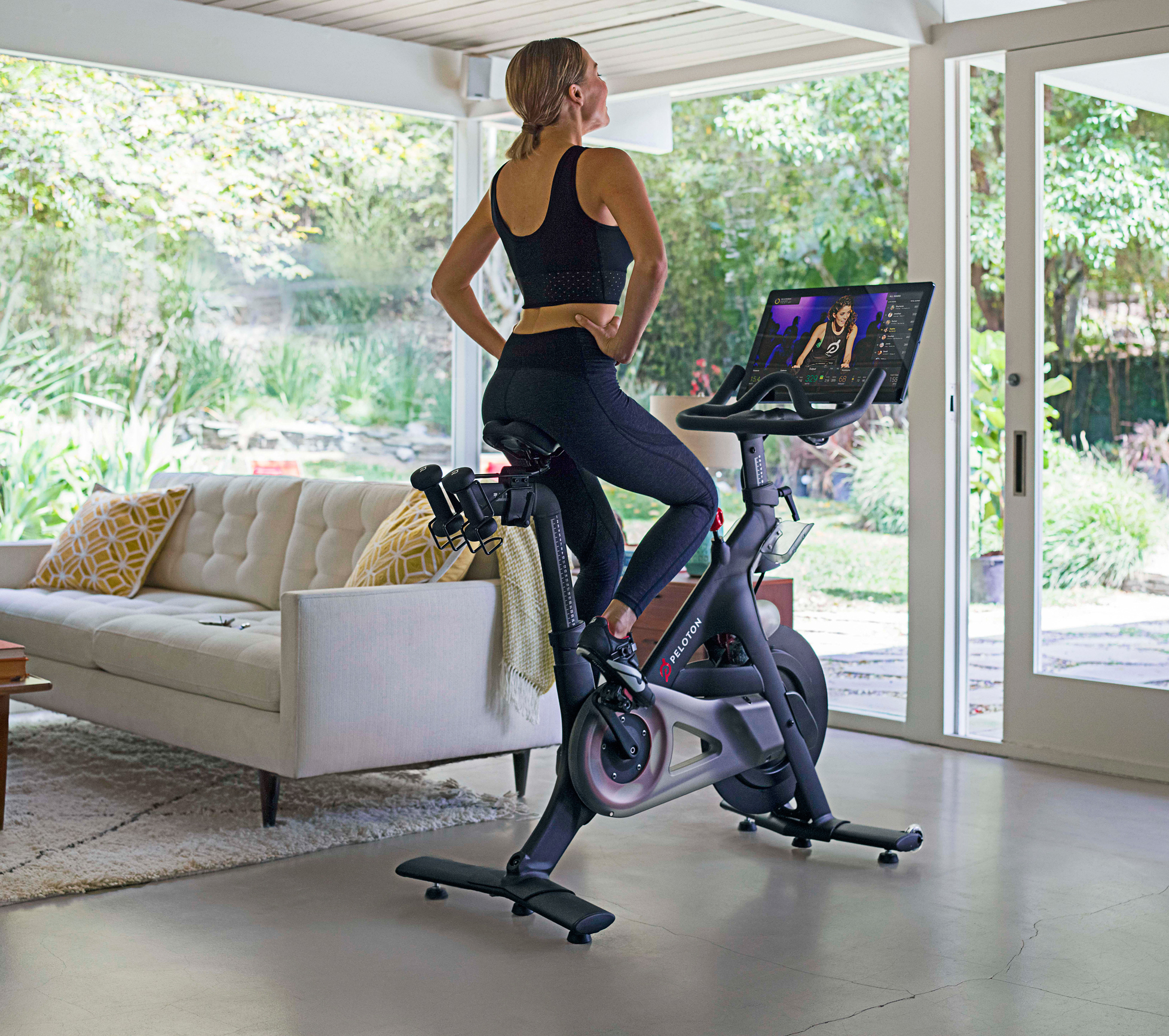
It’s unclear at this point whether home-based offerings like Peloton will have a positive or negative impact on gym membership
Nigel Bland
Deloitte LLP: partner
Nigel Bland

Assuming the current rate of market growth is maintained, at around 4 per cent per annum in 2017/2018, the number of clubs in Europe will increase by around a third by 2025 to over 80,000.

The factors that could support such a significant growth include the increasing significance of the millennials – who regard fitness as a must have – the wider range of products available, driven partly by the proliferation of boutiques, and the opportunity to provide specific offers for underserved markets. For example, our European survey shows that Germany, Switzerland and France achieved faster than average growth in 2018, largely driven by rapid expansion of the budget gyms into areas that were less well supplied. Overall penetration of 15+ year olds across Europe is still just below 10 per cent, so increasing that to around 13 per cent (still less than the UK, the Netherlands and much of Scandinavia) would provide more than enough demand for the additional 20,000 clubs.

"Consolidation is beginning to increase across Europe, which suggests that in certain markets, operators would prefer to remove a competitor than create more sites in competition with each other"

However, there are some indications that overall growth rates may begin to slow in the next few years. First, in 2018 the growth in clubs exceeded the growth in sector revenue at 3.4 per cent. Second, there is an emerging trend for non-site based fitness, with companies like Peloton combining group training with the convenience of home, or indeed a hotel room. Third, the level of consolidation is beginning to increase across Europe, which suggests that in certain markets, operators would prefer to remove a competitor than create more sites in competition with each other.

On balance, I believe the overall growth rates will slow over the next few years, but we are still likely to see another 10,000 to 15,000 clubs open over that period, assuming steady economic growth. Given that the sector will continue to grow, driven by the macro factors underpinning demand and this following wind, the well-funded, well operated companies will continue to achieve growth rates significantly above GDP.


Millennials regard fitness as an essential part of life shutterstock
Sign up here to get HCM's weekly ezine and every issue of HCM magazine free on digital.
https://www.leisureopportunities.co.uk/images/imagesX/HCM2019_8growth.jpg
How big could the European health and fitness industry grow? What models will have the biggest impact? We ask those who have the most up-to-date research
David Trunkfield, PwC: head of hospitality and leisure Karsten Hollasch, Deloitte: partner Herman Rutgers, Global Growth Partners: CEO Nigel Bland, Deloitte LLP: partner,UK health and fitness industry, European Health & Fitness Market Report,
HCM magazine
If the health service is to survive, we must recognise that it is a disease service – and that wellbeing rests with us, says the activity advocate and healthy ageing champion. He talks to Kate Cracknell
HCM magazine
Raphael Cuomo explores the powerful link between addiction, health and behaviour change
HCM magazine
For every member with a tripod and a big following, there are others irritated at the way equipment is being hogged or wary they’ll be in the background on someone’s Insta feed. Do influencers offer valuable, free marketing or are they just a nuisance? Kath Hudson finds out how operators are responding
HCM magazine
I experienced a blissful feeling of joy I hadn’t felt since I was a kid
HCM magazine
Small improvements to sleep, diet and physical activity have major benefits for the heart, according to new research from the University of Sydney
HCM promotional features
Sponsored
Greg Bradley looks at the shift towards strength training in gyms and advises on how operators can create the ultimate training environment
HCM promotional features
Sponsored
SnowDome Fitness has added 50 per cent more space with cutting-edge Technogym solutions
HCM promotional features
Sponsored
Starpool supports Olympic champion Marcell Jacobs, says Riccardo Turri
HCM promotional features
Sponsored
Third Space partnered with IndigoFitness to deliver a bespoke training space for its new club at The Whiteley
HCM promotional features
Sponsored
David Lloyd is stepping up its commitment to women’s health as it continues to explore what fit-for-purpose looks like for the female population
HCM promotional features
Sponsored
Find out how your gym can tap into the corporate wellness boom
HCM promotional features
Sponsored
EGYM has opened a new HQ in Paternoster Square, London and revealed a range of new launches
HCM promotional features
Sponsored
The industry is embracing consumer-facing tech. Now it’s time to streamline back-of-house systems with Orbit4, says Daniel Jones
HCM promotional features
Promotion
Performance Health Systems, manufacturer of Power Plate, has a new CEO, with an ambitious vision for the company
HCM promotional features
Latest News
An ambitious women’s only strength and lifting studio concept is set to launch in Dallas this ...
Latest News
Finnish outdoor fitness equipment specialist, Omnigym, has partnered with charity, Emmaüs Solidarité, to launch an ...
Latest News
Virgin Active has officially opened its redesigned Mayfair club, unveiling its latest Social Wellness Club ...
Latest News
Europe’s largest low-cost operator, Basic-Fit, has agreed to acquire 41 Wellyou clubs in Germany for ...
Latest News
Longevity is the most important motivator for today’s exercisers and social connection is key, according ...
Latest News
Until has opened its fourth club at Canary Wharf, in the iconic YY London building. ...
Latest News
Ben Allen has been appointed managing director at Common Bond. Having set the company up ...
Latest News
Les Mills, whose name became synonymous with one of the world's leading fitness brands, has ...
Opinion
promotion
Strength training has moved from the margins to the mainstream.
Opinion: Building smarter strength spaces for today’s operators
Featured supplier news
Featured supplier news: CoverMe extends matching service to personal training, rewriting how members and personal trainers connect
CoverMe, the global leader in fitness workforce management, today launches CoverMe PT, an on-demand personal training platform that connects the right personal trainer to the right client in under 10 seconds.
Featured supplier news
Featured supplier news: Cornerstone Connect helps Active Blackpool tackle health inequalities
Active Blackpool is deploying Cornerstone Connect, a new digital interface allowing disparate information from multiple systems to be aggregated into one dataset, to support its focus on reducing health inequalities and improving healthy life expectancy.
Company profiles
Company profile: Gharieni Group
With a presence in 140+ countries, Gharieni is trusted by the world’s most prestigious professional ...
Company profiles
Company profile: CoverMe Ltd
CoverMe Fitness, an app for seamless, on-demand management and cover solutions for sports and fitness ...
Supplier Showcases
Supplier Showcase - Future-proofing
Catalogue Gallery
Click on a catalogue to view it online
Featured press releases
Panatta press release: On Air Fitness chooses Panatta and its Made in Italy fitness equipment
French fitness chain On Air Fitness, with 113 clubs across France and internationally (Spain, Morocco and Portugal) and more than 430,000 members, has chosen to introduce Panatta equipment — a 12-machine circuit from the premium Free Weight Special line —
Featured press releases
ukactive press release: UK Active announces plans for National Fitness Day 2026
UK Active has announced the details of National Fitness Day 2026, with the flagship campaign set to take place on Wednesday 16 September 2026.
Directory
Fitness tracking platform
SpiviTech: Fitness tracking platform
Lockers
Crown Sports Lockers: Lockers
Spa and beauty equipment
Living Earth Crafts: Spa and beauty equipment
Hot tubs
MSpa International Ltd: Hot tubs
Water experiences and hydrotherapy solutions
Aquaform s.r.l.: Water experiences and hydrotherapy solutions
Industrial washing machines
Miele Company Limited: Industrial washing machines
Property & Tenders
Stratford, East London.
Lee Valley Regional Park Authority
Property & Tenders
Y Felinheli, LL56 4QN
Newmark
Property & Tenders
Diary dates
21-24 Sep 2026
The Langham Huntington Pasadena , Pasadena, United States
Diary dates
06-08 Oct 2026
Messe Stuttgart, Stuttgart, Germany
Diary dates
22-22 Oct 2026
QEII Conference Centre, London,
Diary dates
26-29 Oct 2027
Koelnmesse Exhibition Centre, Cologne, Germany
Diary dates

features

Ask the experts: European growth

The UK health and fitness industry has doubled in size since 2000. Will growth continue, or even gather pace? And what does this mean for the European health and fitness market? How big could it grow and what factors will have an impact? HCM asks those who have the most up to date research

Published in Health Club Management 2019 issue 8
David Trunkfield
PwC: head of hospitality and leisure
David Trunkfield

Research by PwC, called, UK Low Cost Gyms, shows that the low cost clubs have emerged as a clear category winner in the continued growth of the UK health and fitness market, which is currently worth around £5bn and has been growing in the region of 4 per cent a year over the last five years, doubling in size since 2000.

Low cost clubs have been the most significant driver of market growth and are likely to drive growth going forwards. In revenue terms, they’ve increased market share from 3 per cent in 2012, to 12 per cent currently. Members of low cost clubs also account for 25 per cent of gym members and 4 per cent of the UK population.

A number of factors continue to support the growth of low cost gyms. Health and fitness membership penetration has been increasing in both the UK and European territories, supported by the ability of the low cost operators to bring new members into the market and continued interest in health and fitness.

"We are now starting to see operators broaden the locations in which they operate, and increasingly targeting areas with a smaller population catchment"

The number of low cost gyms in the UK has increased tenfold from 60 in March 2011 to 654 in December 2018. W’re now starting to see operators broaden the locations in which they operate, and increasingly targeting areas with a smaller population catchment by developing new business models.

As they continue to gain market share, we believe there will be further scope for more low cost penetration in the UK. We estimate there’s a total opportunity for 1,200 to 1,400 low cost gyms in the UK, which is is 550 to 750 more than there are at present.

Our assessment is based on the current landscape, but as the concept evolves across location type and new gym and health club models are created, the overall opportunity is likely to increase.

Members of low-cost clubs make up 25 per cent of all gym members in the UK
Karsten Hollasch
Deloitte: partner
Karsten Hollasch

According to the European Health & Fitness Market Report 2019, published by EuropeActive and Deloitte, the European fitness market generated revenues of €27.2bn in 2018, with a total membership of 62.2m across nearly 62,000 fitness clubs at year-end.

From 2016 to 2018, membership in the European fitness market increased by an average of 3.8 per cent annually. If this trend continued, there would be more than 80 million members by 2025; and this figure could be as high as 86 million if the penetration rate increased from the current 7.8 per cent to 11 per cent, for example.

In terms of the number of clubs, the future development will likely be impacted by two opposing trends: the expected growth of small, specialised boutique studios, as well as the continued growth of large low-cost chains like McFIT, Basic-Fit, PureGym, The Gym Group, clever fit or FitX. Many countries still have a lot of potential, for example France, where Basic-Fit alone opened 92 clubs in 2018 – two every week, on average. Although boutiques will also have an impact, this will take longer, as the concept of boutique clubs needs to gain traction in the less mature markets.

"I don’t think Brexit will have a negative impact on the fitness market growth in Europe, as this is very much UK related"

If we assume these trends will even each other out, and average membership remains rather stable at around 1,000 members per club, this would imply around 80,000 clubs in 2025 based on an estimated membership of 80 million. However, assuming that the impact from large-scale operators is higher, this figure could also be closer to 70,000-75,000.

I don’t think Brexit will have a negative impact on the fitness market growth in Europe, as this is very much UK-related. What I think would make a considerable difference is more support from public institutions for health and fitness. This could also be driven by a further strengthening of the fitness industry associations.

Large, low-cost chains like McFIT continue to grow
Herman Rutgers
Global Growth Partners: CEO
Herman Rutgers

EuropeActive has a mantra of: ‘80 million members by 2025’, which was launched in 2015 projecting out one decade, and based on the assumption of an average growth in the number of members in the greater European region (EU plus Norway, Switzerland, Russia and Turkey) per year of around 5 per cent. Based on the actual data for 2018, we are on track to at least achieve that goal, possibly with a few million more.

If we achieve 80 million members and assume the same average of 1,000 members per club as in 2018, that would mean 80,000 facilities, versus last year’s 62,000, equating to 18,000 more sites. However, it is questionable to assume that the number of members per club will remain stable. In the USA, the average number of members per club is 1,487, almost 50 per cent more than in Europe. With the rise of the chains and the low cost clubs, it is more likely the average number of members per club will rise and at the same time we will see an increase in the number of smaller sized boutiques and studios.

"With the rise of the chains and the low cost clubs, it is more likely the average number of members per club will rise and at the same time we will see an increase in the number smaller sized boutiques and studios"

The 2018 data reveals big differences in membership numbers. FitX in Germany has the highest average number of members at 8,784. Pure Gym, the biggest low cost chain in the UK, has an average of 4,559 members per club and McFit, in Germany, achieves 6,771 per club. It is logical that the lower the price the higher the number of members per club and that we see much lower average membership numbers per site for the boutiques and studios.

The impact of the home market will also be of influence. Peloton has just launched in the UK and will enter Germany later this year, but if anything I believe these developments will be positive for the health and fitness industry, as they will promote exercise to new target groups. Research has shown that people who exercise at home are more loyal health club members.

In conclusion, my guesstimate is that we will have anywhere between 70,000 and 80,000 facilities in Europe by 2025.

It’s unclear at this point whether home-based offerings like Peloton will have a positive or negative impact on gym membership
Nigel Bland
Deloitte LLP: partner
Nigel Bland

Assuming the current rate of market growth is maintained, at around 4 per cent per annum in 2017/2018, the number of clubs in Europe will increase by around a third by 2025 to over 80,000.

The factors that could support such a significant growth include the increasing significance of the millennials – who regard fitness as a must have – the wider range of products available, driven partly by the proliferation of boutiques, and the opportunity to provide specific offers for underserved markets. For example, our European survey shows that Germany, Switzerland and France achieved faster than average growth in 2018, largely driven by rapid expansion of the budget gyms into areas that were less well supplied. Overall penetration of 15+ year olds across Europe is still just below 10 per cent, so increasing that to around 13 per cent (still less than the UK, the Netherlands and much of Scandinavia) would provide more than enough demand for the additional 20,000 clubs.

"Consolidation is beginning to increase across Europe, which suggests that in certain markets, operators would prefer to remove a competitor than create more sites in competition with each other"

However, there are some indications that overall growth rates may begin to slow in the next few years. First, in 2018 the growth in clubs exceeded the growth in sector revenue at 3.4 per cent. Second, there is an emerging trend for non-site based fitness, with companies like Peloton combining group training with the convenience of home, or indeed a hotel room. Third, the level of consolidation is beginning to increase across Europe, which suggests that in certain markets, operators would prefer to remove a competitor than create more sites in competition with each other.

On balance, I believe the overall growth rates will slow over the next few years, but we are still likely to see another 10,000 to 15,000 clubs open over that period, assuming steady economic growth. Given that the sector will continue to grow, driven by the macro factors underpinning demand and this following wind, the well-funded, well operated companies will continue to achieve growth rates significantly above GDP.
Millennials regard fitness as an essential part of life shutterstock
Sign up here to get HCM's weekly ezine and every issue of HCM magazine free on digital.

https://www.leisureopportunities.co.uk/images/imagesX/HCM2019_8growth.jpg
How big could the European health and fitness industry grow? What models will have the biggest impact? We ask those who have the most up-to-date research
David Trunkfield, PwC: head of hospitality and leisure Karsten Hollasch, Deloitte: partner Herman Rutgers, Global Growth Partners: CEO Nigel Bland, Deloitte LLP: partner,UK health and fitness industry, European Health & Fitness Market Report,
Latest News
An ambitious women’s only strength and lifting studio concept is set to launch in Dallas this ...
Latest News
Finnish outdoor fitness equipment specialist, Omnigym, has partnered with charity, Emmaüs Solidarité, to launch an ...
Latest News
Virgin Active has officially opened its redesigned Mayfair club, unveiling its latest Social Wellness Club ...
Latest News
Europe’s largest low-cost operator, Basic-Fit, has agreed to acquire 41 Wellyou clubs in Germany for ...
Latest News
Longevity is the most important motivator for today’s exercisers and social connection is key, according ...
Latest News
Until has opened its fourth club at Canary Wharf, in the iconic YY London building. ...
Latest News
Ben Allen has been appointed managing director at Common Bond. Having set the company up ...
Latest News
Les Mills, whose name became synonymous with one of the world's leading fitness brands, has ...
Latest News
People taking GLP-1 weight loss medications such as Ozempic, Wegovy, Mounjaro and Zepbound may be ...
Latest News
Low-cost gym operator, PureGym, is trialling recovery zones at two of its UK sites, democratising ...
Latest News
In a milestone moment, mental health has become a core part of CIMSPA’s occupational professional ...
Opinion
promotion
Strength training has moved from the margins to the mainstream.
Opinion: Building smarter strength spaces for today’s operators
Featured supplier news
Featured supplier news: CoverMe extends matching service to personal training, rewriting how members and personal trainers connect
CoverMe, the global leader in fitness workforce management, today launches CoverMe PT, an on-demand personal training platform that connects the right personal trainer to the right client in under 10 seconds.
Featured supplier news
Featured supplier news: Cornerstone Connect helps Active Blackpool tackle health inequalities
Active Blackpool is deploying Cornerstone Connect, a new digital interface allowing disparate information from multiple systems to be aggregated into one dataset, to support its focus on reducing health inequalities and improving healthy life expectancy.
Company profiles
Company profile: Gharieni Group
With a presence in 140+ countries, Gharieni is trusted by the world’s most prestigious professional ...
Company profiles
Company profile: CoverMe Ltd
CoverMe Fitness, an app for seamless, on-demand management and cover solutions for sports and fitness ...
Supplier Showcases
Supplier Showcase - Future-proofing
Catalogue Gallery
Click on a catalogue to view it online
Featured press releases
Panatta press release: On Air Fitness chooses Panatta and its Made in Italy fitness equipment
French fitness chain On Air Fitness, with 113 clubs across France and internationally (Spain, Morocco and Portugal) and more than 430,000 members, has chosen to introduce Panatta equipment — a 12-machine circuit from the premium Free Weight Special line —
Featured press releases
ukactive press release: UK Active announces plans for National Fitness Day 2026
UK Active has announced the details of National Fitness Day 2026, with the flagship campaign set to take place on Wednesday 16 September 2026.
Directory
Fitness tracking platform
SpiviTech: Fitness tracking platform
Lockers
Crown Sports Lockers: Lockers
Spa and beauty equipment
Living Earth Crafts: Spa and beauty equipment
Hot tubs
MSpa International Ltd: Hot tubs
Water experiences and hydrotherapy solutions
Aquaform s.r.l.: Water experiences and hydrotherapy solutions
Industrial washing machines
Miele Company Limited: Industrial washing machines
Property & Tenders
Stratford, East London.
Lee Valley Regional Park Authority
Property & Tenders
Y Felinheli, LL56 4QN
Newmark
Property & Tenders
Diary dates
21-24 Sep 2026
The Langham Huntington Pasadena , Pasadena, United States
Diary dates
06-08 Oct 2026
Messe Stuttgart, Stuttgart, Germany
Diary dates
22-22 Oct 2026
QEII Conference Centre, London,
Diary dates
26-29 Oct 2027
Koelnmesse Exhibition Centre, Cologne, Germany
Diary dates
Search news, features & products:
Find a supplier:
Partner sites