










We Work Well Events
We Work Well Events
We Work Well Events
Follow Health Club Management on Twitter Like Health Club Management on Facebook Join the discussion with Health Club Management on LinkedIn
FITNESS, HEALTH, WELLNESS

people

Interview: Dr Ollie Lawton

The recent restructure of the NHS has brought new opportunities for physical activity providers to collaborate with the medical sector. Dr Ollie Lawton speaks to Kate Cracknell about getting into fitness
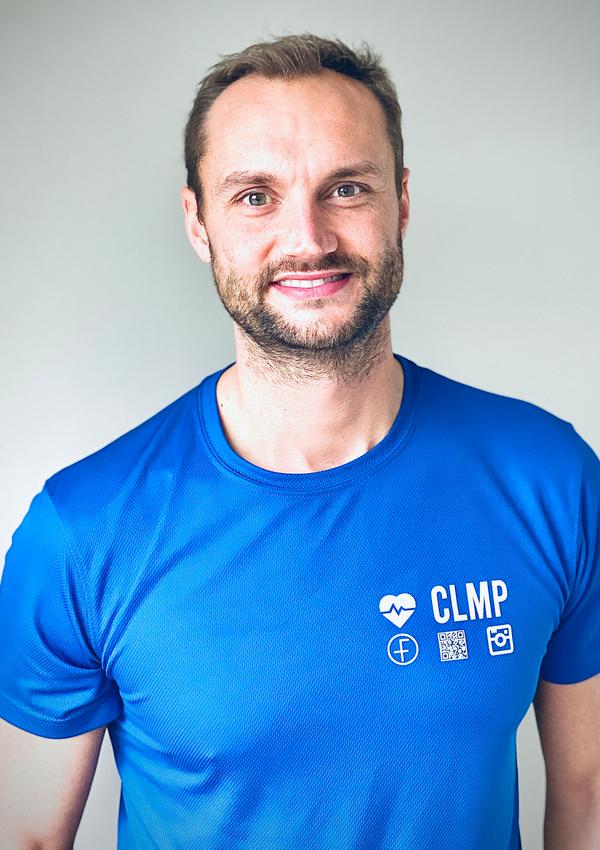
By Kate Cracknell | Published in Health Club Management 2020 issue 2
Dr Ollie Lawton
Dr Ollie Lawton
People come in with problems and the NHS is absolutely brilliant at fixing things when they’ve gone wrong or are broken. But it’s all reactive: unfortunately, it’s not very good at stopping things getting broken in the first place

Ollie, how long have you been a GP?
I’ve been a GP since 2013 and at my current practice – Clarendon Lodge Medical Practice – for six years. I’ve been a partner for five years.

I also have another role, one day a week, as clinical director for North Leamington Primary Care Network; since 1 July 2019, it has been a contractual obligation for GPs to become part of such a network.

In our area, four practices have come together and joined forces in a Primary Care Network, and we get some separate funding to run that network. It makes us more resilient as businesses and gives us an ability to share staff and focus on bigger projects.

But most important of all, it allows us to approach healthcare from a more strategic level, working with other sectors that share our goals of improving health and care, such as social care, education, the third sector and the voluntary sector. The fitness industry is definitely part of that.

Over the next five to 10 years, Primary Care Networks will become the vehicle through which innovative projects are delivered, and that’s important for HCM’s readership, because if they want to collaborate with the NHS in some way – if a local gym wants to come and give tasters sessions, for example – the local Primary Care Network will likely be their point of contact.

How open are GP surgeries to collaboration?
We probably don’t do enough of it, but I don’t think you’ll find a GP out there who says exercise isn’t great. I don’t think it’s a problem of ethos among general practice or secondary care – we’re all doctors and I think we’re all on board with it. It’s just the way the NHS functions and the pressures on us: we simply don’t have enough time or space to think about proactive approaches.

People come in with problems and the NHS is absolutely brilliant at fixing things when they’ve gone wrong or are broken. But it’s all reactive: unfortunately, it’s not very good at stopping things getting broken in the first place, and that’s just down to pressure.

In a 10-minute consultation, we could probably squeeze in: ‘I think you should get moving’, maybe mention Parkrun, but to be honest there’s very limited benefit in saying: ‘Here’s a leaflet, go and find out.’

Research shows, if people aren’t exercising, it isn’t because of a lack of facilities. It’s because of the softer stuff: What do I wear? Who do I go with, because I don’t know anyone there? What do I need to take with me? In a 10-minute consultation with someone who has never really exercised before, you don’t have time to have that discussion in any meaningful way.

What can be done?
It takes a mentality switch. You have to be willing to say: ‘I’m going to take some time out of treating ill people – those who are ringing up every day to see us – and create a bit of space to invest in the future.’
That’s what we’re trying to shift at our practice, and it’s the new Primary Care Network that’s driving this.

I now have that day a week to focus on this agenda. There are other important benefits to this set-up – one crucial point is that there will now be fully-funded social prescribers in every Primary Care Network. We’ve just recruited ours, for example.

I see these social prescribers as becoming the link between health and social care locally. They don’t need medical degrees to do this work. What they need is time to speak to people, and even do things with them, and this is what they’ll have.

These social prescribers will be given a caseload – a list of high-risk patients – and they’ll call them and ask: ‘What are you interested in? Why don’t we go for a walk together? Or to the allotment? Or for a kick-about with the local football team? I’ll do that with you.’ And then they’ll follow up with them regularly to see how they’re getting on. I think this will change things massively when it kicks in over the coming months.

The focus will vary by area: we have a very elderly population, so our social prescribers will be doing a lot around dementia and isolation. But I suspect that across every network in the country, diabetes, obesity and cardiovascular disease will be big areas of focus.

Are you able to do anything within your practice?
We’ve launched a virtual fitness club, on our website and through social media, which we’ve called a club because we really want to push the community aspect.

The idea is that members of the community – our patients who want to be part of the club – can share their stories to inspire and motivate each other to be active, and we can signpost people towards local activity opportunities through this network.

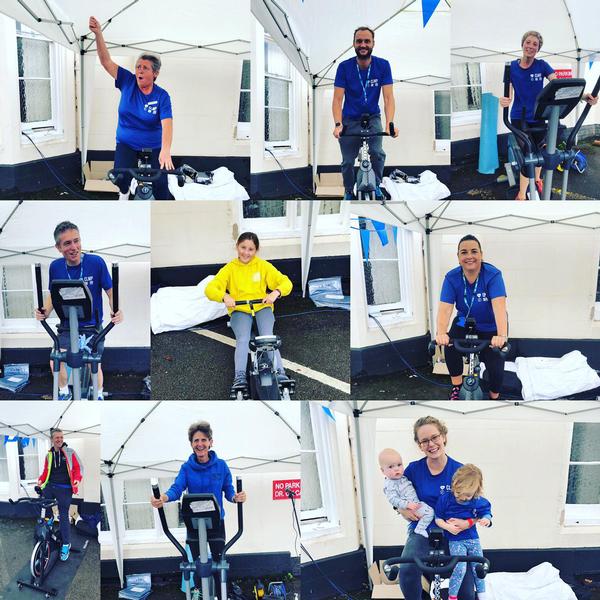
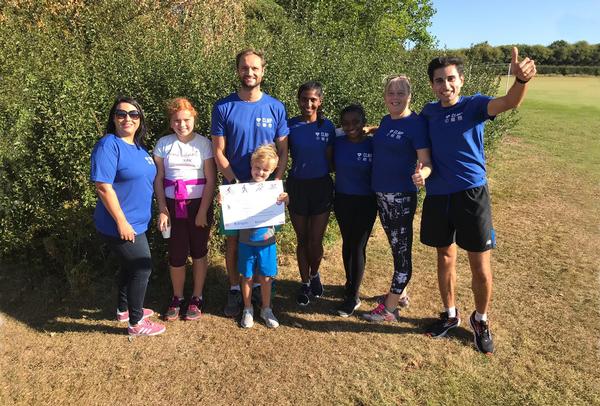
In fact, we originally launched it with a focus on Parkrun: patients could add the miles they had run to our cumulative total, with an overall goal of 10,000km. We’re still working towards that goal: if anyone is going for a run or a walk or a cycle, on their own or with their family, we give them T-shirts and they do their activity, clock the miles on their phone and upload a photo – preferably in our T-shirt – and add our hashtags. We then deduct their miles from our goal.

However, we recognised running is a tough entry point into exercise, so we broadened the club to encompass any form of activity, even if it’s just going down to the allotment and moving some soil around. That still has great benefits for physical and mental health.

I’m reluctant to be too targeted in what we’re doing. I want this to be for everybody, because I think that makes it a social norm. I realise it will probably attract mostly people who are already active, but the whole point for now is gathering as many stories as we can.

For example, we have an excellent blog being written by one of our GPs, who will admit she has struggled with her weight and managing a healthy lifestyle and who’s now sharing her experiences of getting into exercise. I think she’s being incredibly brave opening herself up like this.

Once we have enough stories, we can start to actively approach more high-risk patients.

So, that’s the basis of the club. And the great thing is that doing it this way allows us to separate it from what we do as a medical practice.

Avoiding red tape
If you want to do something like this as a medical practice, you have to work through quite a lot of NHS red tape – I’m sure many of your readers will have struggled with the tight procurement laws and restrictions on what the NHS can support.

But we’ve created a separate entity, which means we can have relationships with gyms, fitness instructors and other fitness providers. I’ve never really understood why all the contracts awarded by the public sector have to go to the huge providers. I’d rather have a broader menu of options to offer people.

Yes, some of the providers are going to be smaller, but as long as we go through due diligence to make sure they’re safe, why don’t we do that? Why don’t we collaborate with the individuals out there who want to make a difference, and who are running all the community-level activities that might appeal to the less active members of our populations?

I think there are loads of smaller clubs out there that could offer something really meaningful – they just don’t have the bidding power to go after the local authority contracts, and to me that’s wrong.

With whom are you collaborating?
In our club, we’ll advertise any activity that helps get more people active. The relationships are loose – nothing contractual or financially benefiting either party. We just want patients to get fitter, so we want to share as many opportunities with them as possible, to make it easy and appealing for them to get active.

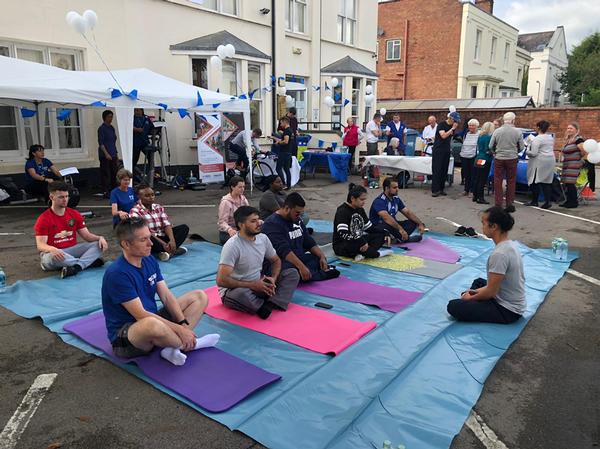
We had a launch day for our new club, and various providers were there: Everyone Active had a stall, we had tae kwondo and yoga, we had the Wasps rugby team running HIIT sessions. It’s predominantly an online club, but we’re planning to do more of these events.

I also approached Freeletics, which is an app I really like, and they came back to say they’d give us a discount code for all our patients.

So, we really are happy to work with anyone who shares our goals of a more active community.

With the dawn of the new philosophy of prevention in primary care that’s being led by Simon Stevens – CEO of the NHS – I’m hopeful such relationships will become easier and easier to form.

How’s your club performing?
We’re still at the stage of getting a load of evidence on there – enough pictures, enough stories – but I think we’re almost ready to more actively promote the club and work to get more followers across our network.

At the moment, our goal is simply to get more followers on social media, because we know that’s a great way to reach people with health messaging. We also know, if they’re engaging with the club, they’re more likely to be active – and there seems to be no reluctance to share stories. Patients are very proud about what they’ve achieved: the weight lost, cholesterol levels reduced and so on.

We currently have over 100 views a day, which for our patient population is, I think, OK at this early stage.

Longer term, we’ll look at health outcomes as well. We’ll track a group of patients with pre-diabetes and see what benefits they gain from the club.

There’s a lot of research on how to predict cardiovascular risk out there already, so we’ll probably piggyback on that and track this at-risk group as well.

I’d also like to see our whole Primary Care Network embrace the fitness club. It might have started at a practice level, but certainly in my mind it’s something that would function better on a bigger scale, across a network of practices. We’re still experimenting for now, and we need to feel our way through the next six months or so, but in phase two, when we do more events and more people start accessing it, it would be great to roll it across our network.

Will you ever build a physical club?
We’re miles off that, but yes, we would very much like to do that. We’re already looking for new premises and when we move, we want to include a dedicated gym space. In fact, it will probably be as a network that we do this, with all four practices coming together.

I envisage it as a studio space – a room with kit – that would be completely publicly funded. We could rent it out for free to anybody in the local area who wanted to come and deliver services from there.

I don’t know of any practice in the country that does that, but it would be great – if you had a patient in front of you who was struggling with back pain or whatever – to be able to say: ‘There’s a session here on a Wednesday night, pay £3 and come and do it.’

We’d be very careful not to threaten other businesses locally – we wouldn’t want to do that.

I’m getting ahead of myself, I know, but I think the model could be that providers would come in to do taster sessions, as at our launch event. If people enjoyed it, they could continue the activity elsewhere.

I see it as a win-win. The instructors would be happy because they wouldn’t have to pay for the room. Patients would be happy because the recommendation would come from a healthcare professional, which would in turn apply a bit of gentle pressure to actually do it.

Because the NHS is a trusted brand. If I were to say to a patient, ‘you should go and do Parkrun’, it would have a bigger impact than them just seeing an advert for Parkrun. But if we actually had dedicated premises to deliver activities from, working in collaboration with other sectors, that would take it to a whole new level.

Ultimately, as primary care clinicians, we have to be thinking about other sectors that can support what we do. The NHS is going to be crippled with increasing numbers of patients and chronic disease. We’re living longer, and the funding isn’t increasing to counteract that. So, we need to look at things outside of the NHS that can help. This is where I feel the health service and the fitness sector can come together.

What would be your call to arms to other GPs?
Being a GP is a tough job: it involves long hours and can be emotionally and physically draining.

My experience is that it feels absolutely great to do something away from the day-to-day work of general practice with all the pressures that work involves.

I might be a bit idealistic, but in the long term I also believe initiatives such as our club will help us.

In 20 years’ time, by helping our population to become fitter and healthier, projects like this can reduce our workload. We’ll be able to spend our time on the people who are really poorly, rather than those who have preventable illnesses.

So, as a call to arms, I would say it feels great being part of a social movement like this. It’s energised our whole practice. It’s something completely new.

We talk about it all the time – everyone is coming up with ideas. Our receptionists are coming in and telling us what activities they did the night before. A nurse who has just gone off to have a hip replaced is constantly posting the 20km she’s just done on her bike, which is something she’d never done before.

It’s been a really energising, positive experience for us – and I think part of that is that it’s totally separate, and away from the grind of general practice. If you use that phrase, most GPs will know exactly what I mean!

Finally, ours might be just a small local initiative at the moment, but I’m sure there are loads of similar projects going on elsewhere. We want to learn from those, and for them to learn from us, so please follow us and together we can make this thing bigger.

Find out more:
www.clmp.org.uk
Facebook: Clarendon Lodge Medical Practice
Twitter: @clarlodge
instagram: @clarendonlodgemedical

Sign up here to get HCM's weekly ezine and every issue of HCM magazine free on digital.
Lawton has launched a new virtual fitness club off the back of his GP surgery / Shutterstock/Dotshock
Lawton’s GP surgery connects with local groups and patients to encourage activity
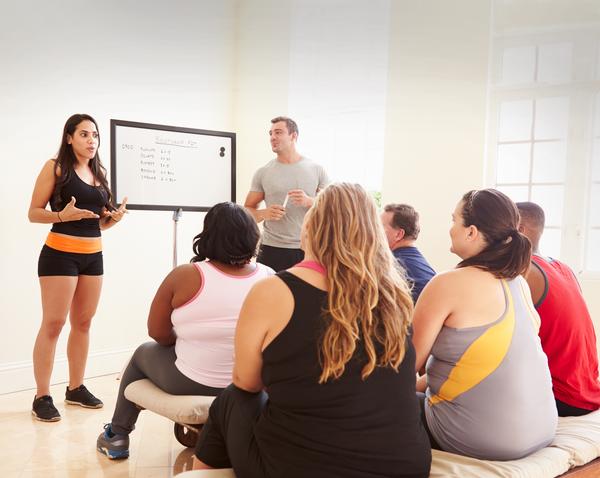
Lawton says the activity sector and the NHS are natural allies in the battle for prevention / Shutterstock/Monkey Business
The Clarendon Lodge Club launch saw operators such as Everyone Active offering activity tasters
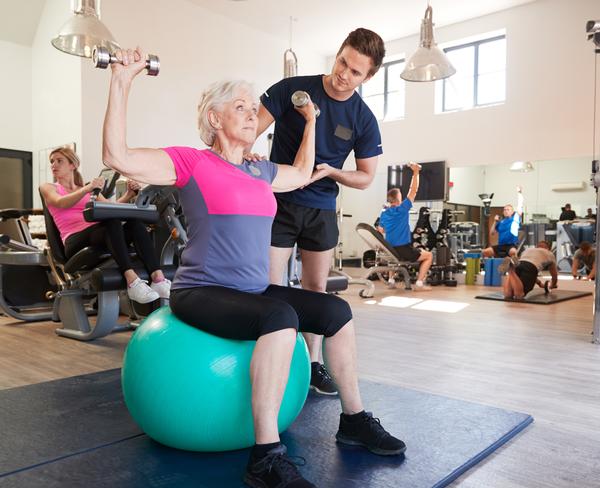
Lawton aspires to create shared studio spaces which can be used to deliver health and activity interventions in partnership with the fitness industry / Shutterstock/Monkey Business images
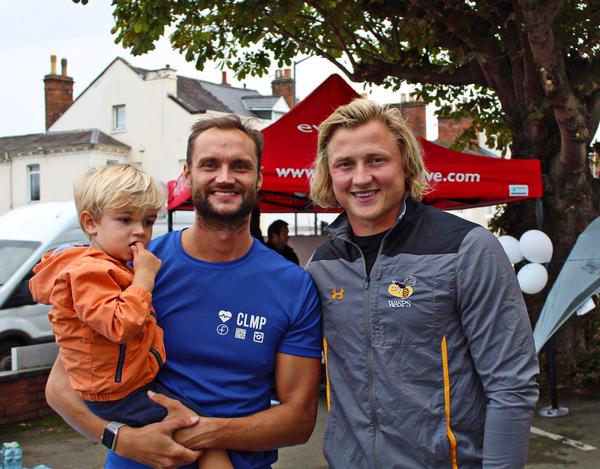
Wigan Wasps’ Tommy Taylor (right), with Ollie Lawton at the Clarendon Lodge open day
https://www.leisureopportunities.co.uk/images/imagesX/127023_565283.jpg
Dr Ollie Lawton, a Warwickshire GP, has launched a virtual fitness club at his practice...
Dr Ollie Lawton, Clarendon Lodge Medical, ,virtual fitness club, Primary Care Network
HCM magazine
For every member with a tripod and a big following, there are others irritated at the way equipment is being hogged or wary they’ll be in the background on someone’s Insta feed. Do influencers offer valuable, free marketing or are they just a nuisance? Kath Hudson finds out how operators are responding
HCM magazine
If the health service is to survive, we must recognise that it is a disease service – and that wellbeing rests with us, says the activity advocate and healthy ageing champion. He talks to Kate Cracknell
HCM magazine
Collaborations with the medical profession and greater aspirations around wellbeing are creating a need for more experts in our sector. It’s time to reboot our thinking around the workforce
HCM magazine
Small improvements to sleep, diet and physical activity have major benefits for the heart, according to new research from the University of Sydney
HCM magazine
As the entrepreneur who started Wexer, Fresh Fitness, Fitness DK and Repeat, as well as being a former elite athlete, Rasmus Ingerslev’s life looked perfect from the outside, but onthe inside it was a different story. He talks to Kath Hudson about healing old wounds
HCM promotional features
Sponsored
Greg Bradley looks at the shift towards strength training in gyms and advises on how operators can create the ultimate training environment
HCM promotional features
Sponsored
Find out how your gym can tap into the corporate wellness boom
HCM promotional features
Sponsored
SnowDome Fitness has added 50 per cent more space with cutting-edge Technogym solutions
HCM promotional features
Sponsored
Starpool supports Olympic champion Marcell Jacobs, says Riccardo Turri
HCM promotional features
Sponsored
David Lloyd is stepping up its commitment to women’s health as it continues to explore what fit-for-purpose looks like for the female population
HCM promotional features
Sponsored
Third Space partnered with IndigoFitness to deliver a bespoke training space for its new club at The Whiteley
HCM promotional features
Sponsored
EGYM has opened a new HQ in Paternoster Square, London and revealed a range of new launches
HCM promotional features
Promotion
BLK BOX has been reimagining elite performance spaces for more than a decade. Founder and former athlete, Greg Bradley, tells us what it takes
HCM promotional features
Sponsored
Pulse Fitness has created a new health club delivering an elevated wellness experience
HCM promotional features
Latest News
Crunch Fitness has announced the launch of Crunch Reform Pilates – its own reformer concept ...
Latest News
The 20th State of the Industry Report reveals a resilient, expanding and competitive sector, the ...
Latest News
Purpose Brands has announced its entry into the Italian market, having sold the franchise rights ...
Latest News
Fitness First UK is integrating red light therapy into its yoga and Pilates classes through ...
Latest News
Nuffield Health has told HCM that it takes its responsibilities towards its colleagues seriously and ...
Latest News
Technogym has announced the launch of the Run X World Treadmill Championship, the first world ...
Latest News
Shocked by the UK loneliness statistics, charitable trust Mytime Active has been doubling down on ...
Latest News
Portugal’s leading operator, SC Fitness, is celebrating a milestone by reaching 100 gyms.  The company ...
Opinion
promotion
Strength training has moved from the margins to the mainstream.
Opinion: Building smarter strength spaces for today’s operators
Featured supplier news
Featured supplier news: Supporting long-term health: why whole body vibration belongs in clinical settings
As healthcare continues to shift towards prevention, there’s a growing focus on helping people stay active, independent and feeling good for longer.
Featured supplier news
Featured supplier news: Reaching the people most gyms miss: Bedford Gym & Swim Campaign delivers 410 new members
One of the biggest mistakes the fitness industry still makes is advertising almost exclusively to people who already look and live like gym members.
Company profiles
Company profile: Matrix Fitness
Matrix provides equipment to facilities in all market sectors including private health clubs, residential housing, ...
Company profiles
Company profile: Parkwood Leisure
Parkwood Leisure provides bespoke management and professional support services for leisure, cultural, and health and ...
Supplier Showcases
Supplier Showcase - Future-proofing
Catalogue Gallery
Click on a catalogue to view it online
Featured press releases
MyZone press release: Myzone global data reveals the building blocks of consistent exercise habits
A major new report from Myzone, the global leader in motivation technology for fitness, reveals how motivation becomes habit and how that transformation drives member retention and long-term business growth.
Featured press releases
GLL press release: GLL highlights the importance of drowning prevention to kids nationally as summer holidays near
School assemblies and water safety messages as part of swim lessons.   The UK's largest public pools and swim school operator, GLL, is providing timely activities during Drowning Prevention Week (13-20 June 2026) to raise awareness of water safety ahead of kids breaking up for the summer holidays.
Directory
Lockers
Crown Sports Lockers: Lockers
Industrial washing machines
Miele Company Limited: Industrial washing machines
Hot tubs
MSpa International Ltd: Hot tubs
Water experiences and hydrotherapy solutions
Aquaform s.r.l.: Water experiences and hydrotherapy solutions
Fitness tracking platform
SpiviTech: Fitness tracking platform
Spa and beauty equipment
Living Earth Crafts: Spa and beauty equipment
Property & Tenders
Stratford, East London.
Lee Valley Regional Park Authority
Property & Tenders
Y Felinheli, LL56 4QN
Newmark
Property & Tenders
Diary dates
13-13 Jun 2026
Worldwide, Various,
Diary dates
21-24 Sep 2026
The Langham Huntington Pasadena , Pasadena, United States
Diary dates
06-08 Oct 2026
Messe Stuttgart, Stuttgart, Germany
Diary dates
22-22 Oct 2026
QEII Conference Centre, London,
Diary dates
26-29 Oct 2027
Koelnmesse Exhibition Centre, Cologne, Germany
Diary dates

people

Interview: Dr Ollie Lawton

The recent restructure of the NHS has brought new opportunities for physical activity providers to collaborate with the medical sector. Dr Ollie Lawton speaks to Kate Cracknell about getting into fitness

By Kate Cracknell | Published in Health Club Management 2020 issue 2
Dr Ollie Lawton
Dr Ollie Lawton
People come in with problems and the NHS is absolutely brilliant at fixing things when they’ve gone wrong or are broken. But it’s all reactive: unfortunately, it’s not very good at stopping things getting broken in the first place

Ollie, how long have you been a GP?
I’ve been a GP since 2013 and at my current practice – Clarendon Lodge Medical Practice – for six years. I’ve been a partner for five years.

I also have another role, one day a week, as clinical director for North Leamington Primary Care Network; since 1 July 2019, it has been a contractual obligation for GPs to become part of such a network.

In our area, four practices have come together and joined forces in a Primary Care Network, and we get some separate funding to run that network. It makes us more resilient as businesses and gives us an ability to share staff and focus on bigger projects.

But most important of all, it allows us to approach healthcare from a more strategic level, working with other sectors that share our goals of improving health and care, such as social care, education, the third sector and the voluntary sector. The fitness industry is definitely part of that.

Over the next five to 10 years, Primary Care Networks will become the vehicle through which innovative projects are delivered, and that’s important for HCM’s readership, because if they want to collaborate with the NHS in some way – if a local gym wants to come and give tasters sessions, for example – the local Primary Care Network will likely be their point of contact.

How open are GP surgeries to collaboration?
We probably don’t do enough of it, but I don’t think you’ll find a GP out there who says exercise isn’t great. I don’t think it’s a problem of ethos among general practice or secondary care – we’re all doctors and I think we’re all on board with it. It’s just the way the NHS functions and the pressures on us: we simply don’t have enough time or space to think about proactive approaches.

People come in with problems and the NHS is absolutely brilliant at fixing things when they’ve gone wrong or are broken. But it’s all reactive: unfortunately, it’s not very good at stopping things getting broken in the first place, and that’s just down to pressure.

In a 10-minute consultation, we could probably squeeze in: ‘I think you should get moving’, maybe mention Parkrun, but to be honest there’s very limited benefit in saying: ‘Here’s a leaflet, go and find out.’

Research shows, if people aren’t exercising, it isn’t because of a lack of facilities. It’s because of the softer stuff: What do I wear? Who do I go with, because I don’t know anyone there? What do I need to take with me? In a 10-minute consultation with someone who has never really exercised before, you don’t have time to have that discussion in any meaningful way.

What can be done?
It takes a mentality switch. You have to be willing to say: ‘I’m going to take some time out of treating ill people – those who are ringing up every day to see us – and create a bit of space to invest in the future.’
That’s what we’re trying to shift at our practice, and it’s the new Primary Care Network that’s driving this.

I now have that day a week to focus on this agenda. There are other important benefits to this set-up – one crucial point is that there will now be fully-funded social prescribers in every Primary Care Network. We’ve just recruited ours, for example.

I see these social prescribers as becoming the link between health and social care locally. They don’t need medical degrees to do this work. What they need is time to speak to people, and even do things with them, and this is what they’ll have.

These social prescribers will be given a caseload – a list of high-risk patients – and they’ll call them and ask: ‘What are you interested in? Why don’t we go for a walk together? Or to the allotment? Or for a kick-about with the local football team? I’ll do that with you.’ And then they’ll follow up with them regularly to see how they’re getting on. I think this will change things massively when it kicks in over the coming months.

The focus will vary by area: we have a very elderly population, so our social prescribers will be doing a lot around dementia and isolation. But I suspect that across every network in the country, diabetes, obesity and cardiovascular disease will be big areas of focus.

Are you able to do anything within your practice?
We’ve launched a virtual fitness club, on our website and through social media, which we’ve called a club because we really want to push the community aspect.

The idea is that members of the community – our patients who want to be part of the club – can share their stories to inspire and motivate each other to be active, and we can signpost people towards local activity opportunities through this network.

In fact, we originally launched it with a focus on Parkrun: patients could add the miles they had run to our cumulative total, with an overall goal of 10,000km. We’re still working towards that goal: if anyone is going for a run or a walk or a cycle, on their own or with their family, we give them T-shirts and they do their activity, clock the miles on their phone and upload a photo – preferably in our T-shirt – and add our hashtags. We then deduct their miles from our goal.

However, we recognised running is a tough entry point into exercise, so we broadened the club to encompass any form of activity, even if it’s just going down to the allotment and moving some soil around. That still has great benefits for physical and mental health.

I’m reluctant to be too targeted in what we’re doing. I want this to be for everybody, because I think that makes it a social norm. I realise it will probably attract mostly people who are already active, but the whole point for now is gathering as many stories as we can.

For example, we have an excellent blog being written by one of our GPs, who will admit she has struggled with her weight and managing a healthy lifestyle and who’s now sharing her experiences of getting into exercise. I think she’s being incredibly brave opening herself up like this.

Once we have enough stories, we can start to actively approach more high-risk patients.

So, that’s the basis of the club. And the great thing is that doing it this way allows us to separate it from what we do as a medical practice.

Avoiding red tape
If you want to do something like this as a medical practice, you have to work through quite a lot of NHS red tape – I’m sure many of your readers will have struggled with the tight procurement laws and restrictions on what the NHS can support.

But we’ve created a separate entity, which means we can have relationships with gyms, fitness instructors and other fitness providers. I’ve never really understood why all the contracts awarded by the public sector have to go to the huge providers. I’d rather have a broader menu of options to offer people.

Yes, some of the providers are going to be smaller, but as long as we go through due diligence to make sure they’re safe, why don’t we do that? Why don’t we collaborate with the individuals out there who want to make a difference, and who are running all the community-level activities that might appeal to the less active members of our populations?

I think there are loads of smaller clubs out there that could offer something really meaningful – they just don’t have the bidding power to go after the local authority contracts, and to me that’s wrong.

With whom are you collaborating?
In our club, we’ll advertise any activity that helps get more people active. The relationships are loose – nothing contractual or financially benefiting either party. We just want patients to get fitter, so we want to share as many opportunities with them as possible, to make it easy and appealing for them to get active.

We had a launch day for our new club, and various providers were there: Everyone Active had a stall, we had tae kwondo and yoga, we had the Wasps rugby team running HIIT sessions. It’s predominantly an online club, but we’re planning to do more of these events.

I also approached Freeletics, which is an app I really like, and they came back to say they’d give us a discount code for all our patients.

So, we really are happy to work with anyone who shares our goals of a more active community.

With the dawn of the new philosophy of prevention in primary care that’s being led by Simon Stevens – CEO of the NHS – I’m hopeful such relationships will become easier and easier to form.

How’s your club performing?
We’re still at the stage of getting a load of evidence on there – enough pictures, enough stories – but I think we’re almost ready to more actively promote the club and work to get more followers across our network.

At the moment, our goal is simply to get more followers on social media, because we know that’s a great way to reach people with health messaging. We also know, if they’re engaging with the club, they’re more likely to be active – and there seems to be no reluctance to share stories. Patients are very proud about what they’ve achieved: the weight lost, cholesterol levels reduced and so on.

We currently have over 100 views a day, which for our patient population is, I think, OK at this early stage.

Longer term, we’ll look at health outcomes as well. We’ll track a group of patients with pre-diabetes and see what benefits they gain from the club.

There’s a lot of research on how to predict cardiovascular risk out there already, so we’ll probably piggyback on that and track this at-risk group as well.

I’d also like to see our whole Primary Care Network embrace the fitness club. It might have started at a practice level, but certainly in my mind it’s something that would function better on a bigger scale, across a network of practices. We’re still experimenting for now, and we need to feel our way through the next six months or so, but in phase two, when we do more events and more people start accessing it, it would be great to roll it across our network.

Will you ever build a physical club?
We’re miles off that, but yes, we would very much like to do that. We’re already looking for new premises and when we move, we want to include a dedicated gym space. In fact, it will probably be as a network that we do this, with all four practices coming together.

I envisage it as a studio space – a room with kit – that would be completely publicly funded. We could rent it out for free to anybody in the local area who wanted to come and deliver services from there.

I don’t know of any practice in the country that does that, but it would be great – if you had a patient in front of you who was struggling with back pain or whatever – to be able to say: ‘There’s a session here on a Wednesday night, pay £3 and come and do it.’

We’d be very careful not to threaten other businesses locally – we wouldn’t want to do that.

I’m getting ahead of myself, I know, but I think the model could be that providers would come in to do taster sessions, as at our launch event. If people enjoyed it, they could continue the activity elsewhere.

I see it as a win-win. The instructors would be happy because they wouldn’t have to pay for the room. Patients would be happy because the recommendation would come from a healthcare professional, which would in turn apply a bit of gentle pressure to actually do it.

Because the NHS is a trusted brand. If I were to say to a patient, ‘you should go and do Parkrun’, it would have a bigger impact than them just seeing an advert for Parkrun. But if we actually had dedicated premises to deliver activities from, working in collaboration with other sectors, that would take it to a whole new level.

Ultimately, as primary care clinicians, we have to be thinking about other sectors that can support what we do. The NHS is going to be crippled with increasing numbers of patients and chronic disease. We’re living longer, and the funding isn’t increasing to counteract that. So, we need to look at things outside of the NHS that can help. This is where I feel the health service and the fitness sector can come together.

What would be your call to arms to other GPs?
Being a GP is a tough job: it involves long hours and can be emotionally and physically draining.

My experience is that it feels absolutely great to do something away from the day-to-day work of general practice with all the pressures that work involves.

I might be a bit idealistic, but in the long term I also believe initiatives such as our club will help us.

In 20 years’ time, by helping our population to become fitter and healthier, projects like this can reduce our workload. We’ll be able to spend our time on the people who are really poorly, rather than those who have preventable illnesses.

So, as a call to arms, I would say it feels great being part of a social movement like this. It’s energised our whole practice. It’s something completely new.

We talk about it all the time – everyone is coming up with ideas. Our receptionists are coming in and telling us what activities they did the night before. A nurse who has just gone off to have a hip replaced is constantly posting the 20km she’s just done on her bike, which is something she’d never done before.

It’s been a really energising, positive experience for us – and I think part of that is that it’s totally separate, and away from the grind of general practice. If you use that phrase, most GPs will know exactly what I mean!

Finally, ours might be just a small local initiative at the moment, but I’m sure there are loads of similar projects going on elsewhere. We want to learn from those, and for them to learn from us, so please follow us and together we can make this thing bigger.

Find out more:
www.clmp.org.uk
Facebook: Clarendon Lodge Medical Practice
Twitter: @clarlodge
instagram: @clarendonlodgemedical
Sign up here to get HCM's weekly ezine and every issue of HCM magazine free on digital.
Lawton has launched a new virtual fitness club off the back of his GP surgery / Shutterstock/Dotshock
Lawton’s GP surgery connects with local groups and patients to encourage activity
Lawton says the activity sector and the NHS are natural allies in the battle for prevention / Shutterstock/Monkey Business
The Clarendon Lodge Club launch saw operators such as Everyone Active offering activity tasters
Lawton aspires to create shared studio spaces which can be used to deliver health and activity interventions in partnership with the fitness industry / Shutterstock/Monkey Business images
Wigan Wasps’ Tommy Taylor (right), with Ollie Lawton at the Clarendon Lodge open day
https://www.leisureopportunities.co.uk/images/imagesX/127023_565283.jpg
Dr Ollie Lawton, a Warwickshire GP, has launched a virtual fitness club at his practice...
Dr Ollie Lawton, Clarendon Lodge Medical, ,virtual fitness club, Primary Care Network
Latest News
Crunch Fitness has announced the launch of Crunch Reform Pilates – its own reformer concept ...
Latest News
The 20th State of the Industry Report reveals a resilient, expanding and competitive sector, the ...
Latest News
Purpose Brands has announced its entry into the Italian market, having sold the franchise rights ...
Latest News
Fitness First UK is integrating red light therapy into its yoga and Pilates classes through ...
Latest News
Nuffield Health has told HCM that it takes its responsibilities towards its colleagues seriously and ...
Latest News
Technogym has announced the launch of the Run X World Treadmill Championship, the first world ...
Latest News
Shocked by the UK loneliness statistics, charitable trust Mytime Active has been doubling down on ...
Latest News
Portugal’s leading operator, SC Fitness, is celebrating a milestone by reaching 100 gyms.  The company ...
Latest News
Australia’s fast-growing fitness network, Viva Leisure, is adding a low-cost gym brand to its already ...
Latest News
Speedflex has launched a strength training programme for 10 to 16-year-olds, to make it safer, ...
Latest News
Tewinbury Farm Hotel in Hertfordshire, UK is expanding its premium leisure proposition with the launch ...
Opinion
promotion
Strength training has moved from the margins to the mainstream.
Opinion: Building smarter strength spaces for today’s operators
Featured supplier news
Featured supplier news: Supporting long-term health: why whole body vibration belongs in clinical settings
As healthcare continues to shift towards prevention, there’s a growing focus on helping people stay active, independent and feeling good for longer.
Featured supplier news
Featured supplier news: Reaching the people most gyms miss: Bedford Gym & Swim Campaign delivers 410 new members
One of the biggest mistakes the fitness industry still makes is advertising almost exclusively to people who already look and live like gym members.
Company profiles
Company profile: Matrix Fitness
Matrix provides equipment to facilities in all market sectors including private health clubs, residential housing, ...
Company profiles
Company profile: Parkwood Leisure
Parkwood Leisure provides bespoke management and professional support services for leisure, cultural, and health and ...
Supplier Showcases
Supplier Showcase - Future-proofing
Catalogue Gallery
Click on a catalogue to view it online
Featured press releases
MyZone press release: Myzone global data reveals the building blocks of consistent exercise habits
A major new report from Myzone, the global leader in motivation technology for fitness, reveals how motivation becomes habit and how that transformation drives member retention and long-term business growth.
Featured press releases
GLL press release: GLL highlights the importance of drowning prevention to kids nationally as summer holidays near
School assemblies and water safety messages as part of swim lessons.   The UK's largest public pools and swim school operator, GLL, is providing timely activities during Drowning Prevention Week (13-20 June 2026) to raise awareness of water safety ahead of kids breaking up for the summer holidays.
Directory
Lockers
Crown Sports Lockers: Lockers
Industrial washing machines
Miele Company Limited: Industrial washing machines
Hot tubs
MSpa International Ltd: Hot tubs
Water experiences and hydrotherapy solutions
Aquaform s.r.l.: Water experiences and hydrotherapy solutions
Fitness tracking platform
SpiviTech: Fitness tracking platform
Spa and beauty equipment
Living Earth Crafts: Spa and beauty equipment
Property & Tenders
Stratford, East London.
Lee Valley Regional Park Authority
Property & Tenders
Y Felinheli, LL56 4QN
Newmark
Property & Tenders
Diary dates
13-13 Jun 2026
Worldwide, Various,
Diary dates
21-24 Sep 2026
The Langham Huntington Pasadena , Pasadena, United States
Diary dates
06-08 Oct 2026
Messe Stuttgart, Stuttgart, Germany
Diary dates
22-22 Oct 2026
QEII Conference Centre, London,
Diary dates
26-29 Oct 2027
Koelnmesse Exhibition Centre, Cologne, Germany
Diary dates
Search news, features & products:
Find a supplier:
We Work Well Events
We Work Well Events
Partner sites