




















EGYM
EGYM
EGYM
Follow Health Club Management on Twitter Like Health Club Management on Facebook Join the discussion with Health Club Management on LinkedIn
FITNESS, HEALTH, WELLNESS

features

Strategy: Prescribing activity

Linking fitness professionals to the NHS

Published in Health Club Management 2019 issue 2
It’s now been agreed that the NHS needs to promote activity therapy alongside drug therapy, operative therapy and psychological therapy

There have been two revolutions in healthcare. The first in the 19th Century was the Public Health Revolution in which large-scale engineering of sewers and water systems – enabled by stable government and growing wealth – reduced mortality from the great epidemics that ravaged Europe.

The most feared were cholera and typhoid – and then came the clean water revolution as a solution.

The last 50 years have seen the second wave of change, the High Tech Revolution, in which developments such as MRI, transplantation, chemotherapy and joint replacement have transformed the health of individuals and populations, when delivered by well-organised services and funded by a growing economy.

However, at the end of this second revolution, we’re facing significant challenges, with rising demand and no parallel increase in finance.

Furthermore, we know that increases in life expectancy are stalling and that the gap in life expectancy between the wealthiest and most deprived subsections of society remains stubbornly wide.

Another challenge we face is population ageing, and there are great fears about the impact of this on individuals, their families, health and social care services and the economic wealth of nations.

However recent research has demonstrated that this fear is not based on evidence and that in fact disability, dementia and frailty can be prevented or delayed, providing we embrace the third healthcare revolution – the Activity Revolution.

COMBATTING THE NEW EPIDEMIC
Inactivity is a modern epidemic. Our bodies have evolved to be active, but we now live in an environment dominated by the car, the computer and the desk job.

Just as the clean water revolution required environmental and social change and also political support, so too does the third revolution. It’s now recognised that inactivity is a major preventable cause of our modern epidemics, where cancer, heart disease and type II diabetes have replaced cholera and typhoid.

Furthermore, we now know not only that activity can prevent many common diseases, but also that it can transform their treatment. It is – in the words of the Academy Medical Royal Colleges – “the miracle cure” and it’s been agreed that the NHS needs to promote activity therapy alongside drug therapy, operative therapy and psychological therapy.

THIRD healthcare revolution
Unlike the second healthcare revolution, activity therapy will not just be delivered by major hospitals and health centres. It will also harness the power of what has been called the third industrial revolution – namely citizens’ knowledge and the internet.

The real key to it is knowledge, and it’s clear that the public and many health service professionals are ignorant or muddled about the effects of ageing, loss of fitness and disease, and the great potential for prevention and treatment.

the impact of ageing
Ageing by itself isn’t a major cause of problems until people reach their mid-90s. It’s a normal biological process that reduces ability and resilience – namely the ability to respond to challenges. However, many people believe that the loss of physical capacity they experience from their 20s onwards is due to ageing, whereas it’s actually due to the modern epidemic – loss of fitness due to inactivity.

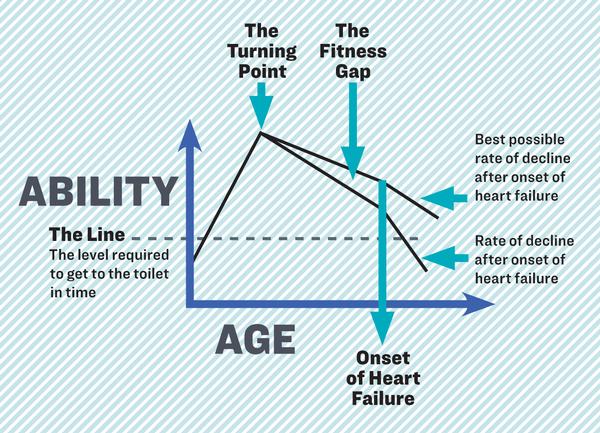
For most people, maximum ability starts to decline from their early 20s – usually when they get their first sitting job and car. A fitness gap then starts to open up between the best possible rate of decline and the actual rate of decline in their physical abilities and capacity.

For this reason loss of fitness and ageing are often confused. The picture becomes more complicated when disease occurs.

The impact of disease on fitness
About 40 per cent of 40-year-olds have one long term condition and a proportion have more than one. The proportion of people with long-term conditions then increases by approximately 10 per cent every decade.

However, this increase in disease is not only because of ageing but also as a result of being exposed to risks that are either environmental, social or personal, such as bad diet and sedentary behaviour.

What’s also emerging is the way loss of fitness complicates disease and accelerates increases in the fitness gap, in part because of the direct effect of that disease and the response to it in terms of treatment.

For example, the direct effect of a heart attack is on heart muscle, but it also increases risk for social reasons because other people, including professional carers and family, can assume that the onset of disease indicates the need for more “care” and less activity – whereas, scientifically, the opposite is what’s required.

This means negative beliefs and pessimistic attitudes towards health are the key factors complicating disease and loss of fitness, and these four factors relate – as shown in the diagram on the right.

Prescribing activity therapy
Of the 15 million people with long-term health conditions in the UK, about three million receive rehabilitation from highly skilled professionals. However, the remaining 13 million are simply given a pill, or a psychological intervention or some combination of the two.

What’s clear now is that all these people need activity therapy. Sometimes the activity therapy can replace the pill or psychological treatment, but often the two or three should be provided simultaneously.

Activity should be prescribed like a drug, not simply as an instruction, but as part of a process of information-giving, encouragement, facilitation and support.

We need to make use of the billions of interactions that people with long-term conditions have with doctors and nurses, health service staff and pharmacies, to keep nudging and encouraging them – but we also clearly need the full energy and skill of the fitness industry to swing in behind this drive to improve the health of the nation.

The fitness industry mostly sees people who want to reduce their risk of disease through activity, but it’s also starting to reach out to people who are living with long-term health conditions.

The launch of the new Universal Personalised Care initiative comes with the proposal to appoint 1,000 link workers whose responsibility it is to find therapeutic opportunities in addition to those provided by pharmacies, hospitals and mental health services.

This offers the best opportunity we’ve had so far to link the NHS and the fitness world in a single therapeutic alliance and we must work towards this goal with all possible haste to deliver on the Third Healthcare Revolution.


Sign up here to get HCM's weekly ezine and every issue of HCM magazine free on digital.
Sir Muir Gray
Sir Muir Gray
Loss of fitness due to inactivity can have wide-ranging effects on health
Health secretary Matt Hancock has a modern health epidemic to tackle
Ageing in the absence of disease needn’t be a problem until people reach their 90s / shutterstock
/ shutterstock_323449430
The fitness industry can start to reach out to those with long-term conditions / shutterstock
https://www.leisureopportunities.co.uk/images/imagesX/27153_390840.jpg
'It's now been agreed that the NHS needs to promote activity therapy alongside drug therapy, operative therapy and psychological therapy' – Sir Muir Gray on linking the activity sector with the NHS
Sir Muir Gray,Sir Muir Gray, NHS, active therapy revolution, drug therapy, operative therapy, psychological therapy, Matt Hancock,
HCM magazine
For every member with a tripod and a big following, there are others irritated at the way equipment is being hogged or wary they’ll be in the background on someone’s Insta feed. Do influencers offer valuable, free marketing or are they just a nuisance? Kath Hudson finds out how operators are responding
HCM magazine
Strength training is evolving, driven by changing consumer preferences. Julie Cramer talks to innovators about how their products are meeting this demand
HCM magazine
As the entrepreneur who started Wexer, Fresh Fitness, Fitness DK and Repeat, as well as being a former elite athlete, Rasmus Ingerslev’s life looked perfect from the outside, but onthe inside it was a different story. He talks to Kath Hudson about healing old wounds
HCM magazine
If the health service is to survive, we must recognise that it is a disease service – and that wellbeing rests with us, says the activity advocate and healthy ageing champion. He talks to Kate Cracknell
HCM magazine
I experienced a blissful feeling of joy I hadn’t felt since I was a kid
HCM promotional features
Sponsored
Find out how your gym can tap into the corporate wellness boom
HCM promotional features
Sponsored
David Lloyd is stepping up its commitment to women’s health as it continues to explore what fit-for-purpose looks like for the female population
HCM promotional features
Sponsored
Third Space partnered with IndigoFitness to deliver a bespoke training space for its new club at The Whiteley
HCM promotional features
Sponsored
Greg Bradley looks at the shift towards strength training in gyms and advises on how operators can create the ultimate training environment
HCM promotional features
Sponsored
Starpool supports Olympic champion Marcell Jacobs, says Riccardo Turri
HCM promotional features
Sponsored
SnowDome Fitness has added 50 per cent more space with cutting-edge Technogym solutions
HCM promotional features
Sponsored
EGYM has opened a new HQ in Paternoster Square, London and revealed a range of new launches
HCM promotional features
Sponsored
New launch, Salus House, elevates boutique wellness with high service levels and a partnership with Technogym
HCM promotional features
Promotion
BLK BOX has been reimagining elite performance spaces for more than a decade. Founder and former athlete, Greg Bradley, tells us what it takes
HCM promotional features
Latest News
Australia’s fast-growing fitness network, Viva Leisure, is adding a low-cost gym brand to its already ...
Latest News
Speedflex has launched a strength training programme for 10 to 16-year-olds, to make it safer, ...
Latest News
Tewinbury Farm Hotel in Hertfordshire, UK is expanding its premium leisure proposition with the launch ...
Latest News

Work is underway in Madrid on one of Europe’s most significant multi-functional complexes, ...

Latest News
PureGym is encouraging people to step away from their screens and go for a walk, ...
Latest News
Small improvements to sleep, diet quality, and physical activity, made in combination lead to a ...
Latest News
Therme Manchester’s 28-acre development, which will include interconnected glass pavilions that measure 65,000sq m, will ...
Latest News
The Yard Gym (TYG) is to become Nike Training’s official global training partner in a ...
Opinion
promotion
Strength training has moved from the margins to the mainstream.
Opinion: Building smarter strength spaces for today’s operators
Featured supplier news
Featured supplier news: Supporting long-term health: why whole body vibration belongs in clinical settings
As healthcare continues to shift towards prevention, there’s a growing focus on helping people stay active, independent and feeling good for longer.
Featured supplier news
Featured supplier news: W3Fit EMEA celebrates its fifth anniversary
Celebrating its milestone 5th anniversary, W3Fit EMEA returns in 2026 with an unmissable gathering of the Health & Fitness industry’s most influential leaders.
Company profiles
Company profile: Life Fitness/Hammer Strength
Life Fitness, Hammer Strength, and ICG are global leaders in premium fitness solutions, trusted by ...
Company profiles
Company profile: Places Leisure
Places Leisure aims to enlighten our communities about the benefits of a healthy lifestyle in ...
Supplier Showcases
Supplier Showcase - Future-proofing
Catalogue Gallery
Click on a catalogue to view it online
Featured press releases
ukactive press release: Are they Fit for Office? UK Active and Technogym throw down the gauntlet to MPs
Hundreds of staff, MPs and Peers from across Westminster have signed up for the Fit for Office parliamentary physical activity challenge, which takes place throughout June and is hosted by ukactive and Technogym.
Featured press releases
Innerva press release: Lex Leisure’s power-assisted exercise suite smashes targets in record time
Crook Log Leisure Centre has more than doubled the membership target for its new power- assisted exercise suite in less than six months.
Directory
Hot tubs
MSpa International Ltd: Hot tubs
Industrial washing machines
Miele Company Limited: Industrial washing machines
Water experiences and hydrotherapy solutions
Aquaform s.r.l.: Water experiences and hydrotherapy solutions
Lockers
Crown Sports Lockers: Lockers
Spa and beauty equipment
Oakworks Inc: Spa and beauty equipment
Fitness tracking platform
SpiviTech: Fitness tracking platform
Property & Tenders
Stratford, East London.
Lee Valley Regional Park Authority
Property & Tenders
Y Felinheli, LL56 4QN
Newmark
Property & Tenders
Diary dates
13-13 Jun 2026
Worldwide, Various,
Diary dates
21-24 Sep 2026
The Langham Huntington Pasadena , Pasadena, United States
Diary dates
06-08 Oct 2026
Messe Stuttgart, Stuttgart, Germany
Diary dates
22-22 Oct 2026
QEII Conference Centre, London,
Diary dates
26-29 Oct 2027
Koelnmesse Exhibition Centre, Cologne, Germany
Diary dates

features

Strategy: Prescribing activity

Linking fitness professionals to the NHS

Published in Health Club Management 2019 issue 2
It’s now been agreed that the NHS needs to promote activity therapy alongside drug therapy, operative therapy and psychological therapy

There have been two revolutions in healthcare. The first in the 19th Century was the Public Health Revolution in which large-scale engineering of sewers and water systems – enabled by stable government and growing wealth – reduced mortality from the great epidemics that ravaged Europe.

The most feared were cholera and typhoid – and then came the clean water revolution as a solution.

The last 50 years have seen the second wave of change, the High Tech Revolution, in which developments such as MRI, transplantation, chemotherapy and joint replacement have transformed the health of individuals and populations, when delivered by well-organised services and funded by a growing economy.

However, at the end of this second revolution, we’re facing significant challenges, with rising demand and no parallel increase in finance.

Furthermore, we know that increases in life expectancy are stalling and that the gap in life expectancy between the wealthiest and most deprived subsections of society remains stubbornly wide.

Another challenge we face is population ageing, and there are great fears about the impact of this on individuals, their families, health and social care services and the economic wealth of nations.

However recent research has demonstrated that this fear is not based on evidence and that in fact disability, dementia and frailty can be prevented or delayed, providing we embrace the third healthcare revolution – the Activity Revolution.

COMBATTING THE NEW EPIDEMIC
Inactivity is a modern epidemic. Our bodies have evolved to be active, but we now live in an environment dominated by the car, the computer and the desk job.

Just as the clean water revolution required environmental and social change and also political support, so too does the third revolution. It’s now recognised that inactivity is a major preventable cause of our modern epidemics, where cancer, heart disease and type II diabetes have replaced cholera and typhoid.

Furthermore, we now know not only that activity can prevent many common diseases, but also that it can transform their treatment. It is – in the words of the Academy Medical Royal Colleges – “the miracle cure” and it’s been agreed that the NHS needs to promote activity therapy alongside drug therapy, operative therapy and psychological therapy.

THIRD healthcare revolution
Unlike the second healthcare revolution, activity therapy will not just be delivered by major hospitals and health centres. It will also harness the power of what has been called the third industrial revolution – namely citizens’ knowledge and the internet.

The real key to it is knowledge, and it’s clear that the public and many health service professionals are ignorant or muddled about the effects of ageing, loss of fitness and disease, and the great potential for prevention and treatment.

the impact of ageing
Ageing by itself isn’t a major cause of problems until people reach their mid-90s. It’s a normal biological process that reduces ability and resilience – namely the ability to respond to challenges. However, many people believe that the loss of physical capacity they experience from their 20s onwards is due to ageing, whereas it’s actually due to the modern epidemic – loss of fitness due to inactivity.

For most people, maximum ability starts to decline from their early 20s – usually when they get their first sitting job and car. A fitness gap then starts to open up between the best possible rate of decline and the actual rate of decline in their physical abilities and capacity.

For this reason loss of fitness and ageing are often confused. The picture becomes more complicated when disease occurs.

The impact of disease on fitness
About 40 per cent of 40-year-olds have one long term condition and a proportion have more than one. The proportion of people with long-term conditions then increases by approximately 10 per cent every decade.

However, this increase in disease is not only because of ageing but also as a result of being exposed to risks that are either environmental, social or personal, such as bad diet and sedentary behaviour.

What’s also emerging is the way loss of fitness complicates disease and accelerates increases in the fitness gap, in part because of the direct effect of that disease and the response to it in terms of treatment.

For example, the direct effect of a heart attack is on heart muscle, but it also increases risk for social reasons because other people, including professional carers and family, can assume that the onset of disease indicates the need for more “care” and less activity – whereas, scientifically, the opposite is what’s required.

This means negative beliefs and pessimistic attitudes towards health are the key factors complicating disease and loss of fitness, and these four factors relate – as shown in the diagram on the right.

Prescribing activity therapy
Of the 15 million people with long-term health conditions in the UK, about three million receive rehabilitation from highly skilled professionals. However, the remaining 13 million are simply given a pill, or a psychological intervention or some combination of the two.

What’s clear now is that all these people need activity therapy. Sometimes the activity therapy can replace the pill or psychological treatment, but often the two or three should be provided simultaneously.

Activity should be prescribed like a drug, not simply as an instruction, but as part of a process of information-giving, encouragement, facilitation and support.

We need to make use of the billions of interactions that people with long-term conditions have with doctors and nurses, health service staff and pharmacies, to keep nudging and encouraging them – but we also clearly need the full energy and skill of the fitness industry to swing in behind this drive to improve the health of the nation.

The fitness industry mostly sees people who want to reduce their risk of disease through activity, but it’s also starting to reach out to people who are living with long-term health conditions.

The launch of the new Universal Personalised Care initiative comes with the proposal to appoint 1,000 link workers whose responsibility it is to find therapeutic opportunities in addition to those provided by pharmacies, hospitals and mental health services.

This offers the best opportunity we’ve had so far to link the NHS and the fitness world in a single therapeutic alliance and we must work towards this goal with all possible haste to deliver on the Third Healthcare Revolution.
Sign up here to get HCM's weekly ezine and every issue of HCM magazine free on digital.
Sir Muir Gray
Sir Muir Gray
Loss of fitness due to inactivity can have wide-ranging effects on health
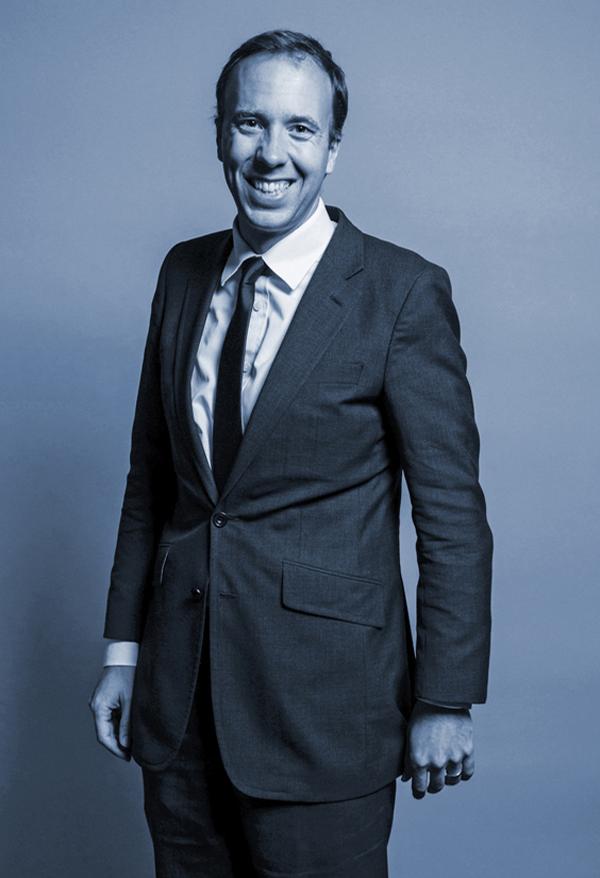
Health secretary Matt Hancock has a modern health epidemic to tackle
Ageing in the absence of disease needn’t be a problem until people reach their 90s / shutterstock
/ shutterstock_323449430
The fitness industry can start to reach out to those with long-term conditions / shutterstock
https://www.leisureopportunities.co.uk/images/imagesX/27153_390840.jpg
'It's now been agreed that the NHS needs to promote activity therapy alongside drug therapy, operative therapy and psychological therapy' – Sir Muir Gray on linking the activity sector with the NHS
Sir Muir Gray,Sir Muir Gray, NHS, active therapy revolution, drug therapy, operative therapy, psychological therapy, Matt Hancock,
Latest News
Australia’s fast-growing fitness network, Viva Leisure, is adding a low-cost gym brand to its already ...
Latest News
Speedflex has launched a strength training programme for 10 to 16-year-olds, to make it safer, ...
Latest News
Tewinbury Farm Hotel in Hertfordshire, UK is expanding its premium leisure proposition with the launch ...
Latest News

Work is underway in Madrid on one of Europe’s most significant multi-functional complexes, ...

Latest News
PureGym is encouraging people to step away from their screens and go for a walk, ...
Latest News
Small improvements to sleep, diet quality, and physical activity, made in combination lead to a ...
Latest News
Therme Manchester’s 28-acre development, which will include interconnected glass pavilions that measure 65,000sq m, will ...
Latest News
The Yard Gym (TYG) is to become Nike Training’s official global training partner in a ...
Latest News
Everlast Gyms' York site has reopened following a refurbishment to bring it up to the ...
Latest News
Luxury hospitality and wellness pioneer Jeremy McCarthy has launched Leisure Alchemy, a digital platform that ...
Latest News
A contrast therapy and breathwork facility called Reset has opened in Islington, London, in the ...
Opinion
promotion
Strength training has moved from the margins to the mainstream.
Opinion: Building smarter strength spaces for today’s operators
Featured supplier news
Featured supplier news: Supporting long-term health: why whole body vibration belongs in clinical settings
As healthcare continues to shift towards prevention, there’s a growing focus on helping people stay active, independent and feeling good for longer.
Featured supplier news
Featured supplier news: W3Fit EMEA celebrates its fifth anniversary
Celebrating its milestone 5th anniversary, W3Fit EMEA returns in 2026 with an unmissable gathering of the Health & Fitness industry’s most influential leaders.
Company profiles
Company profile: Life Fitness/Hammer Strength
Life Fitness, Hammer Strength, and ICG are global leaders in premium fitness solutions, trusted by ...
Company profiles
Company profile: Places Leisure
Places Leisure aims to enlighten our communities about the benefits of a healthy lifestyle in ...
Supplier Showcases
Supplier Showcase - Future-proofing
Catalogue Gallery
Click on a catalogue to view it online
Featured press releases
ukactive press release: Are they Fit for Office? UK Active and Technogym throw down the gauntlet to MPs
Hundreds of staff, MPs and Peers from across Westminster have signed up for the Fit for Office parliamentary physical activity challenge, which takes place throughout June and is hosted by ukactive and Technogym.
Featured press releases
Innerva press release: Lex Leisure’s power-assisted exercise suite smashes targets in record time
Crook Log Leisure Centre has more than doubled the membership target for its new power- assisted exercise suite in less than six months.
Directory
Hot tubs
MSpa International Ltd: Hot tubs
Industrial washing machines
Miele Company Limited: Industrial washing machines
Water experiences and hydrotherapy solutions
Aquaform s.r.l.: Water experiences and hydrotherapy solutions
Lockers
Crown Sports Lockers: Lockers
Spa and beauty equipment
Oakworks Inc: Spa and beauty equipment
Fitness tracking platform
SpiviTech: Fitness tracking platform
Property & Tenders
Stratford, East London.

Lee Valley Regional Park Authority
Property & Tenders
Y Felinheli, LL56 4QN
Newmark
Property & Tenders
Diary dates
13-13 Jun 2026
Worldwide, Various,
Diary dates
21-24 Sep 2026
The Langham Huntington Pasadena , Pasadena, United States
Diary dates
06-08 Oct 2026
Messe Stuttgart, Stuttgart, Germany
Diary dates
22-22 Oct 2026
QEII Conference Centre, London,
Diary dates
26-29 Oct 2027
Koelnmesse Exhibition Centre, Cologne, Germany
Diary dates
Search news, features & products:
Find a supplier:
EGYM
EGYM
Partner sites