





















GET HCM
magazine
Sign up for the FREE digital edition of HCM magazine and also get the HCM ezine and breaking news email alerts.
Not right now, thanksclose this window I've already subscribed!
Elevate Arena
Elevate Arena
Elevate Arena
Follow Health Club Management on Twitter Like Health Club Management on Facebook Join the discussion with Health Club Management on LinkedIn
FITNESS, HEALTH, WELLNESS

features

Statistics: Euro millions

The fitness market in Europe is entering a new phase of growth according to the European Health & Fitness Market Report 2019 by EuropeActive and Deloitte. HCM reports

Published in Health Club Management 2019 issue 6
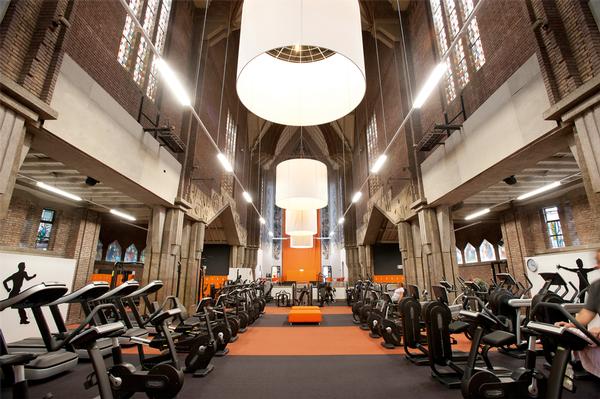
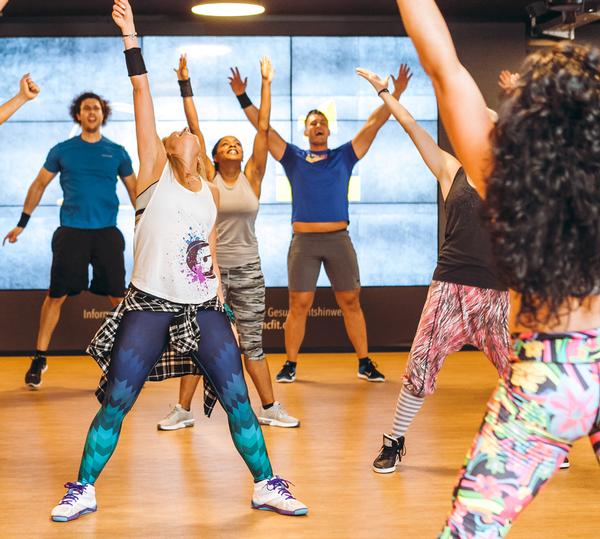
Above and right: RSG (formerly McFit)’s range of fitness concepts has contributed to its number one ranking for size
While Sweden (21.6 per cent) and Norway (21.4 per cent) have the highest ratios of fitness club members relative to the total population, Ukraine (2.9 per cent) and Turkey (2.6 per cent) have low penetration rates, which could indicate potential for growth

Five years ago, EuropeActive adopted its goal of the industry achieving 80 million members by 2025 – with about 46 million members reported at the time.

The industry is still on track to reach this target, as total membership within the European Union, Norway, Russia, Switzerland, Turkey and Ukraine increased by 3.5 per cent in 2018, to 62.2 million at the end of the year.

As Karsten Hollasch, head of consumer business at Deloitte Germany and co-author of the report, says: “The European fitness club market continued its growth trend in 2018, but significant potential remains, as only 7.8 per cent of Europeans have a fitness club membership.

“With the development and roll-out of innovative fitness concepts and the integration of new technologies, we expect membership to increase over the next years – towards EuropeActive’s goal of 80 million members by 2025.”

Depending on the development of the US market, which reported revenues of €26.6bn (US$ 30.0bn) in 2017, according to the 2018 IHRSA Global Report, the European fitness market (€27.2bn) could again be the largest fitness market in the world.

At constant foreign exchange rates, the European market size increased by 3.4 per cent compared to 2017. At actual foreign exchange rates, year-on-year growth amounted to 1.2 per cent, driven by negative exchange rate effects from some countries.

While the low-cost segment continues to grow in most markets, there is also an increasing number of boutiques and growth in offerings such as functional fitness, personal training and small group training. Digitalisation and fitness intermediaries are increasingly shaping the fitness landscape.

Latest Rankings
Among leading operators, German discount chain McFit Global Group – recently rebranded as RSG – retained its top position in terms of membership, with 1.95 million members across 288 clubs.

These operate under brands McFit (253 clubs), John Reed (20 clubs) and High5 (15 clubs). The company attributes the increase of 220,000 members over the previous year to strong campaigns, as well as the introduction of live classes in January 2018 and expansion of its product offering and target audience.

Ranking second is Netherlands-based low-cost chain Basic-Fit (1.84 million members), which generated by far the highest organic membership growth of all operators, with 316,000 additional members. This was largely due to the opening of 92 new clubs in France.

British low-cost operator Pure Gym ranks third, after increasing its membership by 85,000 to 1.01 million in 2018, becoming the third European fitness operator to reach 1 million members.

After these three market leaders come UK-based The Gym Group in fourth, German operators Clever Fit in fifth and FitX in sixth place.

Seven of the top 10 operators by membership can be considered low-cost operators. In addition, two others in the top 10 – SATS Group and Migros Group – have a low-cost brand in their portfolios, while five low-cost operators (McFit Group, Basic-Fit, Pure Gym, Fitness World and Clever Fit) also rank among the top 10 in terms of revenue.

UK-based premium operator, David Lloyd Leisure (DLL), again tops the ranking in Europe, with revenues of €545 million – an increase of €62 million over the previous year. DLL further expanded its international presence in 2018 through the acquisition of the City Green Sports and Health Club in France near Lake Geneva, as well as the acquisition of Health City’s Bad Homburg Club in Germany.

At the end of 2018, DLL operated 114 clubs in eight countries – including 99 clubs in the UK – with a total of 609,000 members, which places the company seventh in the European membership ranking. The company is also currently opening a club in India in partnership with Talwalkars (see HCM July 2019 for a full report).

Low-cost, high income
However, revenue growth was primarily driven by the low-cost businesses. Dutch operator, Basic-Fit, had the highest revenue growth, both in absolute terms with an increase of €76 million and in relative terms, with 23.3 per cent growth and a move from sixth to second place in the European revenue ranking. Basic-Fit had total revenues of €402 million.

McFit/RSG moved from fifth to fourth place in the ranking, following a 7.6 per cent increase in revenues, while fellow low-cost operators PureGym increased revenues by 12.8 per cent, Fitness World by 19.2 per cent and Clever Fit by 22.0 per cent, solidifying their top 10 rankings with double-digit growth.

By comparison, premium operators such as the Switzerland-based Migros Group, with minus 1.2 per cent, Nordic market leader SATS Group at plus 0.3 per cent, and UK-based companies Nuffield Health with plus 2.9 per cent and Virgin Active with minus 4.9 per cent, displayed only slight increases or even slight decreases in revenue. This was also affected by negative exchange rate effects in Switzerland, Sweden and the United Kingdom.

Mergers and acquisitions
SATS Group, L’Appart Fitness, Keep Cool and SportCity/Fit For Free are just some fitness club operators involved in mergers and acquisitions in the European health and fitness market over the last calendar year. In fact, 24 major M&A deals were recorded in 2018, the highest number since the European Health and Fitness Market Report has been published and an increase of four transactions over the previous year.

“The consistently high number of mergers and acquisitions underlines the notion that health and fitness remains a highly attractive sector for strategic and financial investors alike,” says Hollasch. “By supporting the innovation and expansion of fitness operators, these investors help the health and fitness industry to achieve further growth.”

Regarding investor types, 18 of the 24 transactions represented a sale to a strategic investor – ie, another market participant. In addition, five businesses were sold to financial investors, indicating the interest of investors in the fitness industry, while one company was sold to a private investor.

The large number of transactions from founders to strategic investors indicates an increasing market consolidation. However, consolidation in the operator market remains low compared to the commercial fitness equipment market, where the four leading companies – Life Fitness, Technogym, Johnson Health Tech and Precor – account for an estimated 75 per cent of the global and 86 per cent of the European commercial equipment market.

Germany – still the biggest
With a membership growth of 4.5 per cent to 11.1 million members, Germany strengthened its position as the country with the highest membership, ahead of the UK (9.9 million), France (6.0 million), Italy (5.5 million) and Spain (5.3 million).

At the same time, Germany ranked first in terms of market size, with total revenues of 5.3bn, according to research conducted by DSSV, DHfPG and Deloitte. However, this was partly due to negative exchange rate effects in the United Kingdom, as the UK market grew by 4.3 per cent at constant currency, compared to a 2.5 per cent growth in Germany.

Together, the top five countries represent nearly two thirds of the entire European market in terms of memberships and revenues. With penetration rates of about 9-15 per cent, these countries generally offer further market growth potential and are expected to be major drivers towards the set goal of 80 million total members in Europe by 2025. While Sweden (21.6 per cent) and Norway (21.4 per cent) have the highest ratios of fitness club members relative to the total population, Ukraine (2.9 per cent) and Turkey (2.6 per cent) have relatively low penetration rates, which could – in combination with their large populations – indicate potential for growth.

Macro trends
“Further growth in the fitness market will be driven by favourable macro-trends, such as increasing health awareness, but more importantly by innovative fitness concepts and business models that meet customer needs,” explains Hollasch. “The definition of the industry as a purely stationary fitness market is over: existing fitness concepts are being augmented by digital offerings and new market participants are developing entirely new purely digital concepts.”

Thus, technological innovations such as mobile fitness apps, wearables and online fitness as well as offline activities like outdoor group workouts, provide opportunities to be physically active outside a brick-and-mortar gym and continue to gain popularity in many European markets.

While these offerings might be considered a threat by some operators, many fitness providers also see opportunities and have started to incorporate these concepts into their business models.

With regard to EuropeActive’s goal of 80 million members by 2025, Herman Rutgers, board member at EuropeActive and co-author of the report, remains optimistic, saying: “2018 was another year of growth. It was interesting to see positive developments across all market segments; value, premium as well as mid-market. Additionally, we saw more small- and medium-sized facilities opening closer to where people live and work, making fitness more accessible. We remain confident we’ll reach the goal of 80 million members by 2025.”

Most improved
Basic-Fit had the highest revenue growth in 2018, in absolute terms with an increase of €76m to €402m and in relative terms, with 23.3 per cent growth and a move from sixth to second place in the European revenue ranking
Karsten Hollasch, head of consumer business at Deloitte Germany and co-author of the report
"With the development and roll-out of innovative fitness concepts and the integration of new technologies, we expect membership to increase over the next years – towards EuropeActive’s goal of 80 million members by 2025."
Number crunching

Europe total members:
62.2m

No 1 country:
Germany 11.1m members

No 1 company:
McFit/RSG 1.95m members

Europe total revenues:
€27.2bn

No 1 country:
Germany €5.3bn total revenues

No 1 company:
David Lloyd Leisure €545m revenue

Percentage of population
with membership: 7.8%
Sign up here to get HCM's weekly ezine and every issue of HCM magazine free on digital.
Pure Gym is now third in Europe in terms of membership numbers
Virgin Active saw a 4.9 per cent decrease in revenue
Basic Fit recorded the most membership growth
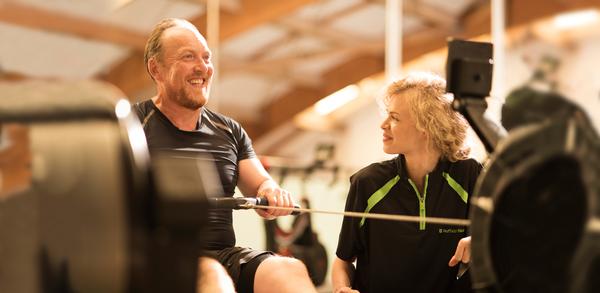
Nuffield increased revenues by 2.9 per cent
https://www.leisureopportunities.co.uk/images/imagesX/697356_953299.jpg
The fitness market in Europe is entering a new phase of growth, according to the European Health & Fitness Market Report 2019 by Deloitte and EuropeActive
Karsten Hollasch, head of consumer business, Deloitte Germany, Karsten Hollasch, European Health & Fitness Market Report, EuropeActive, Deloitte
HCM magazine
HCM People

Jamie Clements

The Breath Coach
I experienced a blissful feeling of joy I hadn’t felt since I was a kid
HCM magazine
For every member with a tripod and a big following, there are others irritated at the way equipment is being hogged or wary they’ll be in the background on someone’s Insta feed. Do influencers offer valuable, free marketing or are they just a nuisance? Kath Hudson finds out how operators are responding
HCM magazine
Raphael Cuomo explores the powerful link between addiction, health and behaviour change
HCM magazine
As the entrepreneur who started Wexer, Fresh Fitness, Fitness DK and Repeat, as well as being a former elite athlete, Rasmus Ingerslev’s life looked perfect from the outside, but onthe inside it was a different story. He talks to Kath Hudson about healing old wounds
HCM magazine
Collaborations with the medical profession and greater aspirations around wellbeing are creating a need for more experts in our sector. It’s time to reboot our thinking around the workforce
HCM promotional features
Sponsored
SnowDome Fitness has added 50 per cent more space with cutting-edge Technogym solutions
HCM promotional features
Sponsored
Third Space partnered with IndigoFitness to deliver a bespoke training space for its new club at The Whiteley
HCM promotional features
Sponsored
Greg Bradley looks at the shift towards strength training in gyms and advises on how operators can create the ultimate training environment
HCM promotional features
Sponsored
David Lloyd is stepping up its commitment to women’s health as it continues to explore what fit-for-purpose looks like for the female population
HCM promotional features
Sponsored
Find out how your gym can tap into the corporate wellness boom
HCM promotional features
Sponsored
Starpool supports Olympic champion Marcell Jacobs, says Riccardo Turri
HCM promotional features
Sponsored
EGYM has opened a new HQ in Paternoster Square, London and revealed a range of new launches
HCM promotional features
Sponsored
New launch, Salus House, elevates boutique wellness with high service levels and a partnership with Technogym
HCM promotional features
Sponsored
The industry is embracing consumer-facing tech. Now it’s time to streamline back-of-house systems with Orbit4, says Daniel Jones
HCM promotional features
Latest News
Global group exercise specialist, Les Mills, is inviting operators to sign up to its Workout ...
Latest News
Global luxury hospitality brand, Six Senses, has partnered with longevity healthcare provider, HUM2N, to launch ...
Latest News
Premium London health club, KX Chelsea, is gearing up to unveil its most significant redevelopment ...
Latest News
Researchers in the US have identified an antibody which could greatly reduce the loss of ...
Latest News
Peloton has made the strategic acquisition of Pilates start-up, Skōp, to support the expansion of ...
Latest News
Crunch Fitness has announced the launch of Crunch Reform Pilates – its own reformer concept ...
Latest News
The 20th State of the Industry Report from LeisureDB has revealed a resilient, expanding and ...
Latest News
Purpose Brands has announced its entry into the Italian market, having sold the franchise rights ...
Opinion
promotion
Strength training has moved from the margins to the mainstream.
Opinion: Building smarter strength spaces for today’s operators
Featured supplier news
Featured supplier news: CoverMe extends matching service to personal training, rewriting how members and personal trainers connect
CoverMe, the global leader in fitness workforce management, today launches CoverMe PT, an on-demand personal training platform that connects the right personal trainer to the right client in under 10 seconds.
Featured supplier news
Featured supplier news: Elevate 2026 to mark 10-year anniversary with biggest ever waterfront drinks reception
Elevate is set to celebrate its 10th anniversary in style this June, with organisers confirming the event’s largest-ever drinks reception as registrations continue to run more than 10% ahead of last year.
Company profiles
Company profile: Sporty Group AS
With more than 90 fitness centres across the country and more than 130.000 members, Sporty ...
Company profiles
Company profile: Perfect Gym Solutions S.A.
Perfect Gym, part of the Sport Alliance group, is a global software provider specialising in ...
Supplier Showcases
Supplier Showcase - From nightclub to health club
Supplier Showcases
Supplier Showcase - Future-proofing
Catalogue Gallery
Click on a catalogue to view it online
Featured press releases
ukactive press release: UK Active launches next phase of Digital Futures to support digital maturity across the physical activity sector
UK Active has announced the next phase of its Digital Futures programme, supporting organisations across the physical activity sector to develop their digital capability.
Featured press releases
The Fitness Group press release: The Fitness Group partners with Serco Leisure to deliver education and career pathways across UK leisure facilities
The Fitness Group, the UK's leading fitness education training provider, has announced a strategic partnership with Serco Leisure, one of the UK's leading national operators of leisure centres, destination venues and elite sporting facilities.
Directory
Lockers
Crown Sports Lockers: Lockers
Hot tubs
MSpa International Ltd: Hot tubs
Spa and beauty equipment
Oakworks Inc: Spa and beauty equipment
Industrial washing machines
Miele Company Limited: Industrial washing machines
Fitness tracking platform
SpiviTech: Fitness tracking platform
Water experiences and hydrotherapy solutions
Aquaform s.r.l.: Water experiences and hydrotherapy solutions
Property & Tenders
Stratford, East London.
Lee Valley Regional Park Authority
Property & Tenders
Y Felinheli, LL56 4QN
Newmark
Property & Tenders
Diary dates
21-24 Sep 2026
The Langham Huntington Pasadena , Pasadena, United States
Diary dates
06-08 Oct 2026
Messe Stuttgart, Stuttgart, Germany
Diary dates
22-22 Oct 2026
QEII Conference Centre, London,
Diary dates
26-29 Oct 2027
Koelnmesse Exhibition Centre, Cologne, Germany
Diary dates

features

Statistics: Euro millions

The fitness market in Europe is entering a new phase of growth according to the European Health & Fitness Market Report 2019 by EuropeActive and Deloitte. HCM reports

Published in Health Club Management 2019 issue 6
Above and right: RSG (formerly McFit)’s range of fitness concepts has contributed to its number one ranking for size
While Sweden (21.6 per cent) and Norway (21.4 per cent) have the highest ratios of fitness club members relative to the total population, Ukraine (2.9 per cent) and Turkey (2.6 per cent) have low penetration rates, which could indicate potential for growth

Five years ago, EuropeActive adopted its goal of the industry achieving 80 million members by 2025 – with about 46 million members reported at the time.

The industry is still on track to reach this target, as total membership within the European Union, Norway, Russia, Switzerland, Turkey and Ukraine increased by 3.5 per cent in 2018, to 62.2 million at the end of the year.

As Karsten Hollasch, head of consumer business at Deloitte Germany and co-author of the report, says: “The European fitness club market continued its growth trend in 2018, but significant potential remains, as only 7.8 per cent of Europeans have a fitness club membership.

“With the development and roll-out of innovative fitness concepts and the integration of new technologies, we expect membership to increase over the next years – towards EuropeActive’s goal of 80 million members by 2025.”

Depending on the development of the US market, which reported revenues of €26.6bn (US$ 30.0bn) in 2017, according to the 2018 IHRSA Global Report, the European fitness market (€27.2bn) could again be the largest fitness market in the world.

At constant foreign exchange rates, the European market size increased by 3.4 per cent compared to 2017. At actual foreign exchange rates, year-on-year growth amounted to 1.2 per cent, driven by negative exchange rate effects from some countries.

While the low-cost segment continues to grow in most markets, there is also an increasing number of boutiques and growth in offerings such as functional fitness, personal training and small group training. Digitalisation and fitness intermediaries are increasingly shaping the fitness landscape.

Latest Rankings
Among leading operators, German discount chain McFit Global Group – recently rebranded as RSG – retained its top position in terms of membership, with 1.95 million members across 288 clubs.

These operate under brands McFit (253 clubs), John Reed (20 clubs) and High5 (15 clubs). The company attributes the increase of 220,000 members over the previous year to strong campaigns, as well as the introduction of live classes in January 2018 and expansion of its product offering and target audience.

Ranking second is Netherlands-based low-cost chain Basic-Fit (1.84 million members), which generated by far the highest organic membership growth of all operators, with 316,000 additional members. This was largely due to the opening of 92 new clubs in France.

British low-cost operator Pure Gym ranks third, after increasing its membership by 85,000 to 1.01 million in 2018, becoming the third European fitness operator to reach 1 million members.

After these three market leaders come UK-based The Gym Group in fourth, German operators Clever Fit in fifth and FitX in sixth place.

Seven of the top 10 operators by membership can be considered low-cost operators. In addition, two others in the top 10 – SATS Group and Migros Group – have a low-cost brand in their portfolios, while five low-cost operators (McFit Group, Basic-Fit, Pure Gym, Fitness World and Clever Fit) also rank among the top 10 in terms of revenue.

UK-based premium operator, David Lloyd Leisure (DLL), again tops the ranking in Europe, with revenues of €545 million – an increase of €62 million over the previous year. DLL further expanded its international presence in 2018 through the acquisition of the City Green Sports and Health Club in France near Lake Geneva, as well as the acquisition of Health City’s Bad Homburg Club in Germany.

At the end of 2018, DLL operated 114 clubs in eight countries – including 99 clubs in the UK – with a total of 609,000 members, which places the company seventh in the European membership ranking. The company is also currently opening a club in India in partnership with Talwalkars (see HCM July 2019 for a full report).

Low-cost, high income
However, revenue growth was primarily driven by the low-cost businesses. Dutch operator, Basic-Fit, had the highest revenue growth, both in absolute terms with an increase of €76 million and in relative terms, with 23.3 per cent growth and a move from sixth to second place in the European revenue ranking. Basic-Fit had total revenues of €402 million.

McFit/RSG moved from fifth to fourth place in the ranking, following a 7.6 per cent increase in revenues, while fellow low-cost operators PureGym increased revenues by 12.8 per cent, Fitness World by 19.2 per cent and Clever Fit by 22.0 per cent, solidifying their top 10 rankings with double-digit growth.

By comparison, premium operators such as the Switzerland-based Migros Group, with minus 1.2 per cent, Nordic market leader SATS Group at plus 0.3 per cent, and UK-based companies Nuffield Health with plus 2.9 per cent and Virgin Active with minus 4.9 per cent, displayed only slight increases or even slight decreases in revenue. This was also affected by negative exchange rate effects in Switzerland, Sweden and the United Kingdom.

Mergers and acquisitions
SATS Group, L’Appart Fitness, Keep Cool and SportCity/Fit For Free are just some fitness club operators involved in mergers and acquisitions in the European health and fitness market over the last calendar year. In fact, 24 major M&A deals were recorded in 2018, the highest number since the European Health and Fitness Market Report has been published and an increase of four transactions over the previous year.

“The consistently high number of mergers and acquisitions underlines the notion that health and fitness remains a highly attractive sector for strategic and financial investors alike,” says Hollasch. “By supporting the innovation and expansion of fitness operators, these investors help the health and fitness industry to achieve further growth.”

Regarding investor types, 18 of the 24 transactions represented a sale to a strategic investor – ie, another market participant. In addition, five businesses were sold to financial investors, indicating the interest of investors in the fitness industry, while one company was sold to a private investor.

The large number of transactions from founders to strategic investors indicates an increasing market consolidation. However, consolidation in the operator market remains low compared to the commercial fitness equipment market, where the four leading companies – Life Fitness, Technogym, Johnson Health Tech and Precor – account for an estimated 75 per cent of the global and 86 per cent of the European commercial equipment market.

Germany – still the biggest
With a membership growth of 4.5 per cent to 11.1 million members, Germany strengthened its position as the country with the highest membership, ahead of the UK (9.9 million), France (6.0 million), Italy (5.5 million) and Spain (5.3 million).

At the same time, Germany ranked first in terms of market size, with total revenues of 5.3bn, according to research conducted by DSSV, DHfPG and Deloitte. However, this was partly due to negative exchange rate effects in the United Kingdom, as the UK market grew by 4.3 per cent at constant currency, compared to a 2.5 per cent growth in Germany.

Together, the top five countries represent nearly two thirds of the entire European market in terms of memberships and revenues. With penetration rates of about 9-15 per cent, these countries generally offer further market growth potential and are expected to be major drivers towards the set goal of 80 million total members in Europe by 2025. While Sweden (21.6 per cent) and Norway (21.4 per cent) have the highest ratios of fitness club members relative to the total population, Ukraine (2.9 per cent) and Turkey (2.6 per cent) have relatively low penetration rates, which could – in combination with their large populations – indicate potential for growth.

Macro trends
“Further growth in the fitness market will be driven by favourable macro-trends, such as increasing health awareness, but more importantly by innovative fitness concepts and business models that meet customer needs,” explains Hollasch. “The definition of the industry as a purely stationary fitness market is over: existing fitness concepts are being augmented by digital offerings and new market participants are developing entirely new purely digital concepts.”

Thus, technological innovations such as mobile fitness apps, wearables and online fitness as well as offline activities like outdoor group workouts, provide opportunities to be physically active outside a brick-and-mortar gym and continue to gain popularity in many European markets.

While these offerings might be considered a threat by some operators, many fitness providers also see opportunities and have started to incorporate these concepts into their business models.

With regard to EuropeActive’s goal of 80 million members by 2025, Herman Rutgers, board member at EuropeActive and co-author of the report, remains optimistic, saying: “2018 was another year of growth. It was interesting to see positive developments across all market segments; value, premium as well as mid-market. Additionally, we saw more small- and medium-sized facilities opening closer to where people live and work, making fitness more accessible. We remain confident we’ll reach the goal of 80 million members by 2025.”

Most improved
Basic-Fit had the highest revenue growth in 2018, in absolute terms with an increase of €76m to €402m and in relative terms, with 23.3 per cent growth and a move from sixth to second place in the European revenue ranking
Karsten Hollasch, head of consumer business at Deloitte Germany and co-author of the report
"With the development and roll-out of innovative fitness concepts and the integration of new technologies, we expect membership to increase over the next years – towards EuropeActive’s goal of 80 million members by 2025."
Number crunching

Europe total members:
62.2m

No 1 country:
Germany 11.1m members

No 1 company:
McFit/RSG 1.95m members

Europe total revenues:
€27.2bn

No 1 country:
Germany €5.3bn total revenues

No 1 company:
David Lloyd Leisure €545m revenue

Percentage of population
with membership: 7.8%
Sign up here to get HCM's weekly ezine and every issue of HCM magazine free on digital.
Pure Gym is now third in Europe in terms of membership numbers
Virgin Active saw a 4.9 per cent decrease in revenue
Basic Fit recorded the most membership growth
Nuffield increased revenues by 2.9 per cent
https://www.leisureopportunities.co.uk/images/imagesX/697356_953299.jpg
The fitness market in Europe is entering a new phase of growth, according to the European Health & Fitness Market Report 2019 by Deloitte and EuropeActive
Karsten Hollasch, head of consumer business, Deloitte Germany, Karsten Hollasch, European Health & Fitness Market Report, EuropeActive, Deloitte
Latest News
Global group exercise specialist, Les Mills, is inviting operators to sign up to its Workout ...
Latest News
Global luxury hospitality brand, Six Senses, has partnered with longevity healthcare provider, HUM2N, to launch ...
Latest News
Premium London health club, KX Chelsea, is gearing up to unveil its most significant redevelopment ...
Latest News
Researchers in the US have identified an antibody which could greatly reduce the loss of ...
Latest News
Peloton has made the strategic acquisition of Pilates start-up, Skōp, to support the expansion of ...
Latest News
Crunch Fitness has announced the launch of Crunch Reform Pilates – its own reformer concept ...
Latest News
The 20th State of the Industry Report from LeisureDB has revealed a resilient, expanding and ...
Latest News
Purpose Brands has announced its entry into the Italian market, having sold the franchise rights ...
Latest News
Fitness First UK is integrating red light therapy into its yoga and Pilates classes through ...
Latest News
Nuffield Health has told HCM that it takes its responsibilities towards its colleagues seriously and ...
Latest News
Technogym has announced the launch of the Run X World Treadmill Championship, the first world ...
Opinion
promotion
Strength training has moved from the margins to the mainstream.
Opinion: Building smarter strength spaces for today’s operators
Featured supplier news
Featured supplier news: CoverMe extends matching service to personal training, rewriting how members and personal trainers connect
CoverMe, the global leader in fitness workforce management, today launches CoverMe PT, an on-demand personal training platform that connects the right personal trainer to the right client in under 10 seconds.
Featured supplier news
Featured supplier news: Elevate 2026 to mark 10-year anniversary with biggest ever waterfront drinks reception
Elevate is set to celebrate its 10th anniversary in style this June, with organisers confirming the event’s largest-ever drinks reception as registrations continue to run more than 10% ahead of last year.

Company profiles
Company profile: Sporty Group AS
With more than 90 fitness centres across the country and more than 130.000 members, Sporty ...
Company profiles
Company profile: Perfect Gym Solutions S.A.
Perfect Gym, part of the Sport Alliance group, is a global software provider specialising in ...
Supplier Showcases
Supplier Showcase - From nightclub to health club
Supplier Showcases
Supplier Showcase - Future-proofing
Catalogue Gallery
Click on a catalogue to view it online
Featured press releases
ukactive press release: UK Active launches next phase of Digital Futures to support digital maturity across the physical activity sector
UK Active has announced the next phase of its Digital Futures programme, supporting organisations across the physical activity sector to develop their digital capability.
Featured press releases
The Fitness Group press release: The Fitness Group partners with Serco Leisure to deliver education and career pathways across UK leisure facilities
The Fitness Group, the UK's leading fitness education training provider, has announced a strategic partnership with Serco Leisure, one of the UK's leading national operators of leisure centres, destination venues and elite sporting facilities.
Directory
Lockers
Crown Sports Lockers: Lockers
Hot tubs
MSpa International Ltd: Hot tubs
Spa and beauty equipment
Oakworks Inc: Spa and beauty equipment
Industrial washing machines
Miele Company Limited: Industrial washing machines
Fitness tracking platform
SpiviTech: Fitness tracking platform
Water experiences and hydrotherapy solutions
Aquaform s.r.l.: Water experiences and hydrotherapy solutions
Property & Tenders
Stratford, East London.
Lee Valley Regional Park Authority
Property & Tenders
Y Felinheli, LL56 4QN
Newmark
Property & Tenders
Diary dates
21-24 Sep 2026
The Langham Huntington Pasadena , Pasadena, United States
Diary dates
06-08 Oct 2026
Messe Stuttgart, Stuttgart, Germany
Diary dates
22-22 Oct 2026
QEII Conference Centre, London,
Diary dates
26-29 Oct 2027
Koelnmesse Exhibition Centre, Cologne, Germany
Diary dates
Search news, features & products:
Find a supplier:
Elevate Arena
Elevate Arena
Partner sites