



















EGYM
EGYM
EGYM
Follow Health Club Management on Twitter Like Health Club Management on Facebook Join the discussion with Health Club Management on LinkedIn
FITNESS, HEALTH, WELLNESS

features

Retention series: The personal touch

Does personal training increase member retention? Dr Melvyn Hillsdon offers his insights on this topic, based on the findings of his ongoing TRP 10,000 study

By Dr Melvyn Hillsdon , University of Exeter | Published in Health Club Management 2015 issue 4
Health club members in the 25–44 age category are the most likely to use a personal trainer / photo: www.shutterstock.com/Peter Nadolski
Despite reporting greater progress than non-PT members, members who only have an occasional session of PT actually have a lower retention rate

In this latest article in the series of reports from TRP 10,000, we report on which members purchased personal training (PT), what their main reasons were for purchasing PT and how PT is associated with visit frequency, reported progress and retention.

Members were asked how many PT sessions they had purchased in the previous three months, with possible answers ranging from ‘none’ to ‘12 or more’. Members who purchased at least one PT session were asked what their main reason was for purchasing PT, selecting from four possible options or an ‘other’ category. Members were followed up for seven months, at which point it was recorded whether they had cancelled or not.

Who receives PT?
Overall, 10 per cent of members reported purchasing at least one session of PT in the three months prior to the survey: 4 per cent reported purchasing one to three sessions and 6 per cent purchased four or more sessions. Figure 1 shows how many sessions of PT members have purchased by gender, age group and length of membership.

Females were more likely to purchase PT than males, as were members aged 25–44 years compared to younger and older members. Mid-term members (between six and 36 months since joining) were most likely to purchase regular sessions of PT compared to new or long-standing members, with the latter the least likely to have bought PT.

Why do people purchase PT?
The primary reasons for purchasing PT are shown in Figure 2. Just over half of the members who purchased at least one session of PT said motivation and assistance with achieving goals more quickly were the main reasons (multiple answers were allowed).

A lower proportion of members reported purchasing PT to help with exercise confidence (36.7 per cent) and to get started with a programme (36.2 per cent). Other reasons given by a small number of members included ‘help with a rehabilitation programme’, ‘training for a specific event’ and ‘help with weight loss’. Females were a little more likely to say they used PT for motivation than males (57 per cent vs 50 per cent), with little difference between age groups and length of membership.

The youngest age group was most likely to say they purchased PT to help them achieve goals quicker; those in the oldest group were the least likely to quote this reason (63 per cent vs 43 per cent). Similarly, a higher proportion of the youngest health club members said they had purchased personal training to increase their confidence for exercise compared to older members (43 per cent vs 34 per cent).

There was little difference in gender, age and length of membership when it came to the proportion of members saying they purchased PT to get started with a programme, apart from members age 35–44 years who were least likely to say this (29 per cent).

Is PT associated with visit frequency?
The level of PT sessions purchased is positively associated with regular club visits (see Figure 3).

In addition, regular PT is associated with a much lower level of non-attendance. On average, health club members who purchased four or more sessions of PT in the previous three months averaged 1.4 more club visits a month than members who did not purchase personal training.

Do members who receive PT report greater progress?
Compared to members who don’t purchase PT, members who do purchase PT report higher levels of progress in all areas they were asked about (see Figure 4). Not only was this true for physical outcomes such as fitness and weight loss, but also for social outcomes and the enjoyment of exercise. PT members were also more likely to report that they had attended the health club as frequently as planned compared to non-PT members.

When considered all together, the two measures of progress most strongly associated with regular personal training was weight loss and making new friends. It’s not clear whether the latter relates to a friendship with the trainer or another club member.

We have previously reported that progress with personal goals is one of the keys to improved membership retention, and based on the results reported here, clubs can confidently advertise that regular PT is associated with progress in a wide range of areas including general fitness, weight loss and the enjoyment of exercise.

Does PT increase member retention?
Figure 5 shows that a higher proportion of members retain their membership over seven months of follow-up if they have regular PT sessions compared to members who don’t purchase PT.

However, despite reporting greater progress than non-PT members, members who only have an occasional session of personal training actually have a lower retention rate than members who don’t purchase any PT.

This observation is reiterated in Figure 6, which shows the rate of cancellation by level of PT. For every 1,000 members, six fewer cancel each month if they have regularly purchased PT in the previous three months compared to members who haven’t purchased any PT. But by contrast, each month there are over six more cancellations per 1,000 members among members who have the occasional session of PT compared to members who have no sessions.

So why is this? It may be that some members who are not making much progress try PT as a last resort, with unrealistic expectations for quick results. When results don’t come in a couple of sessions, they give up all together.

Whatever the reason, members who try PT but don’t continue should be treated as at risk of premature cancellation – and it’s important for PTs to understand this extra risk. Firstly, they should make sure they understand client expectations for PT and manage them if unrealistic. Secondly they need to ensure the first PT session (including taster sessions) reflects member expectations and is sufficiently enjoyable/rewarding that the member wants to repeat the experience.

If clubs observe that significant numbers of members who try PT don’t continue, they quickly need to review the service to avoid an increase in attrition. Is the service high quality and delivered by skilled trainers, or is it just another gym session with one of the existing fitness staff, rebadged as a PT?

Meanwhile, if we look at members whose retention is boosted by regular personal training, why is this? It’s possibly due to increased interaction with fitness staff – we already know from our research that this reduces the risk of cancelling. It’s also possible that the reduced risk of cancelling associated with PT is due to the higher visit frequency that PT purchasers have.

However, when we test these possibilities statistically, regular PT is associated with a 30 per cent reduction in the risk of cancelling during the follow-up period compared to no PT sessions, and this reduction is not due to fitness staff interactions or visit frequency. In other words, PT, staff interactions and visit frequency all independently reduce the risk of cancelling.

An untapped opportunity
Yet despite the many benefits associated with PT – including its potential as a strong secondary income stream for clubs – take-up is very low, with just 6 per cent of members reporting four or more sessions in the three months prior to the survey, and only 2 per cent taking the equivalent of one session a week.

There’s considerable scope to increase PT penetration rates, and this would greatly increase the number of members who meet their goals – which in turn would increase longevity and the level of member income.

If all members purchased the equivalent of four or more PT sessions in a 12-week period, we estimate that 29 per cent of observed cancellations would be avoided.

PT & retention: The key facts

• One in 10 members say they purchased at least one session of PT in the three months prior to the TRP 10,000 survey, with approximately one in 17 purchasing regular sessions.

• The main reasons for purchasing PT are for help with motivation and achieving goals quicker.

• Members who purchase PT regularly attend their club a little more than members who do not, and are much less likely to be non-attenders.

• Regular PT is associated with greater progress in a wide range of areas, both physical and social. The greatest difference in progress between regular PT members and non-PT members is weight loss and making a friend.

• Regular personal training is associated with higher retention and reduced risk of cancelling. This improved retention is not explained by higher visit frequency or better staff interaction, both of which are independently associated with retention.

• Surprisingly, members who report just one or two sessions of PT have a higher cancellation rate than those who don’t purchase PT. This may indicate greater motivation struggles or unrealistic expectations about PT.

PT recommendations

• Ensure PT sessions are high quality – if people try them and give up after a few sessions, the risk of cancellation increases.

• Ensure expectations of PT are managed – if members try PT, find their expectations are not met and give up after a few sessions, the risk of cancelling their membership altogether increases.

• Giving away taster sessions could more than pay for itself, as long as sessions are good enough to get members hooked.

• Discount PT packages for more regular sessions to ensure members get a PT habit.

• Offer discounts or incentives for completing a number of sessions in a set time period.

• Promote the multiple benefits of PT.

Figure 1 Number of PT sessions purchased by gender,
age group and length of membership (in months)
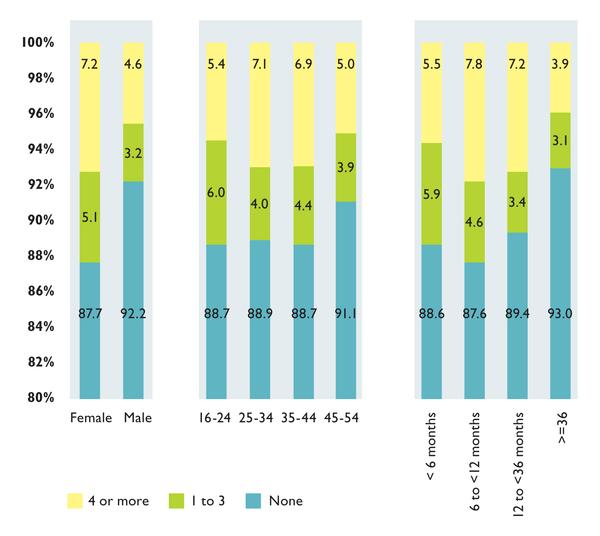
Figure 1
Figure 1

Figure 2 Proportion of members reporting main reasons for purchasing PT
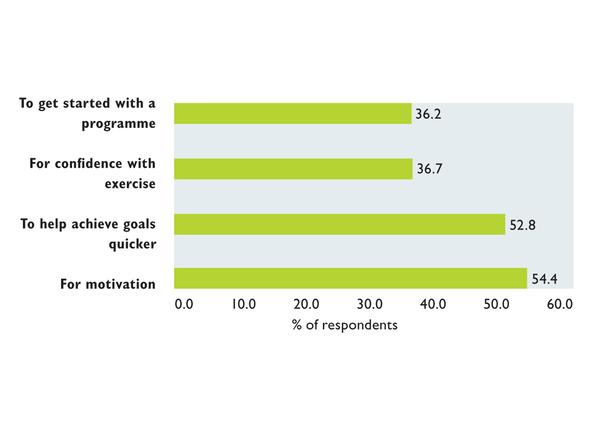
Figure 2
Figure 2

Figure 3 Level of visit frequency by level of PT sessions in the last 3 months
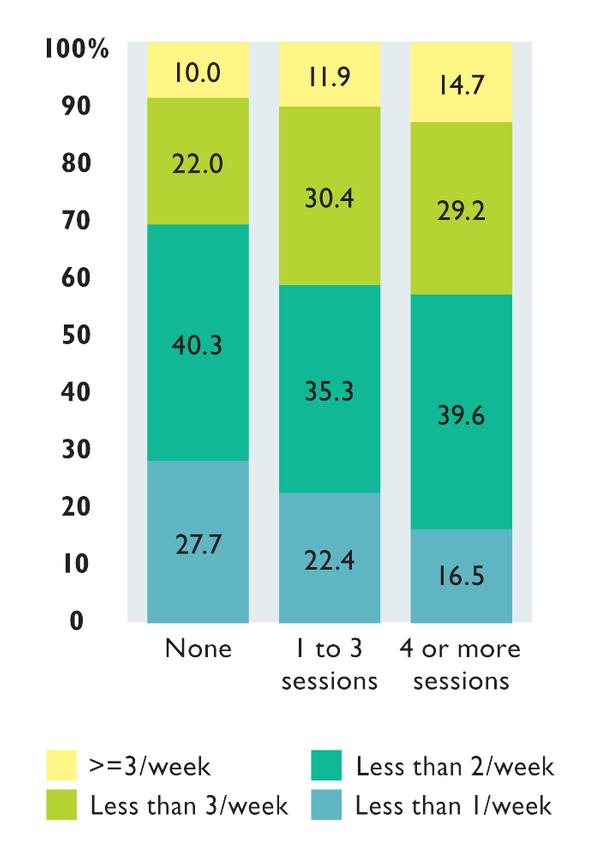
Figure 3
Figure 3

Figure 4 Proportion of members reporting progress in
the previous three months by level of PT
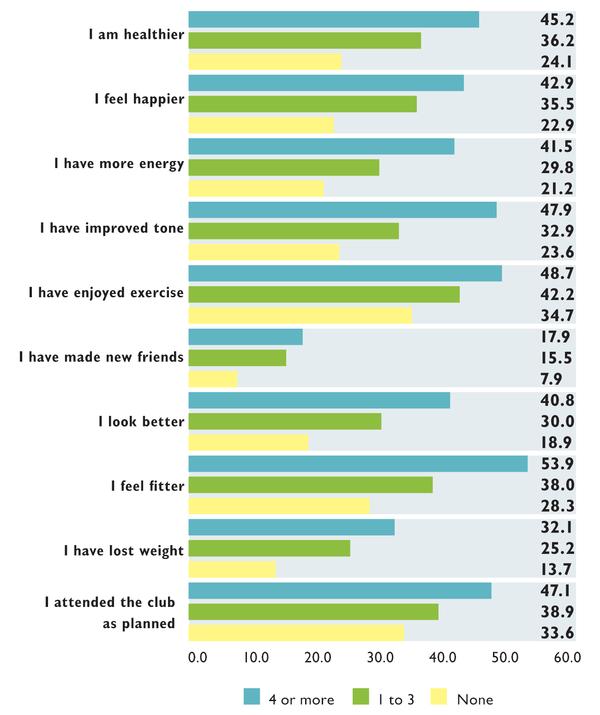
Figure 4
Figure 4

Figure 5 Retention rate by level of PT
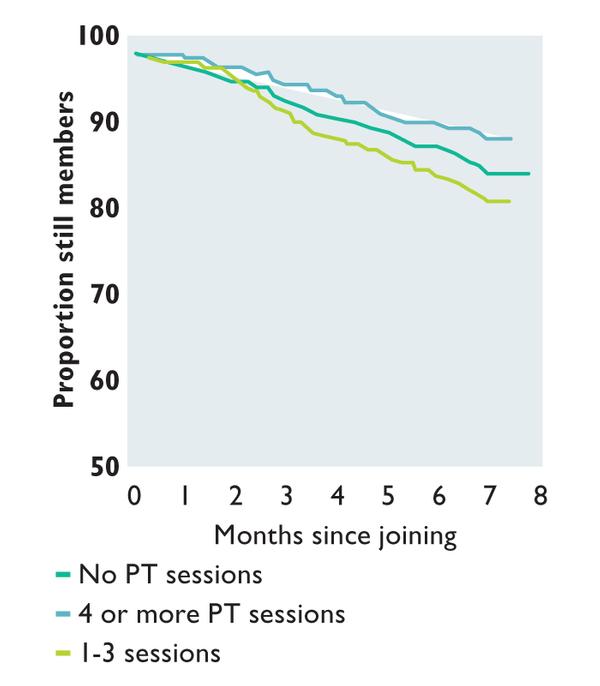
Figure 5
Figure 5

Figure 6 Rate of cancellation
(per 1,000 members per month) by level of PT purchased in previous three months
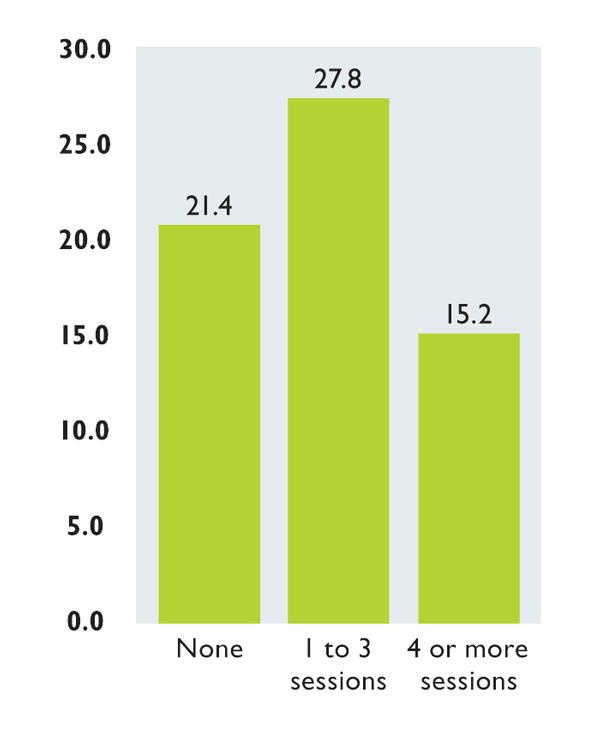

Figure 6
Figure 6
Sign up here to get HCM's weekly ezine and every issue of HCM magazine free on digital.
The survey showed that female members were more likely to purchase personal training services than males / photo: www.shutterstock.com/Tyler Olson
Making progress with personal goals is a key factor in member retention / photo: www.shutterstock.com/Syda Productions
If clubs notice significant numbers of members who try PT and then don’t continue with it, they must review the service / photo: www.shutterstock.com/racom
https://www.leisureopportunities.co.uk/images/286502_182906.jpg
Does personal training increase member retention? Dr Melvyn Hillsdon offers insight and analysis based on his ongoing research
Dr Melvyn Hillsdon ,Personal training, PT, retention, Melvyn Hillsdon, TRP 10,000
HCM magazine
HCM People

Stephen Price

Founder, SP&Co Group
Working in public health over the last few years has lit up parts of my brain again
HCM magazine
If the health service is to survive, we must recognise that it is a disease service – and that wellbeing rests with us, says the activity advocate and healthy ageing champion. He talks to Kate Cracknell
HCM magazine
For every member with a tripod and a big following, there are others irritated at the way equipment is being hogged or wary they’ll be in the background on someone’s Insta feed. Do influencers offer valuable, free marketing or are they just a nuisance? Kath Hudson finds out how operators are responding
HCM magazine
Raphael Cuomo explores the powerful link between addiction, health and behaviour change
HCM magazine
Small improvements to sleep, diet and physical activity have major benefits for the heart, according to new research from the University of Sydney
HCM promotional features
Sponsored
Find out how your gym can tap into the corporate wellness boom
HCM promotional features
Sponsored
Third Space partnered with IndigoFitness to deliver a bespoke training space for its new club at The Whiteley
HCM promotional features
Sponsored
Starpool supports Olympic champion Marcell Jacobs, says Riccardo Turri
HCM promotional features
Sponsored
Greg Bradley looks at the shift towards strength training in gyms and advises on how operators can create the ultimate training environment
HCM promotional features
Sponsored
SnowDome Fitness has added 50 per cent more space with cutting-edge Technogym solutions
HCM promotional features
Sponsored
David Lloyd is stepping up its commitment to women’s health as it continues to explore what fit-for-purpose looks like for the female population
HCM promotional features
Sponsored
EGYM has opened a new HQ in Paternoster Square, London and revealed a range of new launches
HCM promotional features
Sponsored
Pulse Fitness has created a new health club delivering an elevated wellness experience
HCM promotional features
Sponsored
The industry is embracing consumer-facing tech. Now it’s time to streamline back-of-house systems with Orbit4, says Daniel Jones
HCM promotional features
Latest News
Premium London health club, KX Chelsea, is gearing up to unveil its most significant redevelopment ...
Latest News
Researchers in the US have identified an antibody which could greatly reduce the loss of ...
Latest News
Peloton has made the strategic acquisition of Pilates start-up, Skōp, to support the expansion of ...
Latest News
Crunch Fitness has announced the launch of Crunch Reform Pilates – its own reformer concept ...
Latest News
The 20th State of the Industry Report from LeisureDB has revealed a resilient, expanding and ...
Latest News
Purpose Brands has announced its entry into the Italian market, having sold the franchise rights ...
Latest News
Fitness First UK is integrating red light therapy into its yoga and Pilates classes through ...
Latest News
Nuffield Health has told HCM that it takes its responsibilities towards its colleagues seriously and ...
Opinion
promotion
Strength training has moved from the margins to the mainstream.
Opinion: Building smarter strength spaces for today’s operators
Featured supplier news
Featured supplier news: W3Fit EMEA celebrates its fifth anniversary
Celebrating its milestone 5th anniversary, W3Fit EMEA returns in 2026 with an unmissable gathering of the Health & Fitness industry’s most influential leaders.
Featured supplier news
Featured supplier news: CoverMe extends matching service to personal training, rewriting how members and personal trainers connect
CoverMe, the global leader in fitness workforce management, today launches CoverMe PT, an on-demand personal training platform that connects the right personal trainer to the right client in under 10 seconds.
Company profiles
Company profile: Wellhub
Wellhub acts as a corporate sales channel, bringing new, highquality members to your business, by ...
Company profiles
Company profile: Matrix Fitness
Matrix provides equipment to facilities in all market sectors including private health clubs, residential housing, ...
Supplier Showcases
Supplier Showcase - Future-proofing
Catalogue Gallery
Click on a catalogue to view it online
Featured press releases
ukactive press release: UK Active launches next phase of Digital Futures to support digital maturity across the physical activity sector
UK Active has announced the next phase of its Digital Futures programme, supporting organisations across the physical activity sector to develop their digital capability.
Featured press releases
The Fitness Group press release: The Fitness Group partners with Serco Leisure to deliver education and career pathways across UK leisure facilities
The Fitness Group, the UK's leading fitness education training provider, has announced a strategic partnership with Serco Leisure, one of the UK's leading national operators of leisure centres, destination venues and elite sporting facilities.
Directory
Industrial washing machines
Miele Company Limited: Industrial washing machines
Hot tubs
MSpa International Ltd: Hot tubs
Fitness tracking platform
SpiviTech: Fitness tracking platform
Lockers
Crown Sports Lockers: Lockers
Water experiences and hydrotherapy solutions
Aquaform s.r.l.: Water experiences and hydrotherapy solutions
Spa and beauty equipment
Oakworks Inc: Spa and beauty equipment
Property & Tenders
Stratford, East London.
Lee Valley Regional Park Authority
Property & Tenders
Y Felinheli, LL56 4QN
Newmark
Property & Tenders
Diary dates
13-13 Jun 2026
Worldwide, Various,
Diary dates
21-24 Sep 2026
The Langham Huntington Pasadena , Pasadena, United States
Diary dates
06-08 Oct 2026
Messe Stuttgart, Stuttgart, Germany
Diary dates
22-22 Oct 2026
QEII Conference Centre, London,
Diary dates
26-29 Oct 2027
Koelnmesse Exhibition Centre, Cologne, Germany
Diary dates

features

Retention series: The personal touch

Does personal training increase member retention? Dr Melvyn Hillsdon offers his insights on this topic, based on the findings of his ongoing TRP 10,000 study

By Dr Melvyn Hillsdon , University of Exeter | Published in Health Club Management 2015 issue 4
Health club members in the 25–44 age category are the most likely to use a personal trainer / photo: www.shutterstock.com/Peter Nadolski
Despite reporting greater progress than non-PT members, members who only have an occasional session of PT actually have a lower retention rate

In this latest article in the series of reports from TRP 10,000, we report on which members purchased personal training (PT), what their main reasons were for purchasing PT and how PT is associated with visit frequency, reported progress and retention.

Members were asked how many PT sessions they had purchased in the previous three months, with possible answers ranging from ‘none’ to ‘12 or more’. Members who purchased at least one PT session were asked what their main reason was for purchasing PT, selecting from four possible options or an ‘other’ category. Members were followed up for seven months, at which point it was recorded whether they had cancelled or not.

Who receives PT?
Overall, 10 per cent of members reported purchasing at least one session of PT in the three months prior to the survey: 4 per cent reported purchasing one to three sessions and 6 per cent purchased four or more sessions. Figure 1 shows how many sessions of PT members have purchased by gender, age group and length of membership.

Females were more likely to purchase PT than males, as were members aged 25–44 years compared to younger and older members. Mid-term members (between six and 36 months since joining) were most likely to purchase regular sessions of PT compared to new or long-standing members, with the latter the least likely to have bought PT.

Why do people purchase PT?
The primary reasons for purchasing PT are shown in Figure 2. Just over half of the members who purchased at least one session of PT said motivation and assistance with achieving goals more quickly were the main reasons (multiple answers were allowed).

A lower proportion of members reported purchasing PT to help with exercise confidence (36.7 per cent) and to get started with a programme (36.2 per cent). Other reasons given by a small number of members included ‘help with a rehabilitation programme’, ‘training for a specific event’ and ‘help with weight loss’. Females were a little more likely to say they used PT for motivation than males (57 per cent vs 50 per cent), with little difference between age groups and length of membership.

The youngest age group was most likely to say they purchased PT to help them achieve goals quicker; those in the oldest group were the least likely to quote this reason (63 per cent vs 43 per cent). Similarly, a higher proportion of the youngest health club members said they had purchased personal training to increase their confidence for exercise compared to older members (43 per cent vs 34 per cent).

There was little difference in gender, age and length of membership when it came to the proportion of members saying they purchased PT to get started with a programme, apart from members age 35–44 years who were least likely to say this (29 per cent).

Is PT associated with visit frequency?
The level of PT sessions purchased is positively associated with regular club visits (see Figure 3).

In addition, regular PT is associated with a much lower level of non-attendance. On average, health club members who purchased four or more sessions of PT in the previous three months averaged 1.4 more club visits a month than members who did not purchase personal training.

Do members who receive PT report greater progress?
Compared to members who don’t purchase PT, members who do purchase PT report higher levels of progress in all areas they were asked about (see Figure 4). Not only was this true for physical outcomes such as fitness and weight loss, but also for social outcomes and the enjoyment of exercise. PT members were also more likely to report that they had attended the health club as frequently as planned compared to non-PT members.

When considered all together, the two measures of progress most strongly associated with regular personal training was weight loss and making new friends. It’s not clear whether the latter relates to a friendship with the trainer or another club member.

We have previously reported that progress with personal goals is one of the keys to improved membership retention, and based on the results reported here, clubs can confidently advertise that regular PT is associated with progress in a wide range of areas including general fitness, weight loss and the enjoyment of exercise.

Does PT increase member retention?
Figure 5 shows that a higher proportion of members retain their membership over seven months of follow-up if they have regular PT sessions compared to members who don’t purchase PT.

However, despite reporting greater progress than non-PT members, members who only have an occasional session of personal training actually have a lower retention rate than members who don’t purchase any PT.

This observation is reiterated in Figure 6, which shows the rate of cancellation by level of PT. For every 1,000 members, six fewer cancel each month if they have regularly purchased PT in the previous three months compared to members who haven’t purchased any PT. But by contrast, each month there are over six more cancellations per 1,000 members among members who have the occasional session of PT compared to members who have no sessions.

So why is this? It may be that some members who are not making much progress try PT as a last resort, with unrealistic expectations for quick results. When results don’t come in a couple of sessions, they give up all together.

Whatever the reason, members who try PT but don’t continue should be treated as at risk of premature cancellation – and it’s important for PTs to understand this extra risk. Firstly, they should make sure they understand client expectations for PT and manage them if unrealistic. Secondly they need to ensure the first PT session (including taster sessions) reflects member expectations and is sufficiently enjoyable/rewarding that the member wants to repeat the experience.

If clubs observe that significant numbers of members who try PT don’t continue, they quickly need to review the service to avoid an increase in attrition. Is the service high quality and delivered by skilled trainers, or is it just another gym session with one of the existing fitness staff, rebadged as a PT?

Meanwhile, if we look at members whose retention is boosted by regular personal training, why is this? It’s possibly due to increased interaction with fitness staff – we already know from our research that this reduces the risk of cancelling. It’s also possible that the reduced risk of cancelling associated with PT is due to the higher visit frequency that PT purchasers have.

However, when we test these possibilities statistically, regular PT is associated with a 30 per cent reduction in the risk of cancelling during the follow-up period compared to no PT sessions, and this reduction is not due to fitness staff interactions or visit frequency. In other words, PT, staff interactions and visit frequency all independently reduce the risk of cancelling.

An untapped opportunity
Yet despite the many benefits associated with PT – including its potential as a strong secondary income stream for clubs – take-up is very low, with just 6 per cent of members reporting four or more sessions in the three months prior to the survey, and only 2 per cent taking the equivalent of one session a week.

There’s considerable scope to increase PT penetration rates, and this would greatly increase the number of members who meet their goals – which in turn would increase longevity and the level of member income.

If all members purchased the equivalent of four or more PT sessions in a 12-week period, we estimate that 29 per cent of observed cancellations would be avoided.

PT & retention: The key facts

• One in 10 members say they purchased at least one session of PT in the three months prior to the TRP 10,000 survey, with approximately one in 17 purchasing regular sessions.

• The main reasons for purchasing PT are for help with motivation and achieving goals quicker.

• Members who purchase PT regularly attend their club a little more than members who do not, and are much less likely to be non-attenders.

• Regular PT is associated with greater progress in a wide range of areas, both physical and social. The greatest difference in progress between regular PT members and non-PT members is weight loss and making a friend.

• Regular personal training is associated with higher retention and reduced risk of cancelling. This improved retention is not explained by higher visit frequency or better staff interaction, both of which are independently associated with retention.

• Surprisingly, members who report just one or two sessions of PT have a higher cancellation rate than those who don’t purchase PT. This may indicate greater motivation struggles or unrealistic expectations about PT.

PT recommendations

• Ensure PT sessions are high quality – if people try them and give up after a few sessions, the risk of cancellation increases.

• Ensure expectations of PT are managed – if members try PT, find their expectations are not met and give up after a few sessions, the risk of cancelling their membership altogether increases.

• Giving away taster sessions could more than pay for itself, as long as sessions are good enough to get members hooked.

• Discount PT packages for more regular sessions to ensure members get a PT habit.

• Offer discounts or incentives for completing a number of sessions in a set time period.

• Promote the multiple benefits of PT.

Figure 1 Number of PT sessions purchased by gender,
age group and length of membership (in months)

Figure 1
Figure 1

Figure 2 Proportion of members reporting main reasons for purchasing PT

Figure 2
Figure 2

Figure 3 Level of visit frequency by level of PT sessions in the last 3 months

Figure 3
Figure 3

Figure 4 Proportion of members reporting progress in
the previous three months by level of PT

Figure 4
Figure 4

Figure 5 Retention rate by level of PT

Figure 5
Figure 5

Figure 6 Rate of cancellation
(per 1,000 members per month) by level of PT purchased in previous three months

Figure 6
Figure 6
Sign up here to get HCM's weekly ezine and every issue of HCM magazine free on digital.
The survey showed that female members were more likely to purchase personal training services than males / photo: www.shutterstock.com/Tyler Olson
Making progress with personal goals is a key factor in member retention / photo: www.shutterstock.com/Syda Productions
If clubs notice significant numbers of members who try PT and then don’t continue with it, they must review the service / photo: www.shutterstock.com/racom
https://www.leisureopportunities.co.uk/images/286502_182906.jpg
Does personal training increase member retention? Dr Melvyn Hillsdon offers insight and analysis based on his ongoing research
Dr Melvyn Hillsdon ,Personal training, PT, retention, Melvyn Hillsdon, TRP 10,000
Latest News
Premium London health club, KX Chelsea, is gearing up to unveil its most significant redevelopment ...
Latest News
Researchers in the US have identified an antibody which could greatly reduce the loss of ...
Latest News
Peloton has made the strategic acquisition of Pilates start-up, Skōp, to support the expansion of ...
Latest News
Crunch Fitness has announced the launch of Crunch Reform Pilates – its own reformer concept ...
Latest News
The 20th State of the Industry Report from LeisureDB has revealed a resilient, expanding and ...
Latest News
Purpose Brands has announced its entry into the Italian market, having sold the franchise rights ...
Latest News
Fitness First UK is integrating red light therapy into its yoga and Pilates classes through ...
Latest News
Nuffield Health has told HCM that it takes its responsibilities towards its colleagues seriously and ...
Latest News
Technogym has announced the launch of the Run X World Treadmill Championship, the first world ...
Latest News
Shocked by the UK loneliness statistics, charitable trust Mytime Active has been doubling down on ...
Latest News
Portugal’s leading operator, SC Fitness, is celebrating a milestone by reaching 100 gyms.  The company ...
Opinion
promotion
Strength training has moved from the margins to the mainstream.
Opinion: Building smarter strength spaces for today’s operators
Featured supplier news
Featured supplier news: W3Fit EMEA celebrates its fifth anniversary
Celebrating its milestone 5th anniversary, W3Fit EMEA returns in 2026 with an unmissable gathering of the Health & Fitness industry’s most influential leaders.
Featured supplier news
Featured supplier news: CoverMe extends matching service to personal training, rewriting how members and personal trainers connect
CoverMe, the global leader in fitness workforce management, today launches CoverMe PT, an on-demand personal training platform that connects the right personal trainer to the right client in under 10 seconds.
Company profiles
Company profile: Wellhub
Wellhub acts as a corporate sales channel, bringing new, highquality members to your business, by ...
Company profiles
Company profile: Matrix Fitness
Matrix provides equipment to facilities in all market sectors including private health clubs, residential housing, ...
Supplier Showcases
Supplier Showcase - Future-proofing
Catalogue Gallery
Click on a catalogue to view it online
Featured press releases
ukactive press release: UK Active launches next phase of Digital Futures to support digital maturity across the physical activity sector
UK Active has announced the next phase of its Digital Futures programme, supporting organisations across the physical activity sector to develop their digital capability.
Featured press releases
The Fitness Group press release: The Fitness Group partners with Serco Leisure to deliver education and career pathways across UK leisure facilities
The Fitness Group, the UK's leading fitness education training provider, has announced a strategic partnership with Serco Leisure, one of the UK's leading national operators of leisure centres, destination venues and elite sporting facilities.
Directory
Industrial washing machines
Miele Company Limited: Industrial washing machines
Hot tubs
MSpa International Ltd: Hot tubs
Fitness tracking platform
SpiviTech: Fitness tracking platform
Lockers
Crown Sports Lockers: Lockers
Water experiences and hydrotherapy solutions
Aquaform s.r.l.: Water experiences and hydrotherapy solutions
Spa and beauty equipment
Oakworks Inc: Spa and beauty equipment
Property & Tenders
Stratford, East London.
Lee Valley Regional Park Authority
Property & Tenders
Y Felinheli, LL56 4QN
Newmark
Property & Tenders
Diary dates
13-13 Jun 2026
Worldwide, Various,
Diary dates
21-24 Sep 2026
The Langham Huntington Pasadena , Pasadena, United States
Diary dates
06-08 Oct 2026
Messe Stuttgart, Stuttgart, Germany
Diary dates
22-22 Oct 2026
QEII Conference Centre, London,
Diary dates
26-29 Oct 2027
Koelnmesse Exhibition Centre, Cologne, Germany
Diary dates
Search news, features & products:
Find a supplier:
EGYM
EGYM
Partner sites