



























features
Profile: Active Insight
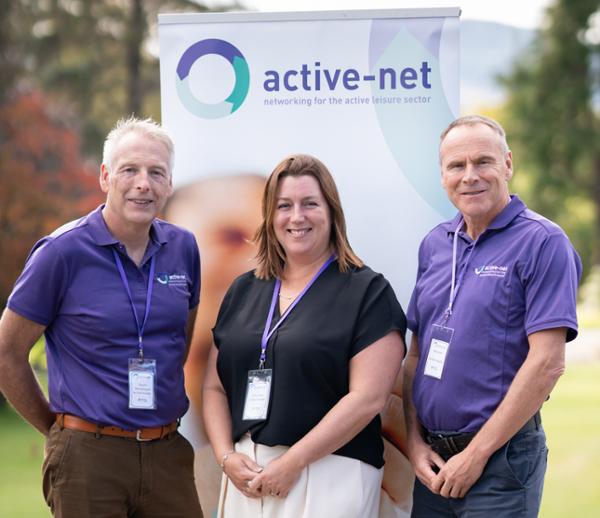
Formerly known as Leisure-net, this industry go-to for consumer insight is celebrating its 25th birthday. Founder Mike Hill and business development director Julie Allen talk to Kate Cracknell


What inspired you to launch the business?
Mike Hill: I’d been in the sector for 15 years and had become focused on customer experience, fascinated by how we could measure, monitor and improve it.
We had the same problems back then as we do now, with people trying us out for a few weeks or months but ultimately not sticking with it. In the facilities I managed, I did a lot of work around customer feedback, gathering it in a variety of ways and using it to improve our service and its stickiness.
I decided I wanted to use my learnings to help other operators, so left my job and set up a business called Leisure-net Solutions, which focused purely on customer experience. That was how it all started, 25 years ago.
What was your focus at that point?
Mike Hill: The first product was a simple online tool – a survey of leisure centre users – for which we developed our e-Focus platform. However, we quickly added a second product: Street Focus.
Street Focus was a non-user survey that was carried out face-to-face – something nobody was doing at the time. We used quota sampling to ensure the 400–1,000 individuals we spoke to were representative of the local community and asked them about their activity levels, whether they wanted to be more active, what was stopping them and what would encourage them and also their thoughts on their local leisure centres.
The findings were used by local authorities and operators to understand the non-user mindset: what were the barriers to using facilities and what would encourage people to use them more?
It started out as local research, with individual local authorities commissioning us to survey their communities. However, over time it evolved into HAFOS – the national Health and Fitness Omnibus Survey – where we conducted 10-12 surveys across the country and amalgamated the findings.
Our online product followed as we began standardising the questions, enabling us to piece together a national picture and produce national benchmarks for users as well as non-users.
We continued to offer these services for 10 years before expanding our involvement with sector bodies such as the FIA (now UK Active) and Sporta (now Community Leisure UK). We took on a secretarial role for Sporta, which firmly embedded us in what was then the small but fast-growing trust sector. We also started to work with SIBEC, recruiting public sector buyers and presenting our research at the events. Ours is a small team, so we often operate within networks, joining up with other organisations and partners.
How has your offering evolved?
Mike Hill: Over the last 10 years, change has been driven by three main factors which have shaped the three pillars of our business.
The first is our engagement with Sport England and Moving Communities, which was born out of the National Benchmarking Service we used to deliver for Sport England. Working as part of a consortium – alongside Sheffield Hallam University, 4Global and Right Directions – Moving Communities accounts for a large proportion of our work as a company and is something I lead.
Linked to this is our work with organisations such as Alliance Leisure and Max Associates, where we deliver consumer research that informs anything from marketing through to strategic decision-making around leisure provision.
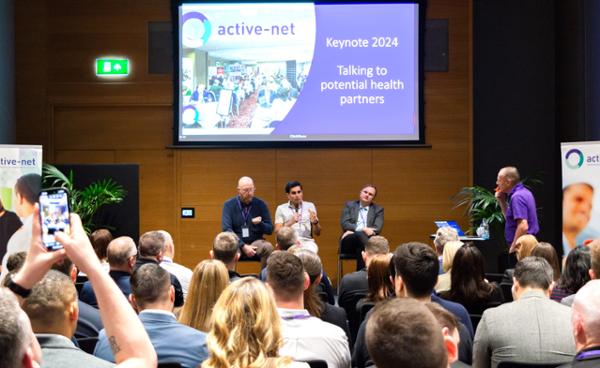
The second change was the ending of our collaboration with SIBEC. When this happened, we saw an opportunity to create a similar but more business-focused event in the UK – something with a broader appeal to local authorities and trusts. It was at this point that Dave Monkhouse joined the team, with our first Active-Net event taking place 10 years ago.
Fast-forward to today and we’re diversifying into new sectors with the launch of private sector and open water events. People see us as an honest arbiter bringing people together, including our competitors, for great networking.
The third change has been the evolution of our customer experience research, including the expansion and development of our online e-Focus platform.
Julie Allen: It was at this point I came on board. Mike and Dave felt the company needed a new injection of energy and I joined the team in August 2022. My first task was to look at e-Focus, seeking feedback from our partners before rebuilding the whole thing.
We’re still rebuilding some of the platforms, adding automation and continuing to make data more enjoyable to use. We also continue to expand our range of products. However, we already span the full customer journey, from joining to the point where someone is considering leaving.
What achievements are you most proud of over the last 25 years?
Mike Hill: The development of the Active-net buyer meets supplier event.
With the support of Dave Monkhouse, this has been one of my proudest achievements. The first year we ran this event we managed to scrape together 40 buyers and operators, it's now almost double that size.
We also run three other similar events, for the private sector, the open water market and the plant-based food sector. They’re incredibly hard work but very rewarding and it's great that so many people now see them as a permanent and valuable event in the sector calendar.
What are the biggest challenges you’ve faced?
Mike Hill: In the first few years it was very difficult to get buy-in from the sector when it came to investing in insight and market research.
Our industry tends to attract very good “generalists”, by that I mean people who are quite good at doing a lot of things, so many operators and managers tended to do their own research and insight and didn't see why they should outsource it. We overcame this by developing software that they couldn’t have developed themselves and secondly by building benchmark data so that they could compare their own findings against a sector standard.
How have consumers changed over the last 25 years?
Mike Hill: I think consumers have become much more savvy about the sector – about what good practice is and when they’re getting value for money.
In the early days when there was rapid growth – particularly in the private sector – operators could build a successful business by churning through new members. That would be impossible now. The competition is much greater and customer expectations are higher.
How has the industry changed?
Mike Hill: The sector is much more professional and generally more qualified than it was 25 years ago, but most of the key challenges remain the same.., how to attract new customers and keep them! We still tend to be a great deal better at the former than the latter.
Tell us more about your role in Moving Communities
Mike Hill: Moving Communities was born four years ago, during and as a result of the pandemic. Designed to evidence the value of public sector leisure centres to their local communities – and focused exclusively on facilities in England – it quantifies the importance of their continued operation based on factors such as participation, public perception of the centres’ importance and also social value: the forecast impact on healthcare costs should facilities close and people become inactive, for example.
We lead on the experiential research, measuring and monitoring user and non-user perceptions of the centres.
There are two parts to what we do. The first is the community survey – an online residents’ survey around activity levels, finding out what would encourage them to do more and their thoughts on local provision – from leisure centres to outdoor spaces to active travel.
We recommend operators commission a survey every two to three years as part of their strategy development. As an example, recent research in Leeds highlighted a need to move some emphasis away from leisure centres towards more community centre outreach.
The results of each year’s community surveys are then collated for Moving Communities.
Then there’s the customer experience survey – the largest of its kind in the sector. Taking place from June to October each year, it surveys 30,000–60,000 people and spans hundreds of local authorities and operators. It looks at everything from Net Promoter Score (NPS) and customer satisfaction to areas for improvement, motivations for using the facilities, methods of travel and – going back to the need to evidence our worth during the pandemic – the extent to which people value their local leisure centres.
Moving Communities has already played a vital role in securing central government funding – the National Leisure Recovery Fund and the Swimming Pool Support Fund, for example.
Have perceptions of local government provision improved over the years?
Mike Hill: Not enough, which is worrying.
If you look at retention and NPS scores today compared to 10 or 20 years ago, they’re very similar. I think that’s partly down to the higher levels of competition now, where it’s so easy to switch between gyms or even exercise elsewhere using wearable tech.
Meanwhile, the gap between those who are engaged and those who aren’t is more extreme than ever. There’s a small percentage of the population who are informed, active and eating healthily, but a growing proportion who for various socioeconomic reasons are even more entrenched in sedentary, unhealthy lifestyles. Who do we serve as a sector?
We do quite a lot of focus groups among inactive people in relatively deprived areas and when you hear how far off their radar physical activity is – mostly for reasons of time and money – it’s a real wake-up call. Activity of any sort, let alone coming to our centres, is so far from their minds. They’re focused on being able to feed their kids.
It’s good to see our sector beginning to respond by doing more outreach work, promoting movement of all kinds and training staff in soft skills, such as engagement and motivation. It’s also positive that organisations such as UK Active and Sport England feel the new government will be open to viewing our sector as an essential part of the health of the nation.
However, we still need to ask what else we can do differently. Just look at the success of not-for-profit Parkrun, with its engaged communities, teams of volunteers and simple framework. It has shifted the dial significantly in terms of people’s activity levels. Why couldn’t local authorities have done this?
Tell us about your customer experience work.
Julie Allen: Our consumer insight panel is a third-party app we use to understand and interrogate consumer behaviour, looking at things such as people’s desire to be physically active and barriers to this.
Operators looking to attract more customers within a specific geographical area use the insights to shape their marketing and at a national level, we use the panel to conduct regular research into the industry, which we share.
Mike Hill: Then there’s e-Focus, which now includes products such as sales-Focus and swim-Focus for lead generation; feedback-Focus, which essentially replaces the customer comment card; Net Promoter Score; a new onboarding product to measure the effectiveness of an onboarding journey; and recovery-Focus for that crucial moment when a customer is thinking about leaving and an intervention could save them.
Julie Allen: Recovery-Focus is very interesting. If operators dedicate the same time and attention to this intervention point as they do to the sales process – gathering insight around why people joined in the first place and why they’re looking to leave – they can have informed, effective conversations. At Circadian Trust, 17 members were saved at one of its sites in just two weeks.
Our new onboarding product is also interesting. It doesn’t just track attendance within the vital first 12 weeks of membership, it also explores happiness and member experience, asking members how they rate the leisure centre/club so far, as well as questions such as ‘have you noticed you’re feeling more energetic / sleeping better since you joined?’
Bringing together our consumer insight with findings from our various e-Focus products, we’re able to give clients actionable insights. We also build on this with learning and development roadshows for their teams. We apply our insights to their business strategies, combined with an overview of the national picture and trends, to show them how they benchmark against other operators and where they can improve. We also support operators on a journey of cultural change.
What’s the latest from your consumer insight panel?
Julie Allen: Earlier this year, we supplemented UK Active’s consumer engagement poll regarding attitudes to physical activity among those with and without health conditions.
Our research highlights the importance of creating experiences that help people adopt healthy habits: those who exercise regularly are more likely to attend their leisure facility for treatment such as physiotherapy, rather than the traditional GP/hospital route.
We also recently delivered lapsed member research in collaboration with HCM as the team on the magazine wanted to understand why people are prepared to pay for a membership and not use it, particularly during a cost of living crisis. You can read more at www.HCMmag.com/sleepers.
There were many reasons, including social connections, status and fear of losing their membership, but the overarching reasons were ‘hope’ and self identity: members who pay but don’t use their membership – women especially, hope they will be motivated enough to return and feel that being a member of a health club powers their sense of self.
We did some interesting research around price sensitivity in 2022 (www.HCMmag.com/pricing). There were regional differences as well as variances between public and private sectors, with less sensitivity in the private sector. However, we found that overall people were willing to accept a 5–10 per cent price rise on average, with those aged over 65 years the most price sensitive.
We’re currently investigating how members feel at the point of purchase as part of a collaborative study with Xplor. Full details will be released soon and we can see clear trends that operators will be able to apply in their sales process.
Tell us about your rebrand
Julie Allen: With our expanded offering in place, in 2023 we became Active-Insight with the aim of being a trusted partner that really understands the consumer – both users and non-users – through our research.
We set out to connect people through insights, enabling data-driven decisions that improve the customer experience, create more physical activity fans and spread the positive word around communities.
Our vision is to have our customer experience platforms deeply embedded within operations, with data and insights presented in such an accessible way that logging in becomes a natural part of an operator’s day. Get into the office, log into your emails, log into our platform to access the intelligence and insight that are so vital to the operation.
We believe in the industry. We believe people should always leave our facilities feeling better. But we need to measure this if we want to create memorable services.
We’re also really keen to encourage suppliers to use our research, so they can measure and understand the experience of their customers – the operators. There’s an opportunity here to develop relationships that are more aligned and less transactional.
What is the future for Active-Insight?
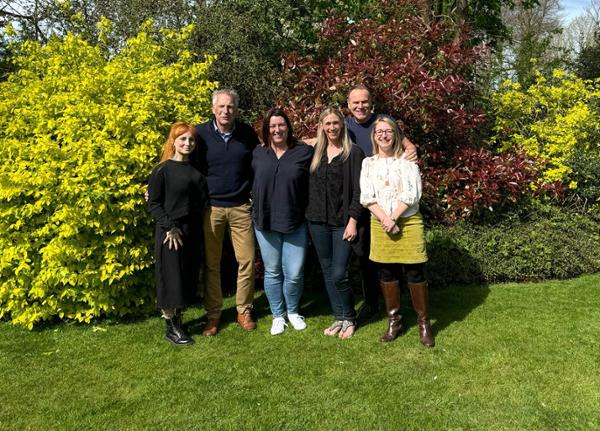
Mike Hill: We joke that I’m the past, Dave is the present and Julie is the future! At the moment, the business is owned by Dave and me, but as we begin to step back, we’re handing over the reins to Julie and using an Employee Share Scheme to gift a percentage of the business to the team.
We want the business to carry on as it has, engaged with the sector and with its core values intact. Under Julie’s leadership, we believe we’ll achieve that continuity.
Where do you see the business at 50?
Dave and I will be retired and I’m sure Jules – our future MD – will have grown the business in ways that we can't even imagine now.
It will definitely be even more reliant on technology, but people and personal relationships will still be at the heart of everything the business does.
Can you identify the industry innovations you most admire?
24-hour budget gyms are one of the most radical changes that the sector has seen over the last 25 years. They’ve increased the breadth and depth of gym membership permanently and made the rest of the sector review how and why they do things.
More: www.activeinsight.co.uk