



















GET HCM
magazine
Sign up for the FREE digital edition of HCM magazine and also get the HCM ezine and breaking news email alerts.
Not right now, thanksclose this window I've already subscribed!
Follow Health Club Management on Twitter Like Health Club Management on Facebook Join the discussion with Health Club Management on LinkedIn
FITNESS, HEALTH, WELLNESS

features

Member payments:: Money talks

Consumers want convenience and clubs want to make it easy for them to spend money, so are member payment systems keeping up with both consumer and industry trends? Kath Hudson reports

By Kath Hudson | Published in Health Club Management 2014 issue 7

New innovations in technology, changing consumer preferences and new business models adopted by health clubs, which are increasingly moving away from monthly direct debits towards more flexible usage patterns and payment schemes – all these trends are having an impact on the ways in which gym users expect to be able to pay for products and services.

But it seems the more ways there are to spend, the longer the list of considerations. Should clubs move towards a cashless system in-club that might encourage members to spend more money, but that also requires a not insignificant upfront investment? If people book into classes via their smartphones, how should they pay – online, in-club or on account? Should clubs develop apps that allow for online bookings and payment?

And are there any facets of the health club business where direct debits still work well? For example Sean Maguire, COO of software provider Legend, has noticed some operators putting quarterly payments like swimming lessons onto direct debit, as this reduces the admin that comes with renewals and makes things easier for the customer as well as the leisure facility.

Going cashless
According to Alexander Egele, business development manager at Gantner, with the low-cost sector causing membership fees to fall across Europe, there’s more pressure on clubs to make money out of secondary spend – including monetising services like showers.

“The best way to generate income while still giving members a good experience is by using cashless payments,” says Egele. “This makes it easier for people to spend money, which means they’re more likely to do so.”

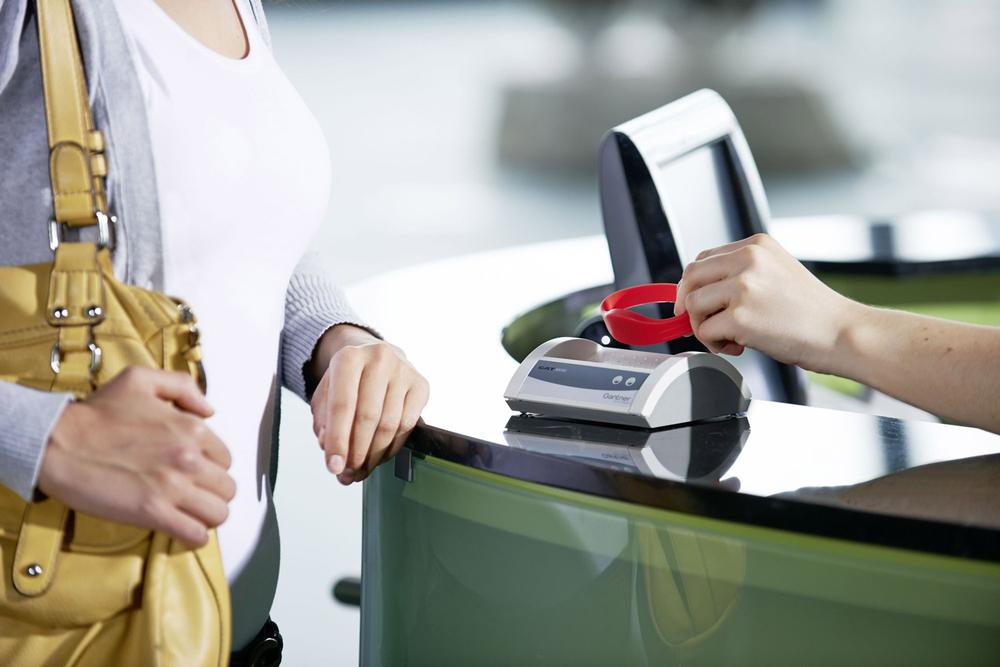
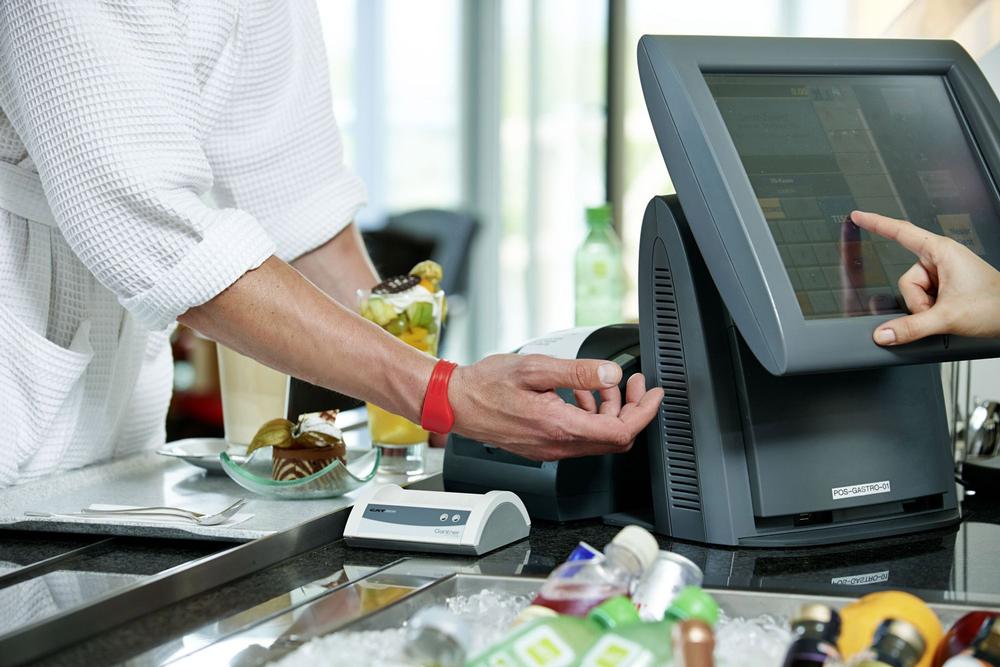
Going cashless involves using membership cards, or better still for a wet environment, wristbands. These can be used for access, lockers and to pay for products and services.

“There’s still some hesitation in the UK, but cashless payment is now very popular in Europe. Some operators allow members to run up credit, but if you persuade members to deposit money onto their card or wristband, this can provide operators with useful cashflow,” says Egele.

Jacob Herborg Nathan, head of sales at Exerp, believes the start-up costs for installing a cashless system can be offset through ongoing cost savings – for example, having wristbands dispensed by a machine, and offering quality vending instead of operating a café.

This cashless approach has been fully embraced by operators such as Fresh Fitness in Scandinavia. Security was one of the main reasons the operator decided to go down the cashless route, but higher secondary spend has been a welcome side-effect (see briefing, p72).

Power in your palm
Offering the option of booking classes and managing memberships online –  particularly via mobile phones – is another trend that’s continuing to gather pace, and operators must ensure they aren’t left behind as consumers become more accustomed to this level of convenience (see also HCM June 14, p69).

“We’re hearing a clarion call when it comes to payments,” says Maguire. “There’s a widespread desire to be able to make payments using mobile phones. Currently, we facilitate two million online smartphone bookings each month, many of which are done on people’s commute to and from work.”

And Kevin Scott, director at Harlands Group, says his company’s services were used to sign up over a million members online in 2013. “We now see over 50 per cent of members joining online via smart devices,” he adds.

Using phones to enable in-club payments also looks likely to become more widespread in the near future. Ivan Stevenson, director at Debit Finance, points to the high levels of innovation in the area of virtual wallets, contactless smartphone apps and NFC technology. “These innovations lend themselves well to a health club point of sale/retail environment, where a member doesn’t necessarily have cash or their wallet in-hand but typically has their phone,” he explains.

In line with this, Gladstone is working on continuous payment authority, which will allow people to pay via their phone using a passcode. The aim is for this to remove barriers to purchase and make transactions as seamless as possible.

Flexible models
Tom Withers, sales and marketing director at Gladstone, says the company has also been looking at other markets to see how they have evolved – the mobile phone sector, for example, which used to be almost exclusively subscription-based, but now offers multiple ways to pay, including options such as pay as you go and personalised monthly packages.

The new breed of microgyms – including specialist cycling studios such as Psycle (see briefing above) – have embraced this sort of flexible model. This new style of club typically offers packages of perhaps 10 or 20 sessions, as well as a ‘pay as you go’ option where customers pay on a class-by-class basis.

 “The fitness industry is already exploring this to a degree by charging a lower monthly membership and then offering top-up services,” adds Withers. “As a software provider, we can facilitate this. 

“By creating flexible applications, we enable operators to offer a range of membership packages to meet their customers’ demands. Many choose to offer a single core fixed-benefit membership package and the option to buy additional benefits – for instance, a core gym membership with add-on swim, towel hire, locker hire, PT and so on.

“It’s about finding ways of keeping people as customers even if they can no longer afford a full monthly membership fee. As people’s lifestyles change, the types of package on offer to them must change too or you risk losing them completely. Offering limited time packages or pick and choose memberships are ideal.” 

He continues: “Each year, we hold a number of regional and national innovation summits where we talk to our customers about their changing business needs, which then supports and guides our future development programme.”

Going forward it’s going to be all about ease and efficiency, both for consumers to spend their money, and for clubs to collect it.

PSYCLE

Psycle London is a no-contract, premium group cycling studio in London, UK, where members buy credits and book classes online (see also HCM June 14, p40). When they register, customers also have the option of saving their credit card details so any in-club purchases can be charged straight to the card.

Co-founder and CEO Colin Waggett, former CEO of Fitness First, says this straightforward, no membership fee or contract approach was the obvious route: “Having come from an environment where contracts were such a source of confusion, I was really happy to leave all that behind and just focus on selling the product. Our system is simple and reflective of our customers, who know their own habits. They don’t want to go to the same facility three or four times a week, but they’ll use us twice a week and maybe go to Triyoga, work with a PT, or have a run in the park as well.”
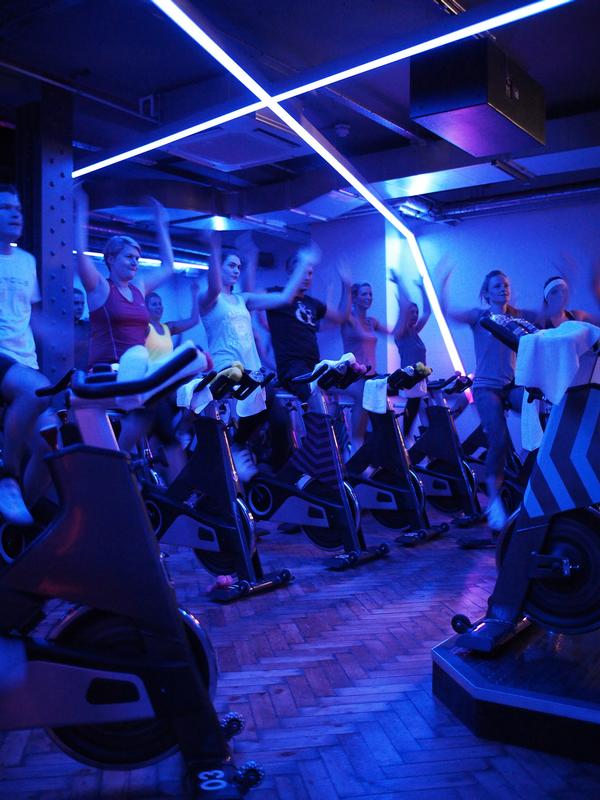
At Psycle London there are no contracts or joining fees

FRESH FITNESS

Exerp supports a cashless system at the 35-strong Scandinavian budget chain Fresh Fitness. Customers book online and, when they enter the health club, are given a Gantner wristband which they can use to access the club, buy drinks and snacks at the vending machine and enter a class. Any purchases are added to the next month’s direct debit payment, with the credit capped at £50.

“When we founded the chain in 2010, we looked through all the processes including cash handling,” says CEO Rasmus Ingerslev. “We run a partially staffed model, with staff not tied to the front desk. To have cash in one location and staff in another was a bad idea. We’re also open 24 hours a day, but only staffed from 10.00am to 9.00pm. There’s often only one member of staff present and we didn’t want them to ever be in the position of being threatened for money. Finally, if we had cash in the club it would have to be counted at every shift change, which is a manual process and we’re allergic to manual processes!”

Fresh Fitness believes being cashless is also much better for the end user, as very often people go to the gym in their workout gear and don’t want to carry wallets. “We strongly believe this system matches the needs of today’s consumers, who are all about convenience,” says Ingerslev. “Offering credit and products when they want them, without having to queue, is very much in-line with what people want. The percentage we make on secondary spend is higher than I’ve seen at any other club in my career.”

Ingerslev concedes there is a danger people might run up accounts and cancel their direct debit, which is why credit is capped at £50. However, he says this has not been a major issue to date and believes the benefits of increased secondary spend far outweigh any disadvantages. In addition, he says the upfront investment in the technology is balanced by ongoing cost savings when it comes to staffing.

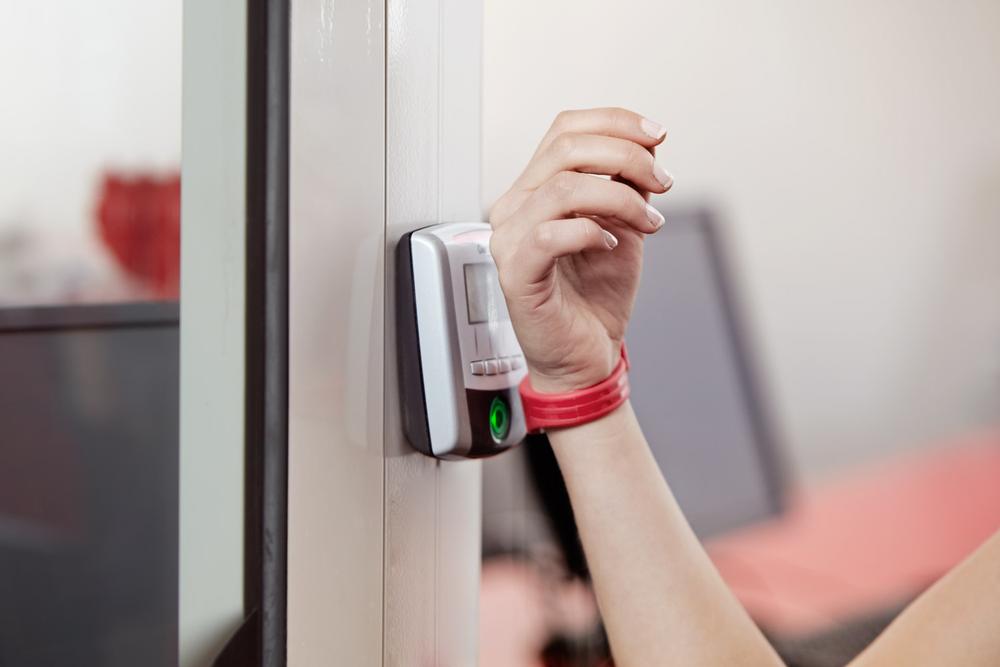
Going cashless means no need for wallets
Sign up here to get HCM's weekly ezine and every issue of HCM magazine free on digital.
Cashless payment devices can be installed around the club, allowing members to swipe in for optional services such as studio classes and showers
Quality vending can help a club avoid the costs of running a café
One size fits all: The same wristband can be used for club access, lockers and cashless payments around the club
Wristbands can be credited with money to pay for products in-club
https://www.leisureopportunities.co.uk/images/HCM2014_7payment.jpg
Kath Hudson reports on payment trends in health and fitness
RFID, NFC, Gladstone, Exerp, Gantner, Harlands, Legend, Debit Finance, Psycle, Fresh Fitness,Payment, cashless, RFID, NFC, Gladstone, Exerp, Gantner, Harlands, Legend, Debit Finance, Psycle, Fresh Fitness
HCM magazine
Strength training is evolving, driven by changing consumer preferences. Julie Cramer talks to innovators about how their products are meeting this demand
HCM magazine
Small improvements to sleep, diet and physical activity have major benefits for the heart, according to new research from the University of Sydney
HCM magazine
For every member with a tripod and a big following, there are others irritated at the way equipment is being hogged or wary they’ll be in the background on someone’s Insta feed. Do influencers offer valuable, free marketing or are they just a nuisance? Kath Hudson finds out how operators are responding
HCM magazine
As the entrepreneur who started Wexer, Fresh Fitness, Fitness DK and Repeat, as well as being a former elite athlete, Rasmus Ingerslev’s life looked perfect from the outside, but onthe inside it was a different story. He talks to Kath Hudson about healing old wounds
HCM magazine
If the health service is to survive, we must recognise that it is a disease service – and that wellbeing rests with us, says the activity advocate and healthy ageing champion. He talks to Kate Cracknell
HCM promotional features
Sponsored
Greg Bradley looks at the shift towards strength training in gyms and advises on how operators can create the ultimate training environment
HCM promotional features
Sponsored
Third Space partnered with IndigoFitness to deliver a bespoke training space for its new club at The Whiteley
HCM promotional features
Sponsored
David Lloyd is stepping up its commitment to women’s health as it continues to explore what fit-for-purpose looks like for the female population
HCM promotional features
Sponsored
Find out how your gym can tap into the corporate wellness boom
HCM promotional features
Sponsored
Starpool supports Olympic champion Marcell Jacobs, says Riccardo Turri
HCM promotional features
Sponsored
SnowDome Fitness has added 50 per cent more space with cutting-edge Technogym solutions
HCM promotional features
Sponsored
EGYM has opened a new HQ in Paternoster Square, London and revealed a range of new launches
HCM promotional features
Sponsored
Pulse Fitness has created a new health club delivering an elevated wellness experience
HCM promotional features
Sponsored
The industry is embracing consumer-facing tech. Now it’s time to streamline back-of-house systems with Orbit4, says Daniel Jones
HCM promotional features
Latest News
An ambitious women’s only strength and lifting studio concept is set to launch in Dallas this ...
Latest News
Finnish outdoor fitness equipment specialist, Omnigym, has partnered with charity, Emmaüs Solidarité, to launch an ...
Latest News
Virgin Active has officially opened its redesigned Mayfair club, unveiling its latest Social Wellness Club ...
Latest News
Europe’s largest low-cost operator, Basic-Fit, has agreed to acquire 41 Wellyou clubs in Germany for ...
Latest News
Longevity is the most important motivator for today’s exercisers and social connection is key, according ...
Latest News
Until has opened its fourth club at Canary Wharf, in the iconic YY London building. ...
Latest News
Ben Allen has been appointed managing director at Common Bond. Having set the company up ...
Latest News
Les Mills, whose name became synonymous with one of the world's leading fitness brands, has ...
Opinion
promotion
Strength training has moved from the margins to the mainstream.
Opinion: Building smarter strength spaces for today’s operators
Featured supplier news
Featured supplier news: CoverMe extends matching service to personal training, rewriting how members and personal trainers connect
CoverMe, the global leader in fitness workforce management, today launches CoverMe PT, an on-demand personal training platform that connects the right personal trainer to the right client in under 10 seconds.
Featured supplier news
Featured supplier news: Cornerstone Connect helps Active Blackpool tackle health inequalities
Active Blackpool is deploying Cornerstone Connect, a new digital interface allowing disparate information from multiple systems to be aggregated into one dataset, to support its focus on reducing health inequalities and improving healthy life expectancy.
Company profiles
Company profile: Swimming Teachers' Association (STA)
The Swimming Teachers’ Association (STA) is a national governing body for swimming and a UK-registered ...
Company profiles
Company profile: Places Leisure
Places Leisure aims to enlighten our communities about the benefits of a healthy lifestyle in ...
Supplier Showcases
Supplier Showcase - From nightclub to health club
Supplier Showcases
Supplier Showcase - Future-proofing
Catalogue Gallery
Click on a catalogue to view it online
Featured press releases
Panatta press release: On Air Fitness chooses Panatta and its Made in Italy fitness equipment
French fitness chain On Air Fitness, with 113 clubs across France and internationally (Spain, Morocco and Portugal) and more than 430,000 members, has chosen to introduce Panatta equipment — a 12-machine circuit from the premium Free Weight Special line —
Featured press releases
ukactive press release: UK Active announces plans for National Fitness Day 2026
UK Active has announced the details of National Fitness Day 2026, with the flagship campaign set to take place on Wednesday 16 September 2026.
Directory
Spa and beauty equipment
Oakworks Inc: Spa and beauty equipment
Fitness tracking platform
SpiviTech: Fitness tracking platform
Lockers
Crown Sports Lockers: Lockers
Hot tubs
MSpa International Ltd: Hot tubs
Water experiences and hydrotherapy solutions
Aquaform s.r.l.: Water experiences and hydrotherapy solutions
Industrial washing machines
Miele Company Limited: Industrial washing machines
Property & Tenders
Stratford, East London.
Lee Valley Regional Park Authority
Property & Tenders
Y Felinheli, LL56 4QN
Newmark
Property & Tenders
Diary dates
21-24 Sep 2026
The Langham Huntington Pasadena , Pasadena, United States
Diary dates
06-08 Oct 2026
Messe Stuttgart, Stuttgart, Germany
Diary dates
22-22 Oct 2026
QEII Conference Centre, London,
Diary dates
26-29 Oct 2027
Koelnmesse Exhibition Centre, Cologne, Germany
Diary dates

features

Member payments:: Money talks

Consumers want convenience and clubs want to make it easy for them to spend money, so are member payment systems keeping up with both consumer and industry trends? Kath Hudson reports

By Kath Hudson | Published in Health Club Management 2014 issue 7

New innovations in technology, changing consumer preferences and new business models adopted by health clubs, which are increasingly moving away from monthly direct debits towards more flexible usage patterns and payment schemes – all these trends are having an impact on the ways in which gym users expect to be able to pay for products and services.

But it seems the more ways there are to spend, the longer the list of considerations. Should clubs move towards a cashless system in-club that might encourage members to spend more money, but that also requires a not insignificant upfront investment? If people book into classes via their smartphones, how should they pay – online, in-club or on account? Should clubs develop apps that allow for online bookings and payment?

And are there any facets of the health club business where direct debits still work well? For example Sean Maguire, COO of software provider Legend, has noticed some operators putting quarterly payments like swimming lessons onto direct debit, as this reduces the admin that comes with renewals and makes things easier for the customer as well as the leisure facility.

Going cashless
According to Alexander Egele, business development manager at Gantner, with the low-cost sector causing membership fees to fall across Europe, there’s more pressure on clubs to make money out of secondary spend – including monetising services like showers.

“The best way to generate income while still giving members a good experience is by using cashless payments,” says Egele. “This makes it easier for people to spend money, which means they’re more likely to do so.”

Going cashless involves using membership cards, or better still for a wet environment, wristbands. These can be used for access, lockers and to pay for products and services.

“There’s still some hesitation in the UK, but cashless payment is now very popular in Europe. Some operators allow members to run up credit, but if you persuade members to deposit money onto their card or wristband, this can provide operators with useful cashflow,” says Egele.

Jacob Herborg Nathan, head of sales at Exerp, believes the start-up costs for installing a cashless system can be offset through ongoing cost savings – for example, having wristbands dispensed by a machine, and offering quality vending instead of operating a café.

This cashless approach has been fully embraced by operators such as Fresh Fitness in Scandinavia. Security was one of the main reasons the operator decided to go down the cashless route, but higher secondary spend has been a welcome side-effect (see briefing, p72).

Power in your palm
Offering the option of booking classes and managing memberships online –  particularly via mobile phones – is another trend that’s continuing to gather pace, and operators must ensure they aren’t left behind as consumers become more accustomed to this level of convenience (see also HCM June 14, p69).

“We’re hearing a clarion call when it comes to payments,” says Maguire. “There’s a widespread desire to be able to make payments using mobile phones. Currently, we facilitate two million online smartphone bookings each month, many of which are done on people’s commute to and from work.”

And Kevin Scott, director at Harlands Group, says his company’s services were used to sign up over a million members online in 2013. “We now see over 50 per cent of members joining online via smart devices,” he adds.

Using phones to enable in-club payments also looks likely to become more widespread in the near future. Ivan Stevenson, director at Debit Finance, points to the high levels of innovation in the area of virtual wallets, contactless smartphone apps and NFC technology. “These innovations lend themselves well to a health club point of sale/retail environment, where a member doesn’t necessarily have cash or their wallet in-hand but typically has their phone,” he explains.

In line with this, Gladstone is working on continuous payment authority, which will allow people to pay via their phone using a passcode. The aim is for this to remove barriers to purchase and make transactions as seamless as possible.

Flexible models
Tom Withers, sales and marketing director at Gladstone, says the company has also been looking at other markets to see how they have evolved – the mobile phone sector, for example, which used to be almost exclusively subscription-based, but now offers multiple ways to pay, including options such as pay as you go and personalised monthly packages.

The new breed of microgyms – including specialist cycling studios such as Psycle (see briefing above) – have embraced this sort of flexible model. This new style of club typically offers packages of perhaps 10 or 20 sessions, as well as a ‘pay as you go’ option where customers pay on a class-by-class basis.

 “The fitness industry is already exploring this to a degree by charging a lower monthly membership and then offering top-up services,” adds Withers. “As a software provider, we can facilitate this. 

“By creating flexible applications, we enable operators to offer a range of membership packages to meet their customers’ demands. Many choose to offer a single core fixed-benefit membership package and the option to buy additional benefits – for instance, a core gym membership with add-on swim, towel hire, locker hire, PT and so on.

“It’s about finding ways of keeping people as customers even if they can no longer afford a full monthly membership fee. As people’s lifestyles change, the types of package on offer to them must change too or you risk losing them completely. Offering limited time packages or pick and choose memberships are ideal.” 

He continues: “Each year, we hold a number of regional and national innovation summits where we talk to our customers about their changing business needs, which then supports and guides our future development programme.”

Going forward it’s going to be all about ease and efficiency, both for consumers to spend their money, and for clubs to collect it.

PSYCLE

Psycle London is a no-contract, premium group cycling studio in London, UK, where members buy credits and book classes online (see also HCM June 14, p40). When they register, customers also have the option of saving their credit card details so any in-club purchases can be charged straight to the card.

Co-founder and CEO Colin Waggett, former CEO of Fitness First, says this straightforward, no membership fee or contract approach was the obvious route: “Having come from an environment where contracts were such a source of confusion, I was really happy to leave all that behind and just focus on selling the product. Our system is simple and reflective of our customers, who know their own habits. They don’t want to go to the same facility three or four times a week, but they’ll use us twice a week and maybe go to Triyoga, work with a PT, or have a run in the park as well.”

At Psycle London there are no contracts or joining fees

FRESH FITNESS

Exerp supports a cashless system at the 35-strong Scandinavian budget chain Fresh Fitness. Customers book online and, when they enter the health club, are given a Gantner wristband which they can use to access the club, buy drinks and snacks at the vending machine and enter a class. Any purchases are added to the next month’s direct debit payment, with the credit capped at £50.

“When we founded the chain in 2010, we looked through all the processes including cash handling,” says CEO Rasmus Ingerslev. “We run a partially staffed model, with staff not tied to the front desk. To have cash in one location and staff in another was a bad idea. We’re also open 24 hours a day, but only staffed from 10.00am to 9.00pm. There’s often only one member of staff present and we didn’t want them to ever be in the position of being threatened for money. Finally, if we had cash in the club it would have to be counted at every shift change, which is a manual process and we’re allergic to manual processes!”

Fresh Fitness believes being cashless is also much better for the end user, as very often people go to the gym in their workout gear and don’t want to carry wallets. “We strongly believe this system matches the needs of today’s consumers, who are all about convenience,” says Ingerslev. “Offering credit and products when they want them, without having to queue, is very much in-line with what people want. The percentage we make on secondary spend is higher than I’ve seen at any other club in my career.”

Ingerslev concedes there is a danger people might run up accounts and cancel their direct debit, which is why credit is capped at £50. However, he says this has not been a major issue to date and believes the benefits of increased secondary spend far outweigh any disadvantages. In addition, he says the upfront investment in the technology is balanced by ongoing cost savings when it comes to staffing.
Going cashless means no need for wallets
Sign up here to get HCM's weekly ezine and every issue of HCM magazine free on digital.
Cashless payment devices can be installed around the club, allowing members to swipe in for optional services such as studio classes and showers
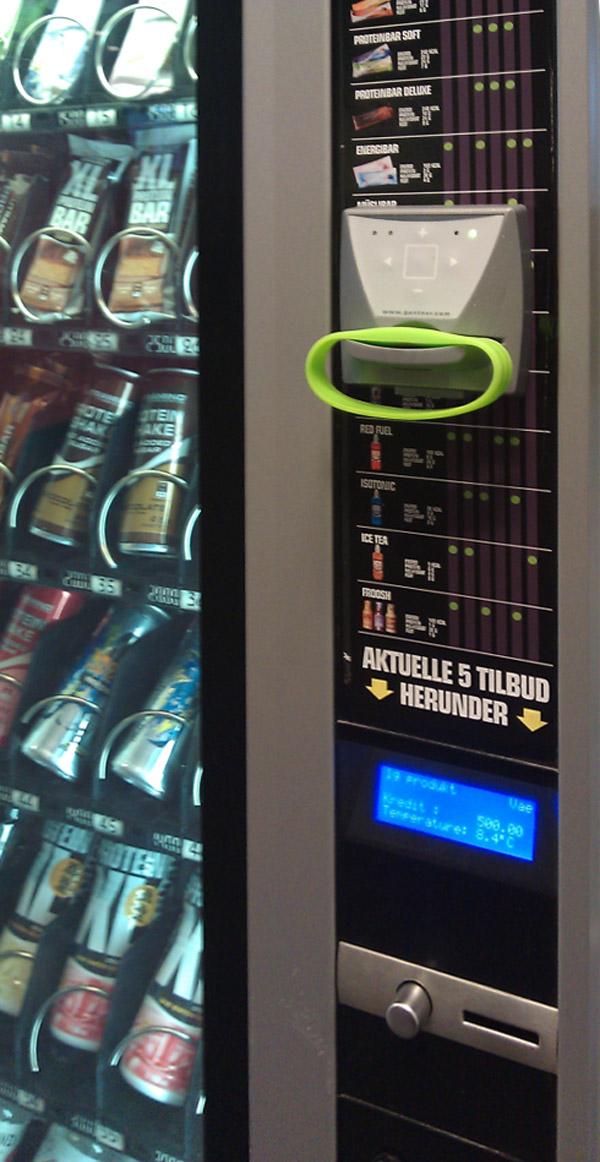
Quality vending can help a club avoid the costs of running a café
One size fits all: The same wristband can be used for club access, lockers and cashless payments around the club
Wristbands can be credited with money to pay for products in-club
https://www.leisureopportunities.co.uk/images/HCM2014_7payment.jpg
Kath Hudson reports on payment trends in health and fitness
RFID, NFC, Gladstone, Exerp, Gantner, Harlands, Legend, Debit Finance, Psycle, Fresh Fitness,Payment, cashless, RFID, NFC, Gladstone, Exerp, Gantner, Harlands, Legend, Debit Finance, Psycle, Fresh Fitness
Latest News
An ambitious women’s only strength and lifting studio concept is set to launch in Dallas this ...
Latest News
Finnish outdoor fitness equipment specialist, Omnigym, has partnered with charity, Emmaüs Solidarité, to launch an ...
Latest News
Virgin Active has officially opened its redesigned Mayfair club, unveiling its latest Social Wellness Club ...
Latest News
Europe’s largest low-cost operator, Basic-Fit, has agreed to acquire 41 Wellyou clubs in Germany for ...
Latest News
Longevity is the most important motivator for today’s exercisers and social connection is key, according ...
Latest News
Until has opened its fourth club at Canary Wharf, in the iconic YY London building. ...


Latest News
Ben Allen has been appointed managing director at Common Bond. Having set the company up ...
Latest News
Les Mills, whose name became synonymous with one of the world's leading fitness brands, has ...
Latest News
People taking GLP-1 weight loss medications such as Ozempic, Wegovy, Mounjaro and Zepbound may be ...
Latest News
Low-cost gym operator, PureGym, is trialling recovery zones at two of its UK sites, democratising ...
Latest News
In a milestone moment, mental health has become a core part of CIMSPA’s occupational professional ...
Opinion
promotion
Strength training has moved from the margins to the mainstream.
Opinion: Building smarter strength spaces for today’s operators
Featured supplier news
Featured supplier news: CoverMe extends matching service to personal training, rewriting how members and personal trainers connect
CoverMe, the global leader in fitness workforce management, today launches CoverMe PT, an on-demand personal training platform that connects the right personal trainer to the right client in under 10 seconds.
Featured supplier news
Featured supplier news: Cornerstone Connect helps Active Blackpool tackle health inequalities
Active Blackpool is deploying Cornerstone Connect, a new digital interface allowing disparate information from multiple systems to be aggregated into one dataset, to support its focus on reducing health inequalities and improving healthy life expectancy.
Company profiles
Company profile: Swimming Teachers' Association (STA)
The Swimming Teachers’ Association (STA) is a national governing body for swimming and a UK-registered ...
Company profiles
Company profile: Places Leisure
Places Leisure aims to enlighten our communities about the benefits of a healthy lifestyle in ...
Supplier Showcases
Supplier Showcase - From nightclub to health club
Supplier Showcases
Supplier Showcase - Future-proofing
Catalogue Gallery
Click on a catalogue to view it online
Featured press releases
Panatta press release: On Air Fitness chooses Panatta and its Made in Italy fitness equipment
French fitness chain On Air Fitness, with 113 clubs across France and internationally (Spain, Morocco and Portugal) and more than 430,000 members, has chosen to introduce Panatta equipment — a 12-machine circuit from the premium Free Weight Special line —
Featured press releases
ukactive press release: UK Active announces plans for National Fitness Day 2026
UK Active has announced the details of National Fitness Day 2026, with the flagship campaign set to take place on Wednesday 16 September 2026.
Directory
Spa and beauty equipment
Oakworks Inc: Spa and beauty equipment
Fitness tracking platform
SpiviTech: Fitness tracking platform
Lockers
Crown Sports Lockers: Lockers
Hot tubs
MSpa International Ltd: Hot tubs
Water experiences and hydrotherapy solutions
Aquaform s.r.l.: Water experiences and hydrotherapy solutions
Industrial washing machines
Miele Company Limited: Industrial washing machines
Property & Tenders
Stratford, East London.
Lee Valley Regional Park Authority
Property & Tenders
Y Felinheli, LL56 4QN
Newmark
Property & Tenders
Diary dates
21-24 Sep 2026
The Langham Huntington Pasadena , Pasadena, United States
Diary dates
06-08 Oct 2026
Messe Stuttgart, Stuttgart, Germany
Diary dates
22-22 Oct 2026
QEII Conference Centre, London,
Diary dates
26-29 Oct 2027
Koelnmesse Exhibition Centre, Cologne, Germany
Diary dates
Search news, features & products:
Find a supplier:
Partner sites