











Follow Health Club Management on Twitter Like Health Club Management on Facebook Join the discussion with Health Club Management on LinkedIn
FITNESS, HEALTH, WELLNESS

features

Heat experiences: Accessible spas

Why aren’t more health club spas disability-friendly? Vicky Kiernander asks the experts

By Vicky Kiernander | Published in Health Club Management 2016 issue 8
New-build spas should aim to provide disabled access to all facilities

We know spas and the facilities they offer provide a host of physical and mental benefits – so why aren’t more of them accessible to those who arguably need them most?

New spas can be designed to accommodate the needs of those with disabilities, but it can be far more challenging in older properties, where compromises often have to made.

And while regulations exist to ensure access for disabled people, some experts say they’re ill-defined and therefore open to interpretation: it’s down to individual operators to weigh up the cost of investing in accessible spa facilities – for what is, after all, a minority audience – against the potential cost of not paying due consideration to legislation. We talk to spa experts to get their views.

Gerard McCarthy,

Sales Director,

Dalesauna

Gerard McCarthy
Gerard McCarthy

Despite DDA legislation being around for some time, many architects still don’t consider the full implications of the regulations in thermal and wet areas. The regulations are woolly and can be open to interpretation.

For example, one new-build spa we worked on recently had four thermal rooms, none of which were designed by the architect to be DDA-compliant.

One of the key issues we come across is the 1,500mm wheelchair turning circle required in ‘rooms’ – which applies, or can be interpreted as applying, to thermal rooms such as saunas and steamrooms. If this 1,500mm circle is applied, it either requires the seating area in most conventionally-sized saunas and steamrooms to be almost completely removed, or it makes the available space for able-bodied users so small that it’s hardly worth doing. Alternatively, operators can make the rooms bigger, which has a big impact on budget for the relatively few times it will be used.

In older buildings, it’s often simply not practical or cost-effective to provide full DDA compliance, and ‘best endeavours’ take over. You have to demonstrate that you’ve given due consideration to DDA regulations, but if you can’t achieve them then compromises have to be made. All of our installations take DDA into consideration, be it via DDA-compliant doors as standard or through the application of the DDA 1,500mm circle – depending on the type of use, whether it’s a new build or a refurbishment, and so on.

My advice is to consider the law in the first instance. It can be woolly so ask an expert, who will always come down on the side of ‘more is better’ – we’d always suggest veering towards DDA compliance.

But also consider your market: will it affect your membership in a positive manner, or will it upset existing members due to the institutional appearance often created by the installation of handrails and hoists?

"Despite DDA legislation being around for some time, many architects still don’t consider the full implications
in thermal and wet areas" - Gerard McCarthy, Dalesauna

Abi Wright,

Co-founder and Managing Director,

Spabreaks.com
Abi Wright
Abi Wright

We launched ‘Spa for All’ to make the spa industry more accessible to a wider audience. Within the Spa for All umbrella, we have Recovery Retreats – which offer spa days and breaks for those with, or recovering from, cancer – and Accessible Spas, which highlight venues with facilities that cater for a range of disabilities, from impaired hearing and vision to mobility issues.

We also offer packages where anyone who has a carer can take their carer on the spa break with them, to use the facilities and help them enjoy their spa experience – at no extra cost.

It’s much easier for venues being built now to make facilities accessible: criteria have changed over the years and awareness about accessibility is much better than it used to be. However, for historic properties with tiny corridors and narrow stairways, it’s very difficult and expensive to make the buildings accessible – or else operators may find they can cater for one or two people, but don’t have the capacity to cater properly for everyone who needs improved accessibility.

For the most part, though, the people we work with very much want to make the changes. It just takes time, so it’s our job to highlight how important it is and the reasons it needs to become a priority.

There’s an argument to say there’s not enough of a market among people with disabilities to justify the costs of implementing accessible facilities a lot of the time, but the reality is that any of us could be in need of accessible facilities – whether temporarily, with a broken leg or an illness that affects your ability to move about, or permanently.

We also have an ageing population, so I can only see accessibility becoming more important. It’s about enhancing the experience for the market as a whole.

Best practice:

Mere Health Club & Spa

With a five-bubble rating from The Good Spa Guide, facilities at the Mere Health Club & Spa in Cheshire include a 20m pool, hydrotherapy pool and a thermal zone offering a salt room, steamroom and caladium.

For guests with disabilities, there’s a ramp into the spa and resort for ease of access; accessible changing facilities for male and female users; automatic doors to the pool and wet areas; a phone by the pool; wide steps into the pool rather than ladder steps; and wide corridors for wheelchairs. A carer policy has also been introduced, allowing carers to accompany their patients and use the spa facilities for free.

Claire Lomas, who became a paraplegic after a riding accident and now campaigns and raises funds to find a cure for paralysis, praises the Mere Spa as “a great spa and hotel for wheelchair users, making it struggle-free and relaxing”.
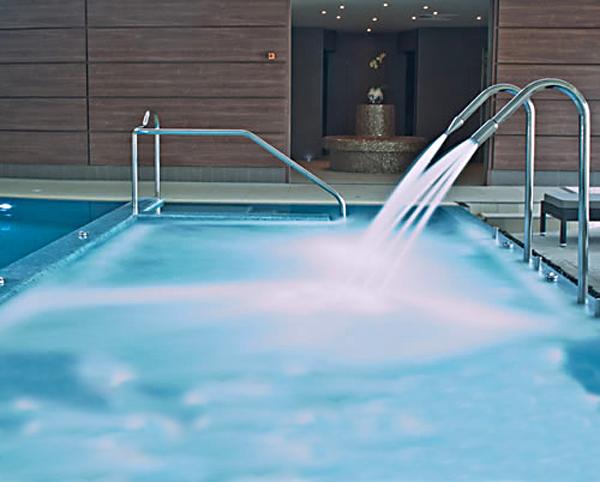
Mere Health Club & Spa

Ian Cotgrave,

Managing Director,

Createability
Ian Cotgrave
Ian Cotgrave

Building regulations require facilities to integrate disability access from the outset. It’s no longer enough to have bolt-on options – it’s a legal requirement. It’s vital to consider the range of users of the space, which could include wheelchair as well as walking disabled and visually- or hearing-impaired people, all of which will impact different elements of the spa’s interior design.

Doorway and corridors must be wide enough to accommodate free movement around the facility and allow for the turning of wheelchairs, whereas tactile surfaces and contrasting colours to differentiate between doors and frames can be helpful for partially-sighted or blind users. Semi-able bodied people may need grab rails for support, while smooth, uninterrupted floor surfaces can help avoid trip hazards.

Each treatment room, sauna or steamroom should be designed for compliance, to include either a dedicated area for wheelchairs or removable benches or seating where wheelchairs can be accommodated.

In the case of spas or hydrotherapy pools, deck-level access should be considered – or a dedicated overhead hoist system will need to be installed – and the height of showers and other features that need to be reached, such as ice fountains, should also be looked at in terms of accessibility.

Panic alarms with pull cords that reach the floor should be installed in all areas of the facility to ensure users can get help should they fall. These often form part of an integrated security system, which also includes flashing fire alarm beacons to alert hearing-impaired users. These need to be visible from any position within the facility, which could mean installing them in steamrooms and saunas that don’t have fully glazed doors.

"Building regulations require disability access to beintegrated from the outset. It’s no longer enough to have bolt-on options" - Ian Cotgrave, Createability

Best practice:

Larkfield Leisure Centre Spa

Tonbridge & Malling Leisure Trust (TMLT) and Tonbridge & Malling Borough Council co-funded a £400,000 upgrade of the spa at Larkfield Leisure Centre in Aylesford, UK, this spring.

The spa was stripped back to its shell and redesigned to accommodate a wider range of facilities including a sauna, steamroom, spa bath, ice feature and showers, and to make the spa accessible. To this end, the spa now has level access and features a hoist, allowing those with limited mobility to use the spa bath. Meanwhile the sauna and steamroom are accessible to wheelchair users. A fully Part M-compliant disabled changing facility is located next to the spa.

“As an inclusive operator, we want our facilities to be used by as many residents as possible to encourage mental and physical wellbeing,” says Martin Guyton, chief executive of TMLT. “This is reflected in the design of the new facility. We have a wide range of users with disabilities who access the spa, including many of our GP referral users.”
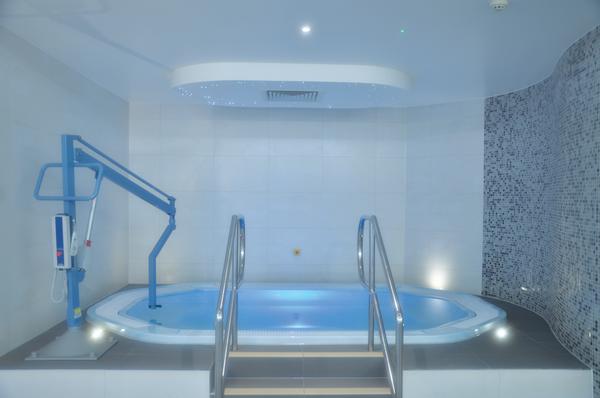
The spa pool features a hoist
Sign up here to get HCM's weekly ezine and every issue of HCM magazine free on digital.
Elite British sprinter Dina Asher-Smith training on the SKILLMILL
https://www.leisureopportunities.co.uk/images/815073_287143.jpg
Why aren’t more health club spas disability-friendly?
Vicky Kiernander, Journalist Gerard McCarthy, Sales director, Dalesauna Abi Wright, Co-founder and managing director, Ian Cotgrave, Managing director, Createability ,Spa, disability, inclusive, heat experiences, sauna, steam, Dalesauna, SpaBreaks, Gerard McCarthy, Abi Wright, Ian Cotgrave, Createability, Larkfield, Tonbridge & Malling, Mere, Vicky Kiernander, Claire Lomas
HCM magazine
The fitness industry is mourning the passing of Les Mills, a founding father of fitness, as Kath Hudson reports
HCM magazine
After decades of focusing on adult audiences, operators are starting to engage young people – unlocking growth opportunities while supporting the health and wellbeing of future generations
HCM magazine
Software suppliers explain how AI, automation and connected digital experiences can work for the good of operators and consumers
HCM magazine
Lisa Starr tries the Ammortal Chamber to see whether layering 10 modalities into one experience really delivers more
HCM magazine
The new CEO of UK Active talks to HCM about the gym-curious and why he believes the sector can double in size by the end of the next decade
HCM promotional features
Sponsored
Social fitness the missing link to member engagement, according to a new Myzone report
HCM promotional features
Sponsored
SnowDome Fitness has added 50 per cent more space with cutting-edge Technogym solutions
HCM promotional features
Sponsored
Starpool supports Olympic champion Marcell Jacobs, says Riccardo Turri
HCM promotional features
Sponsored
Find out how your gym can tap into the corporate wellness boom
HCM promotional features
Sponsored
Third Space partnered with IndigoFitness to deliver a bespoke training space for its new club at The Whiteley
HCM promotional features
Sponsored
David Lloyd is stepping up its commitment to women’s health as it continues to explore what fit-for-purpose looks like for the female population
HCM promotional features
Sponsored
Greg Bradley looks at the shift towards strength training in gyms and advises on how operators can create the ultimate training environment
HCM promotional features
Sponsored
EGYM has opened a new HQ in Paternoster Square, London and revealed a range of new launches
HCM promotional features
Latest News

Urban Gym Group has entered the Irish market with the acquisition of Iconic ...

Latest News

Total Fitness has released new research revealing how the expectations and motivations of ...

Latest News
Wattbike has announced a new integration with EGYM, which enables the bikes to contribute to ...
Latest News
Les Mills has launched a reformer Pilates workout. The 45-minute workout blends traditional reformer movements ...
Latest News
The inaugural HCM Invest event has opened applications for pitching slots ahead of its launch ...
Latest News
Girls in the UK are missing out on 280 million hours of sport every year ...
Latest News
According to research which tracked more than 147,000 people for 30 years, 90-120 minutes of ...
Latest News
Everlast Gyms expands its footprint outside of the UK this month with the imminent launch ...
Opinion
promotion
Strength training has moved from the margins to the mainstream.
Opinion: Building smarter strength spaces for today’s operators
Featured supplier news
Featured supplier news: Introducing a new era of Nautilus Leverage
Strength training has never been more important for member retention, facility differentiation and long-term commercial success.
Featured supplier news
Featured supplier news: Legends never die: four legends, four philosophies of life
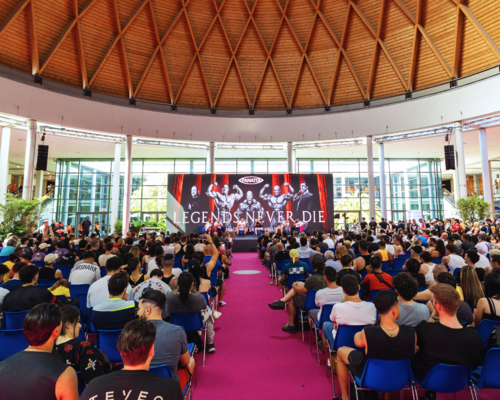
Panatta brought together four of the most influential figures in bodybuilding history on the stage of RiminiWellness 2026: Phil Heath, Lee Haney, Ronnie Coleman and Hany Rambod.
Company profiles
Company profile: Future Fit
Since 1993, Future Fit have been consistently raising the bar when it comes to training ...
Company profiles
Company profile: Perfect Gym Solutions S.A.
Perfect Gym, part of the Sport Alliance group, is a global software provider specialising in ...
Supplier Showcases
Supplier Showcase - Future-proofing
Catalogue Gallery
Click on a catalogue to view it online
Featured press releases
MyZone press release: Myzone Go expands operator opportunity with Garmin integration
Myzone has announced a significant expansion of its MoTech (Motivation Technology) platform, as Myzone Go integration with Garmin goes live.
Featured press releases
Dyaco UK Ltd press release: i-Strength | Spirit Commercial Fitness: Same movements, smarter resistance
Upgrading a gym floor is rarely straightforward. New equipment means retraining staff, repositioning layouts, and a period of adjustment for members.
Directory
Industrial washing machines
Miele Company Limited: Industrial washing machines
Spa and beauty equipment
Oakworks Inc: Spa and beauty equipment
Lockers
Crown Sports Lockers: Lockers
Hot tubs
MSpa International Ltd: Hot tubs
Water experiences and hydrotherapy solutions
Aquaform s.r.l.: Water experiences and hydrotherapy solutions
Fitness tracking platform
SpiviTech: Fitness tracking platform
Property & Tenders
Stratford, East London.
Lee Valley Regional Park Authority
Property & Tenders
Y Felinheli, LL56 4QN
Newmark
Property & Tenders
Diary dates
21-24 Sep 2026
The Langham Huntington Pasadena , Pasadena, United States
Diary dates
28-29 Sep 2026
Grand Ballroom, METT Singapore, Singapore
Diary dates
06-08 Oct 2026
Messe Stuttgart, Stuttgart, Germany
Diary dates
22-22 Oct 2026
QEII Conference Centre, London,
Diary dates
29-31 Oct 2026
Impact Exhibition & Convention Center Bangkok,Thailand, Bangkok, Thailand
Diary dates
29-31 Oct 2026
IMPACT Exhibition Center, Bangkok, Thailand , Bangkok, Thailand
Diary dates
14-15 Nov 2026
The Kromhouthal , Amsterdam, Netherlands
Diary dates
26-29 Oct 2027
Koelnmesse Exhibition Centre, Cologne, Germany
Diary dates

features

Heat experiences: Accessible spas

Why aren’t more health club spas disability-friendly? Vicky Kiernander asks the experts

By Vicky Kiernander | Published in Health Club Management 2016 issue 8
New-build spas should aim to provide disabled access to all facilities

We know spas and the facilities they offer provide a host of physical and mental benefits – so why aren’t more of them accessible to those who arguably need them most?

New spas can be designed to accommodate the needs of those with disabilities, but it can be far more challenging in older properties, where compromises often have to made.

And while regulations exist to ensure access for disabled people, some experts say they’re ill-defined and therefore open to interpretation: it’s down to individual operators to weigh up the cost of investing in accessible spa facilities – for what is, after all, a minority audience – against the potential cost of not paying due consideration to legislation. We talk to spa experts to get their views.

Gerard McCarthy,

Sales Director,

Dalesauna

Gerard McCarthy
Gerard McCarthy

Despite DDA legislation being around for some time, many architects still don’t consider the full implications of the regulations in thermal and wet areas. The regulations are woolly and can be open to interpretation.

For example, one new-build spa we worked on recently had four thermal rooms, none of which were designed by the architect to be DDA-compliant.

One of the key issues we come across is the 1,500mm wheelchair turning circle required in ‘rooms’ – which applies, or can be interpreted as applying, to thermal rooms such as saunas and steamrooms. If this 1,500mm circle is applied, it either requires the seating area in most conventionally-sized saunas and steamrooms to be almost completely removed, or it makes the available space for able-bodied users so small that it’s hardly worth doing. Alternatively, operators can make the rooms bigger, which has a big impact on budget for the relatively few times it will be used.

In older buildings, it’s often simply not practical or cost-effective to provide full DDA compliance, and ‘best endeavours’ take over. You have to demonstrate that you’ve given due consideration to DDA regulations, but if you can’t achieve them then compromises have to be made. All of our installations take DDA into consideration, be it via DDA-compliant doors as standard or through the application of the DDA 1,500mm circle – depending on the type of use, whether it’s a new build or a refurbishment, and so on.

My advice is to consider the law in the first instance. It can be woolly so ask an expert, who will always come down on the side of ‘more is better’ – we’d always suggest veering towards DDA compliance.

But also consider your market: will it affect your membership in a positive manner, or will it upset existing members due to the institutional appearance often created by the installation of handrails and hoists?

"Despite DDA legislation being around for some time, many architects still don’t consider the full implications
in thermal and wet areas" - Gerard McCarthy, Dalesauna

Abi Wright,

Co-founder and Managing Director,

Spabreaks.com

Abi Wright
Abi Wright

We launched ‘Spa for All’ to make the spa industry more accessible to a wider audience. Within the Spa for All umbrella, we have Recovery Retreats – which offer spa days and breaks for those with, or recovering from, cancer – and Accessible Spas, which highlight venues with facilities that cater for a range of disabilities, from impaired hearing and vision to mobility issues.

We also offer packages where anyone who has a carer can take their carer on the spa break with them, to use the facilities and help them enjoy their spa experience – at no extra cost.

It’s much easier for venues being built now to make facilities accessible: criteria have changed over the years and awareness about accessibility is much better than it used to be. However, for historic properties with tiny corridors and narrow stairways, it’s very difficult and expensive to make the buildings accessible – or else operators may find they can cater for one or two people, but don’t have the capacity to cater properly for everyone who needs improved accessibility.

For the most part, though, the people we work with very much want to make the changes. It just takes time, so it’s our job to highlight how important it is and the reasons it needs to become a priority.

There’s an argument to say there’s not enough of a market among people with disabilities to justify the costs of implementing accessible facilities a lot of the time, but the reality is that any of us could be in need of accessible facilities – whether temporarily, with a broken leg or an illness that affects your ability to move about, or permanently.

We also have an ageing population, so I can only see accessibility becoming more important. It’s about enhancing the experience for the market as a whole.

Best practice:

Mere Health Club & Spa

With a five-bubble rating from The Good Spa Guide, facilities at the Mere Health Club & Spa in Cheshire include a 20m pool, hydrotherapy pool and a thermal zone offering a salt room, steamroom and caladium.

For guests with disabilities, there’s a ramp into the spa and resort for ease of access; accessible changing facilities for male and female users; automatic doors to the pool and wet areas; a phone by the pool; wide steps into the pool rather than ladder steps; and wide corridors for wheelchairs. A carer policy has also been introduced, allowing carers to accompany their patients and use the spa facilities for free.

Claire Lomas, who became a paraplegic after a riding accident and now campaigns and raises funds to find a cure for paralysis, praises the Mere Spa as “a great spa and hotel for wheelchair users, making it struggle-free and relaxing”.

Mere Health Club & Spa

Ian Cotgrave,

Managing Director,

Createability

Ian Cotgrave
Ian Cotgrave

Building regulations require facilities to integrate disability access from the outset. It’s no longer enough to have bolt-on options – it’s a legal requirement. It’s vital to consider the range of users of the space, which could include wheelchair as well as walking disabled and visually- or hearing-impaired people, all of which will impact different elements of the spa’s interior design.

Doorway and corridors must be wide enough to accommodate free movement around the facility and allow for the turning of wheelchairs, whereas tactile surfaces and contrasting colours to differentiate between doors and frames can be helpful for partially-sighted or blind users. Semi-able bodied people may need grab rails for support, while smooth, uninterrupted floor surfaces can help avoid trip hazards.

Each treatment room, sauna or steamroom should be designed for compliance, to include either a dedicated area for wheelchairs or removable benches or seating where wheelchairs can be accommodated.

In the case of spas or hydrotherapy pools, deck-level access should be considered – or a dedicated overhead hoist system will need to be installed – and the height of showers and other features that need to be reached, such as ice fountains, should also be looked at in terms of accessibility.

Panic alarms with pull cords that reach the floor should be installed in all areas of the facility to ensure users can get help should they fall. These often form part of an integrated security system, which also includes flashing fire alarm beacons to alert hearing-impaired users. These need to be visible from any position within the facility, which could mean installing them in steamrooms and saunas that don’t have fully glazed doors.

"Building regulations require disability access to beintegrated from the outset. It’s no longer enough to have bolt-on options" - Ian Cotgrave, Createability

Best practice:

Larkfield Leisure Centre Spa

Tonbridge & Malling Leisure Trust (TMLT) and Tonbridge & Malling Borough Council co-funded a £400,000 upgrade of the spa at Larkfield Leisure Centre in Aylesford, UK, this spring.

The spa was stripped back to its shell and redesigned to accommodate a wider range of facilities including a sauna, steamroom, spa bath, ice feature and showers, and to make the spa accessible. To this end, the spa now has level access and features a hoist, allowing those with limited mobility to use the spa bath. Meanwhile the sauna and steamroom are accessible to wheelchair users. A fully Part M-compliant disabled changing facility is located next to the spa.

“As an inclusive operator, we want our facilities to be used by as many residents as possible to encourage mental and physical wellbeing,” says Martin Guyton, chief executive of TMLT. “This is reflected in the design of the new facility. We have a wide range of users with disabilities who access the spa, including many of our GP referral users.”

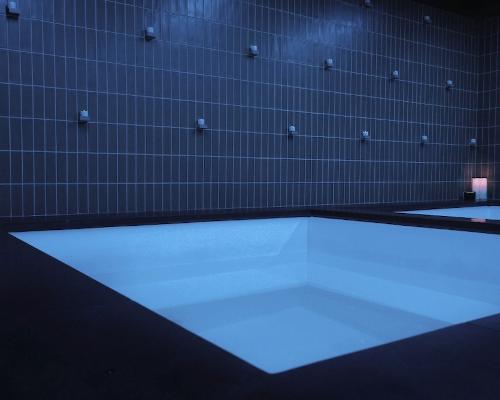
The spa pool features a hoist
Sign up here to get HCM's weekly ezine and every issue of HCM magazine free on digital.
Elite British sprinter Dina Asher-Smith training on the SKILLMILL
https://www.leisureopportunities.co.uk/images/815073_287143.jpg
Why aren’t more health club spas disability-friendly?
Vicky Kiernander, Journalist Gerard McCarthy, Sales director, Dalesauna Abi Wright, Co-founder and managing director, Ian Cotgrave, Managing director, Createability ,Spa, disability, inclusive, heat experiences, sauna, steam, Dalesauna, SpaBreaks, Gerard McCarthy, Abi Wright, Ian Cotgrave, Createability, Larkfield, Tonbridge & Malling, Mere, Vicky Kiernander, Claire Lomas
Latest News

Urban Gym Group has entered the Irish market with the acquisition of Iconic ...
Latest News

Total Fitness has released new research revealing how the expectations and motivations of ...
Latest News
Wattbike has announced a new integration with EGYM, which enables the bikes to contribute to ...
Latest News
Les Mills has launched a reformer Pilates workout. The 45-minute workout blends traditional reformer movements ...
Latest News
The inaugural HCM Invest event has opened applications for pitching slots ahead of its launch ...
Latest News
Girls in the UK are missing out on 280 million hours of sport every year ...
Latest News
According to research which tracked more than 147,000 people for 30 years, 90-120 minutes of ...
Latest News
Everlast Gyms expands its footprint outside of the UK this month with the imminent launch ...
Latest News
The UK's four Chief Medical Officers have published a refreshed edition of  Physical activity guidelines: ...
Latest News
Places Leisure has exchanged contracts to build and operate a flagship £60m water and wellness ...
Latest News
The Republic of Ireland will become the latest market in PureGym’s expanding international portfolio, with ...
Opinion
promotion
Strength training has moved from the margins to the mainstream.
Opinion: Building smarter strength spaces for today’s operators
Featured supplier news
Featured supplier news: Introducing a new era of Nautilus Leverage
Strength training has never been more important for member retention, facility differentiation and long-term commercial success.
Featured supplier news
Featured supplier news: Legends never die: four legends, four philosophies of life
Panatta brought together four of the most influential figures in bodybuilding history on the stage of RiminiWellness 2026: Phil Heath, Lee Haney, Ronnie Coleman and Hany Rambod.
Company profiles
Company profile: Future Fit
Since 1993, Future Fit have been consistently raising the bar when it comes to training ...
Company profiles
Company profile: Perfect Gym Solutions S.A.
Perfect Gym, part of the Sport Alliance group, is a global software provider specialising in ...
Supplier Showcases
Supplier Showcase - Future-proofing
Catalogue Gallery
Click on a catalogue to view it online
Featured press releases
MyZone press release: Myzone Go expands operator opportunity with Garmin integration
Myzone has announced a significant expansion of its MoTech (Motivation Technology) platform, as Myzone Go integration with Garmin goes live.
Featured press releases
Dyaco UK Ltd press release: i-Strength | Spirit Commercial Fitness: Same movements, smarter resistance
Upgrading a gym floor is rarely straightforward. New equipment means retraining staff, repositioning layouts, and a period of adjustment for members.
Directory
Industrial washing machines
Miele Company Limited: Industrial washing machines
Spa and beauty equipment
Oakworks Inc: Spa and beauty equipment
Lockers
Crown Sports Lockers: Lockers
Hot tubs
MSpa International Ltd: Hot tubs
Water experiences and hydrotherapy solutions
Aquaform s.r.l.: Water experiences and hydrotherapy solutions
Fitness tracking platform
SpiviTech: Fitness tracking platform
Property & Tenders
Stratford, East London.
Lee Valley Regional Park Authority
Property & Tenders
Y Felinheli, LL56 4QN
Newmark
Property & Tenders
Diary dates
21-24 Sep 2026
The Langham Huntington Pasadena , Pasadena, United States
Diary dates
28-29 Sep 2026
Grand Ballroom, METT Singapore, Singapore
Diary dates
06-08 Oct 2026
Messe Stuttgart, Stuttgart, Germany
Diary dates
22-22 Oct 2026
QEII Conference Centre, London,
Diary dates
29-31 Oct 2026
Impact Exhibition & Convention Center Bangkok,Thailand, Bangkok, Thailand
Diary dates
29-31 Oct 2026
IMPACT Exhibition Center, Bangkok, Thailand , Bangkok, Thailand
Diary dates
14-15 Nov 2026
The Kromhouthal , Amsterdam, Netherlands
Diary dates
26-29 Oct 2027
Koelnmesse Exhibition Centre, Cologne, Germany
Diary dates
Search news, features & products:
Find a supplier:
Partner sites