














Follow Health Club Management on Twitter Like Health Club Management on Facebook Join the discussion with Health Club Management on LinkedIn
FITNESS, HEALTH, WELLNESS

features

HCM People: Dr Natasha Jones & Suzi Gardner

A new report called Benefits Outweigh the Risk has established that exercise is safe for the vast majority of people – even those with medical conditions. Kath Hudson talks to the team driving the initiative

Published in Health Club Management 2022 issue 1
Pre-participation screening is now seen as an unnecessary barrier / ndab creativity/shutterstock
We found the benefits of physical activity outweigh the risks –  and the risk is very low

The Benefits Outweigh the Risk report is a follow-up to a 2015 research study called Exercise, the Miracle Cure. Why is it needed and what’s the aim?
Suzi Gardner: Across a large time period Sport England has heard messages about the concept of risk with regards to people getting active.

Patients who need exercise have concerns that it might make their symptoms worse, or even cause a catastrophic event, such as a heart attack, while 46 per cent of healthcare professionals reported that not knowing how to advise patients how to safely take part in physical activity – and not knowing how to allay their concerns about taking part – is a barrier to signposting for them.

This has precipitated a huge discussion with a range of partners, looking at how we can work together to maximise the role physical activity can play, whether that’s supporting people through ill health, or supporting the management of a condition.

This new research set out to weigh up the risks of physical activity for all adults with long term conditions and to find ways to overcome the barriers for exercise referral. The statements and advice have been written very specifically by healthcare professionals for healthcare professionals.

This isn’t a standalone piece of work – there are lots of pieces to this jigsaw – but Sport England sees Benefits Outweigh the Risk as a critical piece of work (www.hcmmag.com/benefits/risk).

What were the findings, and how will they be used?
Natasha Jones: We found that the benefits of physical activity do outweigh the risks and that the risk is very low. More interesting is how the research will empower healthcare professionals to communicate the lack of risk to their patients.

It’s not as easy as just telling someone to move more, medics need to be given tools to avoid the familiar “yes, but” conversations with patients. What is needed is a collaborative person-centred conversation, establishing what is right for that individual and how they could incorporate activity into their lives, taking into account specific concerns about symptoms.

Suzi Gardner: We’ll also utilise the evidence and statements as a foundation to create policy change to remove other systemic barriers. For example, Benefits Outweigh the Risk calls for a review of the need for pre-participation screening, which is a barrier for many when it comes to getting active.

In the next phase of this initiative, we’ll work with all interested partners, looking at how to remove systemic barriers and will be talking to all interested parties – including the health and fitness sector – to see what the scope of a review could be, how that could go forward and who should lead it.

We’ll be working with the Richmond Group of Charities to develop patient-facing messages from the content of the report. Additionally, we’ll work with CIMSPA to consider how the statements might be used within workforce development for the physical activity sector, leading to conversations around the standards, workforce expectations and what’s needed to support people with long-term conditions.

Is change coming?
Natasha Jones: Yes, it does feel as though change is coming and it’s a really exciting time. The work Sport England is funding and promoting is novel and recognised internationally.

There’s still more to be done, however, to support medical professionals in helping patients overcome their barriers – for example, we need to get past the firmly entrenched idea that people should be signed off by a doctor before they can get physically active, as this is not the case.

We need to adopt a more rounded view of the patient, to understand what matters to them and what they’re interested in, rather than defining them by their condition. It’s all about empowerment and inspiration and how to best support them to achieve their goals.

There are a growing number of people with long term conditions and co-morbidities, so how we tackle inequalities and support those who are further away from physical activity to becoming physically active is an important issue.

Benefits Outweigh the Risk is not a standalone piece of work, it ties in with the Moving Healthcare Professionals Programme (www.hcmmag.com/MHP), which is educating healthcare professionals about the power of physical activity. The award-winning Moving Medicine project (www.movingmedicine.ac.uk) and Active Hospital Project (www.movingmedicine.ac.uk/active-hospitals) have also gained national and international traction in healthcare and we work tirelessly to continue to build momentum.

Sport England’s engagement with the National Centre for Sport and Exercise Medicine at Sheffield Hallam for the creation of Easier to be Active is also looking at how to remove barriers to activity (​​www.hcmmag.com/easiertobeactive).

What can the health and fitness industry do to build a closer relationship with healthcare?
Suzi Gardner: It doesn’t just come from one side, we need to work together to create better trust between the different sectors, and ultimately develop a seamless journey into exercise, as part of a multi-disciplinary team.

Natasha Jones: We need to keep person empowerment at the forefront. As healthcare professionals, we should keep building motivation and building confidence as our primary aim. Part of that could be to reassure people about specific medical concerns.

I am not an advocate of ‘exercise prescription‘, which can be too directive and ignore the tenets of successful behavioural change. Medicalising exercise should only be necessary if the patient deems it to be so.

What I’m in favour of is the continuation of a supportive conversation, bearing in mind that people are much more likely to engage in activity if the idea comes from them.

The fitness industry can continue that journey by promoting autonomy while empowering people to find their own starting point and build from there. If we all keep that at the forefront of what we’re trying to do, a lot of the barriers will drop away.

Key takeaways: Observations

• Pre-participation screening is an unnecessary barrier as long as people start gently and build gradually

• Most people with long-term conditions want to be more active. However, complex psycho-social barriers lead to high levels of inactivity in this growing population

• Healthcare professionals and the fitness industry can be most effective if they take time to understand barriers from the individual’s point of view
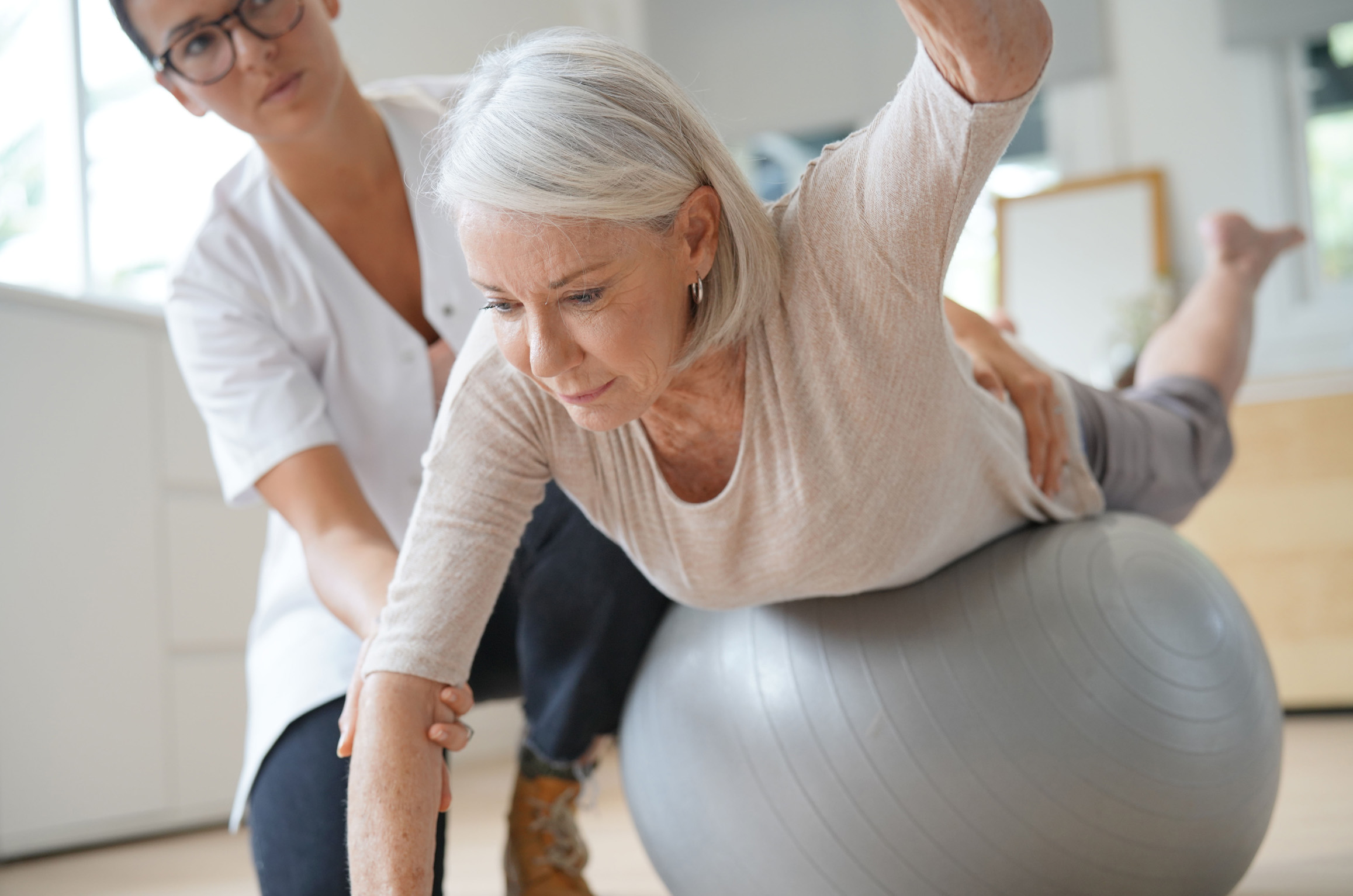
The aim is to develop a seamless journey into exercise to support health / Goodluz/Shutterstock
Fast facts

• 69 per cent of people living with long-term health conditions would like to be more active, according to research conducted by DJS Research as part of the We Are Undefeatable campaign.

• Reducing inactivity/increasing activity levels could help reduce the risk of up to 40 per cent of long-term health conditions, as well as helping improve quality of life and sleep, managing stress and helping reduce social isolation.

• 43 per cent of the population of England has at least one long-term health condition, according to patient data.

• People with long-term health conditions are almost twice as likely to be inactive (less than 30 minutes a week) than those without, according to Sport England’s physical activity data.

• 56 per cent of people with one impairment are active, this decreases to 48 per cent for people with two, and drops to 37 per cent of those with three or more.

• Increasing levels of inactivity are evident in people from diverse ethnic backgrounds, more deprived geographical areas and among older populations.

Dr Natasha Jones

Dr Natasha Jones is co-author of the Benefits Outweigh the Risk report

Suzi Gardner

Suzi Gardner is National partnership lead for health at Sport England
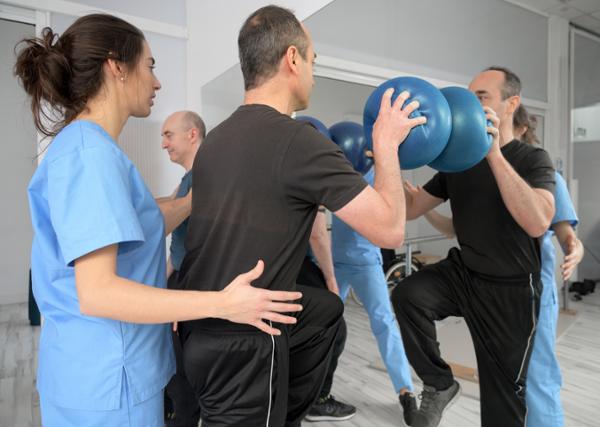
The Active Hospital Project is working to build momentum / David Herraez Calzada/shutterstock
https://www.leisureopportunities.co.uk/images/2022/849213_573257.jpg
The team behind new report, Benefits Outweigh the Risks, report that exercise is safe for the vast majority of people
HCM magazine
Fuel the debate about issues and opportunities across the industry. We’d love to hear from you. Write to [email protected]
HCM magazine
Would you stop selling memberships to prevent your club getting overcrowded? How do you strike the balance between maximising profits and prioritising the member experience? Kath Hudson talks to the experts
HCM magazine
Shaping the future of the sector with a clear mission, unified voice and open channels of communication. This is the ambition of UK Active’s new chair
HCM magazine
People on weight loss drugs reduce their activity levels, according to a team at St John’s Hospital Illinois
HCM magazine
HCM People

Shaun Grove

Owner, Stride Fitness
My goal was to invest in where fitness is going, not where it’s already been
HCM promotional features
Sponsored
Social fitness the missing link to member engagement, according to a new Myzone report
HCM promotional features
Sponsored
Find out how your gym can tap into the corporate wellness boom
HCM promotional features
Sponsored
SnowDome Fitness has added 50 per cent more space with cutting-edge Technogym solutions
HCM promotional features
Sponsored
Third Space partnered with IndigoFitness to deliver a bespoke training space for its new club at The Whiteley
HCM promotional features
Sponsored
Starpool supports Olympic champion Marcell Jacobs, says Riccardo Turri
HCM promotional features
Sponsored
David Lloyd is stepping up its commitment to women’s health as it continues to explore what fit-for-purpose looks like for the female population
HCM promotional features
Sponsored
Greg Bradley looks at the shift towards strength training in gyms and advises on how operators can create the ultimate training environment
HCM promotional features
Sponsored
EGYM has opened a new HQ in Paternoster Square, London and revealed a range of new launches
HCM promotional features
Latest News
The inaugural HCM Invest event has opened applications for pitching slots ahead of its launch ...
Latest News
Girls in the UK are missing out on 280 million hours of sport every year ...
Latest News
According to research which tracked more than 147,000 people for 30 years, 90-120 minutes of ...
Latest News
Everlast Gyms expands its footprint outside of the UK this month with the imminent launch ...
Latest News
The UK's four Chief Medical Officers have published a refreshed edition of  Physical activity guidelines: ...
Latest News
Places Leisure has exchanged contracts to build and operate a flagship £60m water and wellness ...
Latest News
The Republic of Ireland will become the latest market in PureGym’s expanding international portfolio, with ...
Latest News
Sophie Lawler, CEO of Total Fitness, has launched a leadership coaching business aimed at helping ...
Opinion
promotion
Strength training has moved from the margins to the mainstream.
Opinion: Building smarter strength spaces for today’s operators
Featured supplier news
Featured supplier news: Cornerstone Connect helps Active Blackpool tackle health inequalities
Active Blackpool is deploying Cornerstone Connect, a new digital interface allowing disparate information from multiple systems to be aggregated into one dataset, to support its focus on reducing health inequalities and improving healthy life expectancy.
Featured supplier news
Featured supplier news: Legends never die: four legends, four philosophies of life
Panatta brought together four of the most influential figures in bodybuilding history on the stage of RiminiWellness 2026: Phil Heath, Lee Haney, Ronnie Coleman and Hany Rambod.
Company profiles
Company profile: WellnessSpace Brands
WellnessSpace Brands provides innovative wellness solutions like HydroMassage, CryoLounge+, and RelaxSpace Pods— designed for convenient, ...
Company profiles
Company profile: Zynk - wellness design experts
Zynk are a team of specialist interior architects and designers with more than 25 year’s ...
Supplier Showcases
Supplier Showcase - From nightclub to health club
Supplier Showcases
Supplier Showcase - Future-proofing
Catalogue Gallery
Click on a catalogue to view it online
Featured press releases
Precor Fitness Ltd press release: BH Live partners with Precor, transforming the Mountbatten Leisure Centre Gym
Alongside Precor, BH Live, the registered charity and social enterprise operating sport and leisure facilities across southern England, has completed a major refurbishment of the gym at Mountbatten Leisure Centre in Portsmouth as a part of a £750,000 inve
Featured press releases
Innerva press release: Wrightcare embeds wellness and active living into next-generation care homes
A care home provider is developing a new generation of care homes where health, wellbeing and active living are embedded into everyday life.
Directory
Industrial washing machines
Miele Company Limited: Industrial washing machines
Spa and beauty equipment
Oakworks Inc: Spa and beauty equipment
Fitness tracking platform
SpiviTech: Fitness tracking platform
Lockers
Crown Sports Lockers: Lockers
Hot tubs
MSpa International Ltd: Hot tubs
Water experiences and hydrotherapy solutions
Aquaform s.r.l.: Water experiences and hydrotherapy solutions
Property & Tenders
Stratford, East London.
Lee Valley Regional Park Authority
Property & Tenders
Y Felinheli, LL56 4QN
Newmark
Property & Tenders
Diary dates
21-24 Sep 2026
The Langham Huntington Pasadena , Pasadena, United States
Diary dates
06-08 Oct 2026
Messe Stuttgart, Stuttgart, Germany
Diary dates
22-22 Oct 2026
QEII Conference Centre, London,
Diary dates
26-29 Oct 2027
Koelnmesse Exhibition Centre, Cologne, Germany
Diary dates

features

HCM People: Dr Natasha Jones & Suzi Gardner

A new report called Benefits Outweigh the Risk has established that exercise is safe for the vast majority of people – even those with medical conditions. Kath Hudson talks to the team driving the initiative

Published in Health Club Management 2022 issue 1
Pre-participation screening is now seen as an unnecessary barrier / ndab creativity/shutterstock
We found the benefits of physical activity outweigh the risks –  and the risk is very low

The Benefits Outweigh the Risk report is a follow-up to a 2015 research study called Exercise, the Miracle Cure. Why is it needed and what’s the aim?
Suzi Gardner: Across a large time period Sport England has heard messages about the concept of risk with regards to people getting active.

Patients who need exercise have concerns that it might make their symptoms worse, or even cause a catastrophic event, such as a heart attack, while 46 per cent of healthcare professionals reported that not knowing how to advise patients how to safely take part in physical activity – and not knowing how to allay their concerns about taking part – is a barrier to signposting for them.

This has precipitated a huge discussion with a range of partners, looking at how we can work together to maximise the role physical activity can play, whether that’s supporting people through ill health, or supporting the management of a condition.

This new research set out to weigh up the risks of physical activity for all adults with long term conditions and to find ways to overcome the barriers for exercise referral. The statements and advice have been written very specifically by healthcare professionals for healthcare professionals.

This isn’t a standalone piece of work – there are lots of pieces to this jigsaw – but Sport England sees Benefits Outweigh the Risk as a critical piece of work (www.hcmmag.com/benefits/risk).

What were the findings, and how will they be used?
Natasha Jones: We found that the benefits of physical activity do outweigh the risks and that the risk is very low. More interesting is how the research will empower healthcare professionals to communicate the lack of risk to their patients.

It’s not as easy as just telling someone to move more, medics need to be given tools to avoid the familiar “yes, but” conversations with patients. What is needed is a collaborative person-centred conversation, establishing what is right for that individual and how they could incorporate activity into their lives, taking into account specific concerns about symptoms.

Suzi Gardner: We’ll also utilise the evidence and statements as a foundation to create policy change to remove other systemic barriers. For example, Benefits Outweigh the Risk calls for a review of the need for pre-participation screening, which is a barrier for many when it comes to getting active.

In the next phase of this initiative, we’ll work with all interested partners, looking at how to remove systemic barriers and will be talking to all interested parties – including the health and fitness sector – to see what the scope of a review could be, how that could go forward and who should lead it.

We’ll be working with the Richmond Group of Charities to develop patient-facing messages from the content of the report. Additionally, we’ll work with CIMSPA to consider how the statements might be used within workforce development for the physical activity sector, leading to conversations around the standards, workforce expectations and what’s needed to support people with long-term conditions.

Is change coming?
Natasha Jones: Yes, it does feel as though change is coming and it’s a really exciting time. The work Sport England is funding and promoting is novel and recognised internationally.

There’s still more to be done, however, to support medical professionals in helping patients overcome their barriers – for example, we need to get past the firmly entrenched idea that people should be signed off by a doctor before they can get physically active, as this is not the case.

We need to adopt a more rounded view of the patient, to understand what matters to them and what they’re interested in, rather than defining them by their condition. It’s all about empowerment and inspiration and how to best support them to achieve their goals.

There are a growing number of people with long term conditions and co-morbidities, so how we tackle inequalities and support those who are further away from physical activity to becoming physically active is an important issue.

Benefits Outweigh the Risk is not a standalone piece of work, it ties in with the Moving Healthcare Professionals Programme (www.hcmmag.com/MHP), which is educating healthcare professionals about the power of physical activity. The award-winning Moving Medicine project (www.movingmedicine.ac.uk) and Active Hospital Project (www.movingmedicine.ac.uk/active-hospitals) have also gained national and international traction in healthcare and we work tirelessly to continue to build momentum.

Sport England’s engagement with the National Centre for Sport and Exercise Medicine at Sheffield Hallam for the creation of Easier to be Active is also looking at how to remove barriers to activity (​​www.hcmmag.com/easiertobeactive).

What can the health and fitness industry do to build a closer relationship with healthcare?
Suzi Gardner: It doesn’t just come from one side, we need to work together to create better trust between the different sectors, and ultimately develop a seamless journey into exercise, as part of a multi-disciplinary team.

Natasha Jones: We need to keep person empowerment at the forefront. As healthcare professionals, we should keep building motivation and building confidence as our primary aim. Part of that could be to reassure people about specific medical concerns.

I am not an advocate of ‘exercise prescription‘, which can be too directive and ignore the tenets of successful behavioural change. Medicalising exercise should only be necessary if the patient deems it to be so.

What I’m in favour of is the continuation of a supportive conversation, bearing in mind that people are much more likely to engage in activity if the idea comes from them.

The fitness industry can continue that journey by promoting autonomy while empowering people to find their own starting point and build from there. If we all keep that at the forefront of what we’re trying to do, a lot of the barriers will drop away.

Key takeaways: Observations

• Pre-participation screening is an unnecessary barrier as long as people start gently and build gradually

• Most people with long-term conditions want to be more active. However, complex psycho-social barriers lead to high levels of inactivity in this growing population

• Healthcare professionals and the fitness industry can be most effective if they take time to understand barriers from the individual’s point of view

The aim is to develop a seamless journey into exercise to support health / Goodluz/Shutterstock
Fast facts

• 69 per cent of people living with long-term health conditions would like to be more active, according to research conducted by DJS Research as part of the We Are Undefeatable campaign.

• Reducing inactivity/increasing activity levels could help reduce the risk of up to 40 per cent of long-term health conditions, as well as helping improve quality of life and sleep, managing stress and helping reduce social isolation.

• 43 per cent of the population of England has at least one long-term health condition, according to patient data.

• People with long-term health conditions are almost twice as likely to be inactive (less than 30 minutes a week) than those without, according to Sport England’s physical activity data.

• 56 per cent of people with one impairment are active, this decreases to 48 per cent for people with two, and drops to 37 per cent of those with three or more.

• Increasing levels of inactivity are evident in people from diverse ethnic backgrounds, more deprived geographical areas and among older populations.

Dr Natasha Jones

Dr Natasha Jones is co-author of the Benefits Outweigh the Risk report

Suzi Gardner

Suzi Gardner is National partnership lead for health at Sport England

The Active Hospital Project is working to build momentum / David Herraez Calzada/shutterstock
https://www.leisureopportunities.co.uk/images/2022/849213_573257.jpg
The team behind new report, Benefits Outweigh the Risks, report that exercise is safe for the vast majority of people
Latest News
The inaugural HCM Invest event has opened applications for pitching slots ahead of its launch ...
Latest News
Girls in the UK are missing out on 280 million hours of sport every year ...
Latest News
According to research which tracked more than 147,000 people for 30 years, 90-120 minutes of ...
Latest News
Everlast Gyms expands its footprint outside of the UK this month with the imminent launch ...
Latest News
The UK's four Chief Medical Officers have published a refreshed edition of  Physical activity guidelines: ...
Latest News
Places Leisure has exchanged contracts to build and operate a flagship £60m water and wellness ...
Latest News
The Republic of Ireland will become the latest market in PureGym’s expanding international portfolio, with ...

Latest News
Sophie Lawler, CEO of Total Fitness, has launched a leadership coaching business aimed at helping ...
Latest News
Anytime Fitness reaches a milestone this week with the launch of its 6000th site. The ...
Latest News
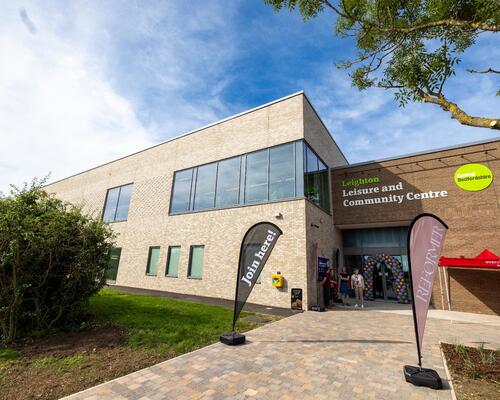
The £33.9 million Leighton Leisure and Community Centre has opened in Leighton Buzzard, UK, creating ...

Latest News
YogaSix, the yoga brand owned by Xponential Fitness, has launched a heated, Pilates-inspired class called ...

Opinion
promotion
Strength training has moved from the margins to the mainstream.
Opinion: Building smarter strength spaces for today’s operators
Featured supplier news
Featured supplier news: Cornerstone Connect helps Active Blackpool tackle health inequalities
Active Blackpool is deploying Cornerstone Connect, a new digital interface allowing disparate information from multiple systems to be aggregated into one dataset, to support its focus on reducing health inequalities and improving healthy life expectancy.
Featured supplier news
Featured supplier news: Legends never die: four legends, four philosophies of life
Panatta brought together four of the most influential figures in bodybuilding history on the stage of RiminiWellness 2026: Phil Heath, Lee Haney, Ronnie Coleman and Hany Rambod.
Company profiles
Company profile: WellnessSpace Brands
WellnessSpace Brands provides innovative wellness solutions like HydroMassage, CryoLounge+, and RelaxSpace Pods— designed for convenient, ...
Company profiles
Company profile: Zynk - wellness design experts
Zynk are a team of specialist interior architects and designers with more than 25 year’s ...
Supplier Showcases
Supplier Showcase - From nightclub to health club
Supplier Showcases
Supplier Showcase - Future-proofing
Catalogue Gallery
Click on a catalogue to view it online
Featured press releases
Precor Fitness Ltd press release: BH Live partners with Precor, transforming the Mountbatten Leisure Centre Gym
Alongside Precor, BH Live, the registered charity and social enterprise operating sport and leisure facilities across southern England, has completed a major refurbishment of the gym at Mountbatten Leisure Centre in Portsmouth as a part of a £750,000 inve
Featured press releases
Innerva press release: Wrightcare embeds wellness and active living into next-generation care homes
A care home provider is developing a new generation of care homes where health, wellbeing and active living are embedded into everyday life.
Directory
Industrial washing machines
Miele Company Limited: Industrial washing machines
Spa and beauty equipment
Oakworks Inc: Spa and beauty equipment
Fitness tracking platform
SpiviTech: Fitness tracking platform
Lockers
Crown Sports Lockers: Lockers
Hot tubs
MSpa International Ltd: Hot tubs
Water experiences and hydrotherapy solutions
Aquaform s.r.l.: Water experiences and hydrotherapy solutions
Property & Tenders
Stratford, East London.
Lee Valley Regional Park Authority
Property & Tenders
Y Felinheli, LL56 4QN
Newmark
Property & Tenders
Diary dates
21-24 Sep 2026
The Langham Huntington Pasadena , Pasadena, United States
Diary dates
06-08 Oct 2026
Messe Stuttgart, Stuttgart, Germany
Diary dates
22-22 Oct 2026
QEII Conference Centre, London,
Diary dates
26-29 Oct 2027
Koelnmesse Exhibition Centre, Cologne, Germany
Diary dates
Search news, features & products:
Find a supplier:
Partner sites