











Elevate Arena
Elevate Arena
Elevate Arena
Follow Health Club Management on Twitter Like Health Club Management on Facebook Join the discussion with Health Club Management on LinkedIn
FITNESS, HEALTH, WELLNESS

features

Floatation: Set adrift

Scientists believe floatation therapy could be a shortcut to meditation and much more than just a relaxation amenity for health clubs. Niamh Madigan dives in to find out more
By Niamh Madigan | Published in Health Club Management 2018 issue 8
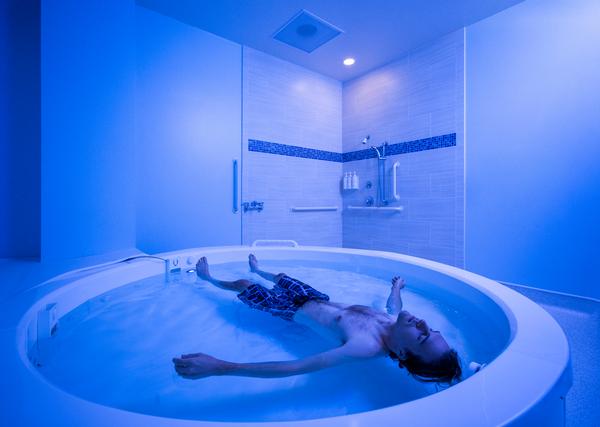
Float Clinic and Research Center at the Laureate Institute for Brain Research
The most important point is to enter into an unperturbed state of consciousness

Anyone who’s ever tried to meditate will know how difficult it is to sit quietly, shut out distractions and go into a state of complete tranquility. In a world where our brains are constantly being primed, there’s little chance to focus inwards. But what if the many widely-reported benefits of meditation could be achieved in another way – by the simple act of floating?

Neuropsychologist Justin Feinstein thinks this is a possibility and says: “floatation creates what I might say is the ultimate environment for focused, internal meditation”. Last year, he set up the Float Clinic and Research Center at the Laureate Institute for Brain Research in Tulsa, Oklahoma. It’s one of the first labs to look at the therapeutic benefits of floatation and initial findings indicate that it could be used to treat conditions like post-traumatic stress disorder (PTSD), chronic pain and even anorexia.

What Feinstein and his team are working on could have wider implications for spas. Instead of overlooking floatation pools and pods and thinking of them as an expensive extra just for relaxation, there may be grounds for operators to incorporate them into wellness programmes or use them as a standalone treatment for more serious ailments.

Making sense
Originally called isolation tanks, floatation pools have been around since the 1950s but had little credibility with scientists – not least because studies were often combined with hallucinogens like LSD. But as we move towards an era when mindfulness is being taken more seriously by western society, a number of researchers are trying to provide concrete evidence for the healing benefits of floatation.   

Feinstein first became interested in floatation 10 years ago when studying the brain function of patients with psychiatric conditions such as PTSD, social phobia and drug addiction. His interest was in the concept of interoception. In other words, how the brain senses the internal workings of the body; from the heart beating and blood pulsating to feelings from the gut and the immune system. He believed that disturbances in these body maps were the crux of mental health issues and discovered that floatation can help correct that dysregulation.

He explains: “For the first time in people’s lives, they have a chance to connect with those senses which are being overshadowed and understand who they are a little bit better.” Floating also creates a state of profound relaxation, which is the complete opposite to a state of anxiety.

Research results
Feinstein’s research is still in its early stages and he’s still trying to understand the basic science behind floating and how it so profoundly affects both the brain and the body.
Preliminary studies show a lot of visceral systems are entering into a relaxed state, with a reduction in heart rates, respiratory rates, blood pressure and brain waves. He says: “Most people outside of a float pool average 15 breaths a minute. Without much practice, floating reduces this to about five breaths a minute, which is quite a change.”

He’s just completed the first float fMRI brain imaging study to see what impact the experience has on the amygdala, a part of the brain that plays a key role in the processing of emotions. When the amygdala is over-stimulated it activates our fight or flight response which can trigger stress and anxiety. In the research, 40 healthy people were split into two groups – one enjoyed a 90-minute float, the other control group spent the time relaxing in a reclining chair. Their brain activity was scanned before and after, and fMRI results show that unlike the control relaxation group, the amygdala shut off post-float, causing the body to relax and have a similar effect to anti-anxiety medication and meditation. Feinstein says: “Floating is a great environment to enhance meditation – sensory distractions are minimised and you can really focus inwards.”

In another first, Feinstein is conducting the first float electroencephalogram screening. This allows him to measure the brainwaves of patients during a float by placing a waterproof, wireless device on their foreheads. “We hope to characterise the neural signature of what happens during a float experience,” he says. “Some preliminary results reveal that the brain’s going into a state of deep relaxation.”

Effective experience
Costs for a floatation pool start at around £17,000, plus wet-room conversion prices. But for health clubs thinking of taking the plunge, it’s not just a case of ‘build it and they will come’. It’s about creating the right offering for the most effective experience.

The custom-made flotation pools at Feinstein’s clinic are not encased, which is deliberate. He says: “Some pod-style tanks are very enclosed. They look like coffins and the average person isn’t very excited about trying out floating because of that.”

Instead, his UK-built Floataway pools are 2.5m in diameter and the circular shape creates a self-centering effect for the person floating.

Each pool is filled with 2,000lbs of Epsom salts, which allows the body to effortlessly float and the salts themselves are said to have therapeutic properties.

The water is set at 35?C to match the body’s temperature and the temperature of the air is the same. This creates a unique situation, where the user is no longer able to distinguish the boundaries between air, body and water. A wave of an arm turns the lights on or off and music is played through embedded speakers. “There’s probably a list of about 20 different variables we control in our lab, says Feinstein. “The most important point is to enter into an unperturbed state of consciousness and that’s why it’s important to calibrate the environment so precisely.”

Feinstein believes the perfect length of time for a session is 90 minutes. “It takes about 25 minutes to an hour to fully relax and clear mind chatter, so the idea is to sustain that for a little bit longer,” he says. “In circadian terms, the basic rest activity cycle tends to run in 90 minute increments and we’re finding that it seems to maximise the relaxation response.”

To increase the benefits further, for health clubs with spas, Feinstein feels there are many treatments that complement floating and could be combined with it in packages. Consider acupuncture, massage or alternatively, yoga, pilates or assisted stretching, which help to loosen up muscles before a session and allow the person to maintain a deep stillness during a float.

Floatation renaissance?
Spurred on by a growing interest in mindfulness, it’s possible that there’s a resurgence in floating. The Float Locations directory lists 297 float centres in the US compared to only 85 in 2011, but it’s not able to give accurate figures in Europe yet.

Meanwhile, in Sweden, a number of studies suggest that floatation relieves chronic stress, depression, fibromyalgia and insomnia and the government is now incorporating float therapy into its national healthcare programme.

As for Feinstein, he feels much more research is needed: “My hope is that as more results are published, more and more scientists will get excited about floating and begin to study this as well.”

Sign up here to get HCM's weekly ezine and every issue of HCM magazine free on digital.
90 minutes is the ideal 
float time as it takes up 
to 25 minutes to clear initial mind chatter
90 minutes is the ideal float time as it takes up to 25 minutes to clear initial mind chatter
Feinstein (third right) and his team are among the first to study floatation
https://www.leisureopportunities.co.uk/images/938092_169727.jpg
The science of floatation – How introducing this mindful practice could add a wellness element to your health club and tie in with your mind-body programme.
Niamh Madigan, multimedia journalist and fitness enthusiast,science of floatation, mindful practice, wellness, mind:body programme, Float Clinic, Laureate Institute for Brain Research
HCM magazine
Collaborations with the medical profession and greater aspirations around wellbeing are creating a need for more experts in our sector. It’s time to reboot our thinking around the workforce
HCM magazine
If the health service is to survive, we must recognise that it is a disease service – and that wellbeing rests with us, says the activity advocate and healthy ageing champion. He talks to Kate Cracknell
HCM magazine
Small improvements to sleep, diet and physical activity have major benefits for the heart, according to new research from the University of Sydney
HCM magazine
Strength training is evolving, driven by changing consumer preferences. Julie Cramer talks to innovators about how their products are meeting this demand
HCM magazine
For every member with a tripod and a big following, there are others irritated at the way equipment is being hogged or wary they’ll be in the background on someone’s Insta feed. Do influencers offer valuable, free marketing or are they just a nuisance? Kath Hudson finds out how operators are responding
HCM promotional features
Sponsored
Starpool supports Olympic champion Marcell Jacobs, says Riccardo Turri
HCM promotional features
Sponsored
Third Space partnered with IndigoFitness to deliver a bespoke training space for its new club at The Whiteley
HCM promotional features
Sponsored
Greg Bradley looks at the shift towards strength training in gyms and advises on how operators can create the ultimate training environment
HCM promotional features
Sponsored
SnowDome Fitness has added 50 per cent more space with cutting-edge Technogym solutions
HCM promotional features
Sponsored
Find out how your gym can tap into the corporate wellness boom
HCM promotional features
Sponsored
David Lloyd is stepping up its commitment to women’s health as it continues to explore what fit-for-purpose looks like for the female population
HCM promotional features
Sponsored
EGYM has opened a new HQ in Paternoster Square, London and revealed a range of new launches
HCM promotional features
Sponsored
The industry is embracing consumer-facing tech. Now it’s time to streamline back-of-house systems with Orbit4, says Daniel Jones
HCM promotional features
Promotion
BLK BOX has been reimagining elite performance spaces for more than a decade. Founder and former athlete, Greg Bradley, tells us what it takes
HCM promotional features
Latest News
Nuffield Health has told HCM that it takes its responsibilities towards its colleagues seriously and ...
Latest News
Technogym has announced the launch of the Run X World Treadmill Championship, the first world ...
Latest News
Shocked by the UK loneliness statistics, charitable trust Mytime Active has been doubling down on ...
Latest News
Portugal’s leading operator, SC Fitness, is celebrating a milestone by reaching 100 gyms.  The company ...
Latest News
Australia’s fast-growing fitness network, Viva Leisure, is adding a low-cost gym brand to its already ...
Latest News
Speedflex has launched a strength training programme for 10 to 16-year-olds, to make it safer, ...
Latest News
Tewinbury Farm Hotel in Hertfordshire, UK is expanding its premium leisure proposition with the launch ...
Latest News

Work is underway in Madrid on one of Europe’s most significant multi-functional complexes, ...

Opinion
promotion
Strength training has moved from the margins to the mainstream.
Opinion: Building smarter strength spaces for today’s operators
Featured supplier news
Featured supplier news: Supporting long-term health: why whole body vibration belongs in clinical settings
As healthcare continues to shift towards prevention, there’s a growing focus on helping people stay active, independent and feeling good for longer.
Featured supplier news
Featured supplier news: Elevate 2026 to mark 10-year anniversary with biggest ever waterfront drinks reception
Elevate is set to celebrate its 10th anniversary in style this June, with organisers confirming the event’s largest-ever drinks reception as registrations continue to run more than 10% ahead of last year.
Company profiles
Company profile: Gladstone Software
Gladstone’s software is built to streamline operations, reduce admin burden, and boost engagement. Operators can ...
Company profiles
Company profile: BLK BOX
BLK BOX - where precision meets strength, and innovation never stops in the pursuit of ...
Supplier Showcases
Supplier Showcase - From nightclub to health club
Supplier Showcases
Supplier Showcase - Future-proofing
Catalogue Gallery
Click on a catalogue to view it online
Featured press releases
Technogym press release: Great success for Technogym’s “Let’s Move & Donate Food” campaign: one million meals donated
Thanks to the participation of 150,000 people across 141 countries, the social campaign surpassed one billion Moves collected, which were converted into a donation of one million school meals to support children in need.
Featured press releases
ukactive press release: Are they Fit for Office? UK Active and Technogym throw down the gauntlet to MPs
Hundreds of staff, MPs and Peers from across Westminster have signed up for the Fit for Office parliamentary physical activity challenge, which takes place throughout June and is hosted by ukactive and Technogym.
Directory
Lockers
Crown Sports Lockers: Lockers
Industrial washing machines
Miele Company Limited: Industrial washing machines
Spa and beauty equipment
Oakworks Inc: Spa and beauty equipment
Water experiences and hydrotherapy solutions
Aquaform s.r.l.: Water experiences and hydrotherapy solutions
Fitness tracking platform
SpiviTech: Fitness tracking platform
Hot tubs
MSpa International Ltd: Hot tubs
Property & Tenders
Stratford, East London.
Lee Valley Regional Park Authority
Property & Tenders
Y Felinheli, LL56 4QN
Newmark
Property & Tenders
Diary dates
13-13 Jun 2026
Worldwide, Various,
Diary dates
21-24 Sep 2026
The Langham Huntington Pasadena , Pasadena, United States
Diary dates
06-08 Oct 2026
Messe Stuttgart, Stuttgart, Germany
Diary dates
22-22 Oct 2026
QEII Conference Centre, London,
Diary dates
26-29 Oct 2027
Koelnmesse Exhibition Centre, Cologne, Germany
Diary dates

features

Floatation: Set adrift

Scientists believe floatation therapy could be a shortcut to meditation and much more than just a relaxation amenity for health clubs. Niamh Madigan dives in to find out more

By Niamh Madigan | Published in Health Club Management 2018 issue 8
Float Clinic and Research Center at the Laureate Institute for Brain Research
The most important point is to enter into an unperturbed state of consciousness

Anyone who’s ever tried to meditate will know how difficult it is to sit quietly, shut out distractions and go into a state of complete tranquility. In a world where our brains are constantly being primed, there’s little chance to focus inwards. But what if the many widely-reported benefits of meditation could be achieved in another way – by the simple act of floating?

Neuropsychologist Justin Feinstein thinks this is a possibility and says: “floatation creates what I might say is the ultimate environment for focused, internal meditation”. Last year, he set up the Float Clinic and Research Center at the Laureate Institute for Brain Research in Tulsa, Oklahoma. It’s one of the first labs to look at the therapeutic benefits of floatation and initial findings indicate that it could be used to treat conditions like post-traumatic stress disorder (PTSD), chronic pain and even anorexia.

What Feinstein and his team are working on could have wider implications for spas. Instead of overlooking floatation pools and pods and thinking of them as an expensive extra just for relaxation, there may be grounds for operators to incorporate them into wellness programmes or use them as a standalone treatment for more serious ailments.

Making sense
Originally called isolation tanks, floatation pools have been around since the 1950s but had little credibility with scientists – not least because studies were often combined with hallucinogens like LSD. But as we move towards an era when mindfulness is being taken more seriously by western society, a number of researchers are trying to provide concrete evidence for the healing benefits of floatation.   

Feinstein first became interested in floatation 10 years ago when studying the brain function of patients with psychiatric conditions such as PTSD, social phobia and drug addiction. His interest was in the concept of interoception. In other words, how the brain senses the internal workings of the body; from the heart beating and blood pulsating to feelings from the gut and the immune system. He believed that disturbances in these body maps were the crux of mental health issues and discovered that floatation can help correct that dysregulation.

He explains: “For the first time in people’s lives, they have a chance to connect with those senses which are being overshadowed and understand who they are a little bit better.” Floating also creates a state of profound relaxation, which is the complete opposite to a state of anxiety.

Research results
Feinstein’s research is still in its early stages and he’s still trying to understand the basic science behind floating and how it so profoundly affects both the brain and the body.
Preliminary studies show a lot of visceral systems are entering into a relaxed state, with a reduction in heart rates, respiratory rates, blood pressure and brain waves. He says: “Most people outside of a float pool average 15 breaths a minute. Without much practice, floating reduces this to about five breaths a minute, which is quite a change.”

He’s just completed the first float fMRI brain imaging study to see what impact the experience has on the amygdala, a part of the brain that plays a key role in the processing of emotions. When the amygdala is over-stimulated it activates our fight or flight response which can trigger stress and anxiety. In the research, 40 healthy people were split into two groups – one enjoyed a 90-minute float, the other control group spent the time relaxing in a reclining chair. Their brain activity was scanned before and after, and fMRI results show that unlike the control relaxation group, the amygdala shut off post-float, causing the body to relax and have a similar effect to anti-anxiety medication and meditation. Feinstein says: “Floating is a great environment to enhance meditation – sensory distractions are minimised and you can really focus inwards.”

In another first, Feinstein is conducting the first float electroencephalogram screening. This allows him to measure the brainwaves of patients during a float by placing a waterproof, wireless device on their foreheads. “We hope to characterise the neural signature of what happens during a float experience,” he says. “Some preliminary results reveal that the brain’s going into a state of deep relaxation.”

Effective experience
Costs for a floatation pool start at around £17,000, plus wet-room conversion prices. But for health clubs thinking of taking the plunge, it’s not just a case of ‘build it and they will come’. It’s about creating the right offering for the most effective experience.

The custom-made flotation pools at Feinstein’s clinic are not encased, which is deliberate. He says: “Some pod-style tanks are very enclosed. They look like coffins and the average person isn’t very excited about trying out floating because of that.”

Instead, his UK-built Floataway pools are 2.5m in diameter and the circular shape creates a self-centering effect for the person floating.

Each pool is filled with 2,000lbs of Epsom salts, which allows the body to effortlessly float and the salts themselves are said to have therapeutic properties.

The water is set at 35?C to match the body’s temperature and the temperature of the air is the same. This creates a unique situation, where the user is no longer able to distinguish the boundaries between air, body and water. A wave of an arm turns the lights on or off and music is played through embedded speakers. “There’s probably a list of about 20 different variables we control in our lab, says Feinstein. “The most important point is to enter into an unperturbed state of consciousness and that’s why it’s important to calibrate the environment so precisely.”

Feinstein believes the perfect length of time for a session is 90 minutes. “It takes about 25 minutes to an hour to fully relax and clear mind chatter, so the idea is to sustain that for a little bit longer,” he says. “In circadian terms, the basic rest activity cycle tends to run in 90 minute increments and we’re finding that it seems to maximise the relaxation response.”

To increase the benefits further, for health clubs with spas, Feinstein feels there are many treatments that complement floating and could be combined with it in packages. Consider acupuncture, massage or alternatively, yoga, pilates or assisted stretching, which help to loosen up muscles before a session and allow the person to maintain a deep stillness during a float.

Floatation renaissance?
Spurred on by a growing interest in mindfulness, it’s possible that there’s a resurgence in floating. The Float Locations directory lists 297 float centres in the US compared to only 85 in 2011, but it’s not able to give accurate figures in Europe yet.

Meanwhile, in Sweden, a number of studies suggest that floatation relieves chronic stress, depression, fibromyalgia and insomnia and the government is now incorporating float therapy into its national healthcare programme.

As for Feinstein, he feels much more research is needed: “My hope is that as more results are published, more and more scientists will get excited about floating and begin to study this as well.”
Sign up here to get HCM's weekly ezine and every issue of HCM magazine free on digital.
90 minutes is the ideal 
float time as it takes up 
to 25 minutes to clear initial mind chatter
90 minutes is the ideal float time as it takes up to 25 minutes to clear initial mind chatter
Feinstein (third right) and his team are among the first to study floatation
https://www.leisureopportunities.co.uk/images/938092_169727.jpg
The science of floatation – How introducing this mindful practice could add a wellness element to your health club and tie in with your mind-body programme.
Niamh Madigan, multimedia journalist and fitness enthusiast,science of floatation, mindful practice, wellness, mind:body programme, Float Clinic, Laureate Institute for Brain Research
Latest News
Nuffield Health has told HCM that it takes its responsibilities towards its colleagues seriously and ...
Latest News
Technogym has announced the launch of the Run X World Treadmill Championship, the first world ...
Latest News
Shocked by the UK loneliness statistics, charitable trust Mytime Active has been doubling down on ...
Latest News
Portugal’s leading operator, SC Fitness, is celebrating a milestone by reaching 100 gyms.  The company ...
Latest News
Australia’s fast-growing fitness network, Viva Leisure, is adding a low-cost gym brand to its already ...
Latest News
Speedflex has launched a strength training programme for 10 to 16-year-olds, to make it safer, ...
Latest News
Tewinbury Farm Hotel in Hertfordshire, UK is expanding its premium leisure proposition with the launch ...
Latest News

Work is underway in Madrid on one of Europe’s most significant multi-functional complexes, ...

Latest News
PureGym is encouraging people to step away from their screens and go for a walk, ...
Latest News
Small improvements to sleep, diet quality, and physical activity, made in combination lead to a ...
Latest News
Therme Manchester’s 28-acre development, which will include interconnected glass pavilions that measure 65,000sq m, will ...
Opinion
promotion
Strength training has moved from the margins to the mainstream.
Opinion: Building smarter strength spaces for today’s operators
Featured supplier news
Featured supplier news: Supporting long-term health: why whole body vibration belongs in clinical settings
As healthcare continues to shift towards prevention, there’s a growing focus on helping people stay active, independent and feeling good for longer.
Featured supplier news
Featured supplier news: Elevate 2026 to mark 10-year anniversary with biggest ever waterfront drinks reception
Elevate is set to celebrate its 10th anniversary in style this June, with organisers confirming the event’s largest-ever drinks reception as registrations continue to run more than 10% ahead of last year.
Company profiles
Company profile: Gladstone Software
Gladstone’s software is built to streamline operations, reduce admin burden, and boost engagement. Operators can ...
Company profiles
Company profile: BLK BOX
BLK BOX - where precision meets strength, and innovation never stops in the pursuit of ...
Supplier Showcases
Supplier Showcase - From nightclub to health club
Supplier Showcases
Supplier Showcase - Future-proofing
Catalogue Gallery
Click on a catalogue to view it online
Featured press releases
Technogym press release: Great success for Technogym’s “Let’s Move & Donate Food” campaign: one million meals donated
Thanks to the participation of 150,000 people across 141 countries, the social campaign surpassed one billion Moves collected, which were converted into a donation of one million school meals to support children in need.
Featured press releases
ukactive press release: Are they Fit for Office? UK Active and Technogym throw down the gauntlet to MPs
Hundreds of staff, MPs and Peers from across Westminster have signed up for the Fit for Office parliamentary physical activity challenge, which takes place throughout June and is hosted by ukactive and Technogym.
Directory
Lockers
Crown Sports Lockers: Lockers
Industrial washing machines
Miele Company Limited: Industrial washing machines
Spa and beauty equipment
Oakworks Inc: Spa and beauty equipment
Water experiences and hydrotherapy solutions
Aquaform s.r.l.: Water experiences and hydrotherapy solutions
Fitness tracking platform
SpiviTech: Fitness tracking platform
Hot tubs
MSpa International Ltd: Hot tubs
Property & Tenders
Stratford, East London.
Lee Valley Regional Park Authority
Property & Tenders
Y Felinheli, LL56 4QN
Newmark
Property & Tenders
Diary dates
13-13 Jun 2026
Worldwide, Various,
Diary dates
21-24 Sep 2026
The Langham Huntington Pasadena , Pasadena, United States
Diary dates
06-08 Oct 2026
Messe Stuttgart, Stuttgart, Germany
Diary dates
22-22 Oct 2026
QEII Conference Centre, London,
Diary dates
26-29 Oct 2027
Koelnmesse Exhibition Centre, Cologne, Germany
Diary dates
Search news, features & products:
Find a supplier:
Elevate Arena
Elevate Arena
Partner sites