

























Follow Health Club Management on Twitter Like Health Club Management on Facebook Join the discussion with Health Club Management on LinkedIn
FITNESS, HEALTH, WELLNESS

features

CrossFit: Niche or mainstream?

For those who are brave enough to try it, CrossFit offers fantastic results in an engaging workout that’s never the same twice. But can it ever be a mass market concept? Kath Hudson reports

By Kath Hudson | Published in Health Club Management 2014 issue 5
we recognised that much of what scares people about crossfit is the industrial environment

Founded by Greg Glassman in 2000, the CrossFit concept sets out to “prepare trainees for any physical contingency – not only for the unknown, but for the unknowable,” according to the website.

The programme incorporates high intensity interval training, Olympic lifting, power lifting, gymnastics, calisthenics and strongman exercises (see also HCM Jan 11, p40), with CrossFit certifying trainers and licensing gyms for an annual fee.

There’s a strong group focus to the training, which is designed to build a sense of community – but at the moment it’s a community from which many of us feel excluded. The CrossFit boxes tend to be minimal and raw, the tone is sergeant majorish, and the website features über-fit people beasting themselves – not really the sort of friendly, accessible image that might help the UK fitness sector in its bid to draw more people into physical exercise.

But does this matter? Is it reasonable to have an element of fitness that’s reserved for those who want to dedicate a lot of time to training and have attained a higher level of fitness? Should it stay as it is and not be diluted for the mass market, or are there ways to fine-tune the concept so more people might give it a go and reap the benefits?

Going mainstream?
Some don’t believe CrossFit can be translated for the mass market. Licensed CrossFit operator Rachel Young, who runs independent studio mi-gym in Chelmsford, UK, is not sure health club chains could properly deliver this concept which, she says, works better on a smaller, more personal scale.

Tom Haynes, head of commercial and sports performance at Indigo 23 and owner of The Training Shed, agrees: “CrossFit is a specialist area and I don’t think the average health club would be able to run an authentic class safely: the knowledge and expertise of their instructors tends to be quite limited, and clubs wouldn’t have adequate space or the required equipment either.

“In addition, the underground and edgy feel of CrossFit is part of its identity and I’m not sure this would work successfully in a mainstream health club. The CrossFit clubs tend to charge more, and in return there’s a small, personal feel, with excellent coaches who know every member by name.”

However Tony Buchanan, MD and founder of Absolute Performance, argues that CrossFit training methods are already in the mass market: strength and conditioning, shuttle running, Olympic lifting and functional fitness rigs are now commonplace. “It’s just about going back to basics,” he says. “Any health club looking to start offering CrossFit simply needs excellent coaches and a decent amount of space.”

Indeed, for clubs that have already invested in functional training areas, many experts agree that only a few tweaks are needed to offer CrossFit, or at least a CrossFit-style workout.

However, to take it mass market, the concept does need to be toned down somewhat, as the hardcore image is never going to pull in the deconditioned, older or nervous member – even though these groups could very much benefit from the style of training.

“For CrossFit to appeal to a broader marker, it has to be diluted,” says John Halls, sales and marketing director at Physical Company. “This isn’t a bad thing, as short, sharp, effective workouts can still take place – but in a safer environment. Members will always be attracted by workouts that offer maximum results in minimum time, so clubs need to get that message across.”

With this focus on safety in mind, clubs must consider how to properly introduce members to the concept. Experienced, knowledgeable, ideally PT-trained Level 3 staff are vital, ensuring members are correctly instructed in safe technique – otherwise there’s real potential for injury. Fitness First Middle East, which has introduced its own Xfit offering (see below), provides a ‘fundamentals’ class so members can learn the basics before progressing first to the ‘essential’ class and then the ‘daily extreme’ programme.

“There should be a great focus on the correct lifting techniques and a lot of training before novices are allowed to lift heavier weights,” says Antti Kohvakka, sales director at York Fitness. “Clubs should develop tutorial programmes to provide this service and get members lifting correctly and safely.”

Create your brand
Although going the route of getting your club licensed by CrossFit, and your trainers affiliated, allows you to benefit from the public awareness of the CrossFit brand – “the marketing has, to a degree, already been done for clubs,” says Matthew Januszek of Escape Fitness – nevertheless the hardcore brand can be off-putting for many. Creating your own, more accessible brand is a way of giving this type of training a more universal appeal. And indeed health club chains have no choice in the matter, as CrossFit won’t license chains.

Scandinavian chain SATS, which operates 110 clubs, has therefore created Prformance. Currently offered in 10 of its sites, it’s in the process of being rolled out as it’s proved successful in boosting visits, sales, retention and PT revenues, as well as attracting an even mix of males and females.

“The CrossFit brand and product is more extreme than mass market, but its principles of back to basics, functional fitness can be applied in a health club,” says Daniel Almgren, SATS Nordic product manager. “It’s straightforward to make the training techniques available and appealing to a broad market.”

The Prformance offering is delivered within a 200–300sq m arena with padded flooring and rigs, where high intensity, strength and Olympic lifting classes are offered. SATS selects its best personal trainers to run the sessions.

“We recognised that much of what scares people about CrossFit is the industrial environment, so we’ve set about making ours more appealing – for example, using more inviting lighting,” says Almgren. “However, we’ve kept some of the rawness with a prison yard-style, see-through fence.”

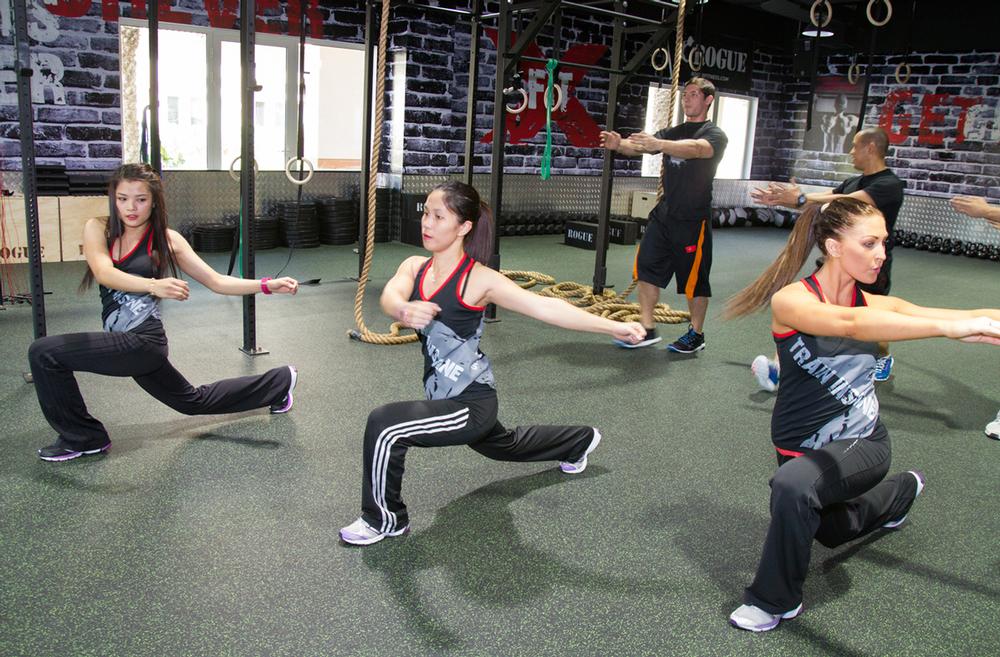
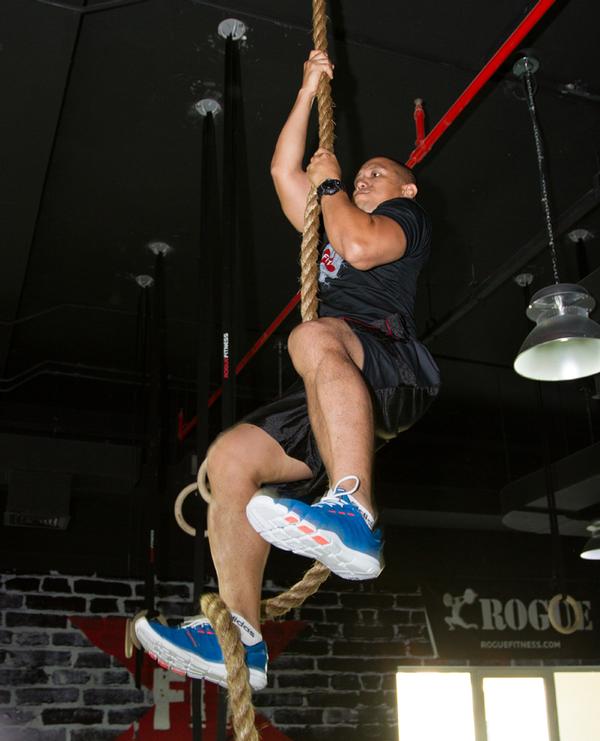
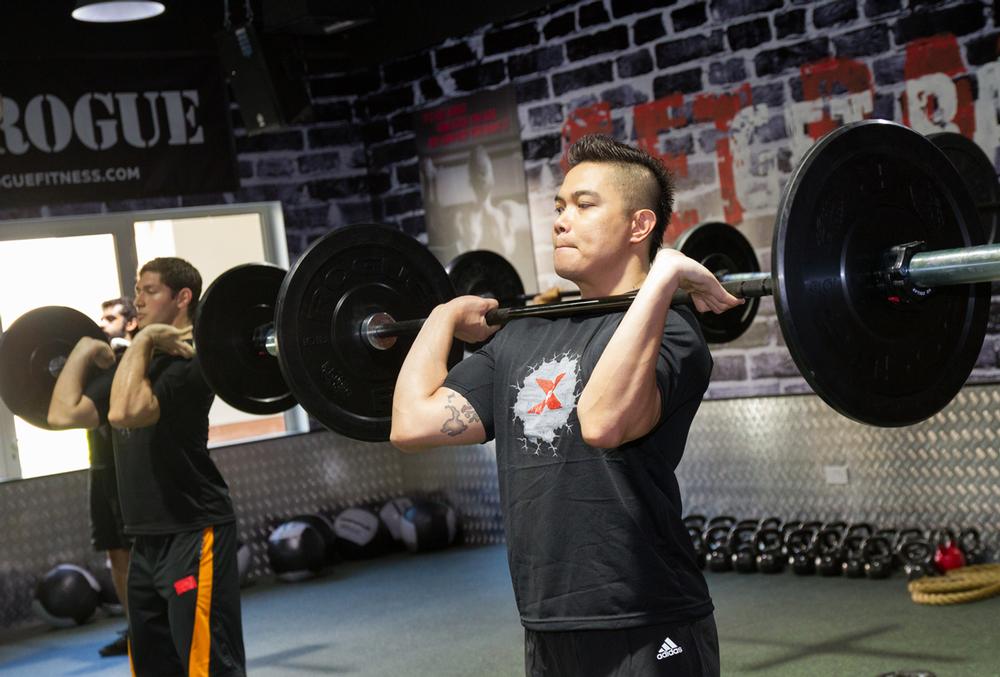
Fitness First Middle East has also created its own brand, Xfit – a mix of functional training, gymnastics, body movement and Olympic lifting. The Xfit boxes – which have no mirrors or TV screens – are kitted out with tyres, a functional training rig, medicine balls, Olympic bars and weights, plus boxes to jump over. MYZONE has been introduced to measure workout intensity and boost motivation.

“We’re seeing phenomenal results, with people changing their body shape and with significant increases in fitness levels and strength. Some members have even taken part in the CrossFit Open Regionals,” says Mark Botha, group operations and marketing director of Fitness First Middle East. “Xfit is popular because it’s results-driven, fun, instructor-led, and offers the benefits of PT but with a group exercise dynamic.”

Meanwhile Young has taken a two-pronged approach at mi-gym, using the CrossFit brand to attract those to whom it appeals and dropping it for those who would find it off-putting. “The name can be intimidating, so I call my evening classes CrossFit, but daytime sessions are Results classes,” she says. “It’s the same training, but 80 per cent of the membership wouldn’t have come if it had been called CrossFit. To get going, I aimed my marketing at women – I knew the men, and those into CrossFit, would come anyway.”

Sense of community
Undoubtedly one of the secrets to CrossFit’s success is the way it has built up a community, both online and within clubs. It’s this small, personal feel that leads some to doubt whether the concept can be taken mass market. However, although difficult in a large club, it’s by no means impossible – it just requires energy and effort on the part of staff, with lots of personal contact both in and out of the club, follow-ups if people miss class so they feel important, and good use of social media.

Young intentionally limits the size of classes so people feel special; as a result, they’re very sociable with each other, going out to breakfast together after class and suchlike. Fitness First Middle East has also managed to create a strong sense of community. “We set 12-week targets based on suggestions, and everyone works to the same goal – learning a new skill such as a handstand push-up, for example, or getting a beach body – which culminates in a beach swim and BBQ,” says Botha.

Although CrossFit is intended to cater for all levels and ages within one class, one quick way to create a community might be to run sessions that appeal to like-minded people. Fitness First Middle East runs a mums class, for example, scheduled after the school run, and this has proved immensely popular and generated word-of-mouth referrals.

Selling fitness
Since CrossFit won’t license chains, and seems keen to protect its niche status, it’s unlikely that CrossFit itself will go mass market. However, the style of training certainly can – and is already starting to do so. If your club wants to replicate the concept, the key requirements are well-trained staff, a well thought-out environment, personal relationships with the members, and a concept that’s accessible but still has an edge – don’t dumb it right down.

Creating a CrossFit-style brand should result in better results for members and better retention for your club. However, it won’t come without a lot of work and effort on your part. The focus must be on selling fitness, not selling memberships.

The Environment

For operators wanting to create a CrossFit-style club-in-club, considerations include:

- Noise pollution: Make sure the floors can deal with weights being dropped, but also site CrossFit areas away from offices or places where relaxing activities take place.

- Location: Consider zoning, as SATS has done, so the areas are part of the club – creating a buzz and introducing people to the concept – but with some degree of separation so participants don’t feel self-conscious.

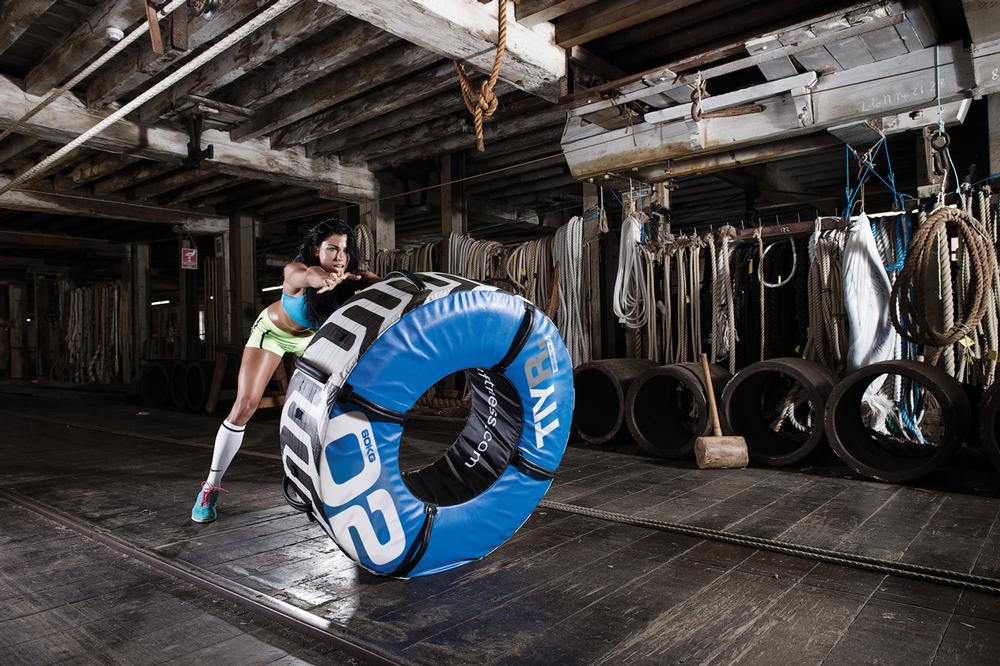
- Make it accessible: “Colourful products are an excellent way to engage people,” says Escape’s Matthew Januszek. “Not everyone wants to flip a tractor tyre, but offer different sized tyres and different colours and suddenly flipping tyres becomes more accessible.”
Sign up here to get HCM's weekly ezine and every issue of HCM magazine free on digital.
CrossFit won’t license chains, so clubs could look to brand their own offering
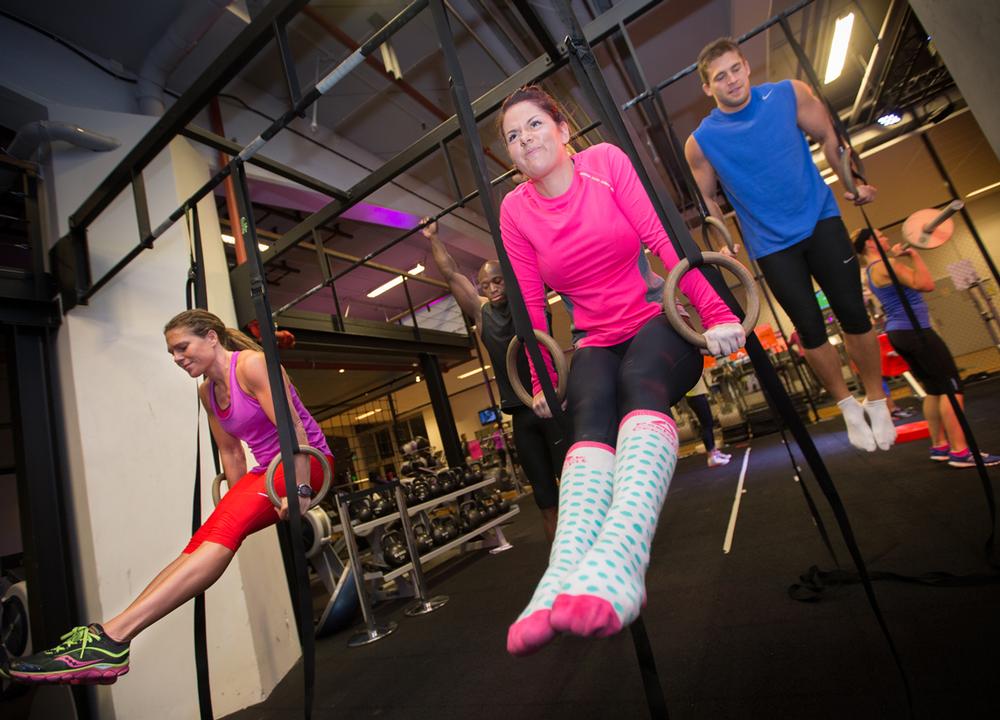
SATS created Prformance to appeal to a wider market
Fitness First Middle East created 
a results-driven offer called Xfit
Fitness First Middle East created a results-driven offer called Xfit
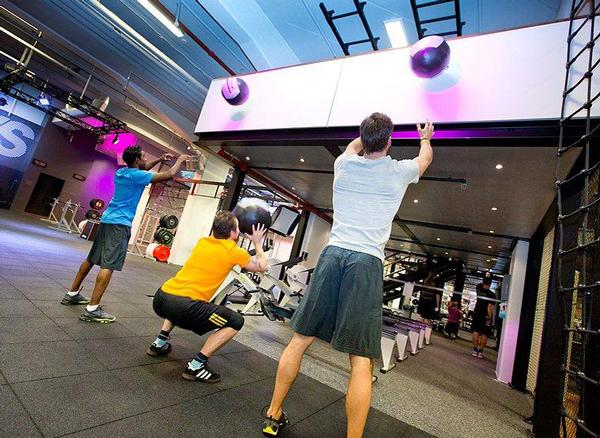
The Xfit boxes have no mirrors or TV screens to distract people from training
Xfit mixes functional training, gymnastics, movement and lifting
https://www.leisureopportunities.co.uk/images/HCM2014_5niche.jpg
CrossFit is a tough workout that gives fantastic results, but can it ever achieve mass market appeal?
Crossfit, mi-gym.com, XFIT Barbell Company Ltd, SATS, Fitness First Middle East Prformance, Physical Company Ltd, York Barbell UK Ltd, Absolute Performance, Escape Fitness,crossfit, programmes, training, high intensity interval training, Olympic lifting, power lifting, gymnastics, calisthenics and strongman exercises
HCM magazine
As the entrepreneur who started Wexer, Fresh Fitness, Fitness DK and Repeat, as well as being a former elite athlete, Rasmus Ingerslev’s life looked perfect from the outside, but onthe inside it was a different story. He talks to Kath Hudson about healing old wounds
HCM magazine
Small improvements to sleep, diet and physical activity have major benefits for the heart, according to new research from the University of Sydney
HCM magazine
Strength training is evolving, driven by changing consumer preferences. Julie Cramer talks to innovators about how their products are meeting this demand
HCM magazine
I experienced a blissful feeling of joy I hadn’t felt since I was a kid
HCM magazine
Collaborations with the medical profession and greater aspirations around wellbeing are creating a need for more experts in our sector. It’s time to reboot our thinking around the workforce
HCM promotional features
Sponsored
Find out how your gym can tap into the corporate wellness boom
HCM promotional features
Sponsored
David Lloyd is stepping up its commitment to women’s health as it continues to explore what fit-for-purpose looks like for the female population
HCM promotional features
Sponsored
Third Space partnered with IndigoFitness to deliver a bespoke training space for its new club at The Whiteley
HCM promotional features
Sponsored
SnowDome Fitness has added 50 per cent more space with cutting-edge Technogym solutions
HCM promotional features
Sponsored
Starpool supports Olympic champion Marcell Jacobs, says Riccardo Turri
HCM promotional features
Sponsored
Greg Bradley looks at the shift towards strength training in gyms and advises on how operators can create the ultimate training environment
HCM promotional features
Sponsored
EGYM has opened a new HQ in Paternoster Square, London and revealed a range of new launches
HCM promotional features
Sponsored
New launch, Salus House, elevates boutique wellness with high service levels and a partnership with Technogym
HCM promotional features
Sponsored
Pulse Fitness has created a new health club delivering an elevated wellness experience
HCM promotional features
Latest News
People taking GLP-1 weight loss medications such as Ozempic, Wegovy, Mounjaro and Zepbound may be ...
Latest News
Low-cost gym operator, PureGym, is trialling recovery zones at two of its UK sites, democratising ...
Latest News
In a milestone moment, mental health has become a core part of CIMSPA’s occupational professional ...
Latest News
US high-value, low-price chain, Eos Fitness, has announced plans to pilot reformer Pilates in three ...
Latest News
Preventive healthcare company Neko Health has added body composition analysis to its full-body health scan ...
Latest News
Chequan Lewis is the new CEO of Crunch Fitness, taking over from Jim Rowley, who ...
Latest News
Sea Lanes Canary Wharf has officially opened. The 50-metre, six-lane pool, which uses the natural ...
Latest News
London-based high-performance fitness club, ONE LDN, is raising funds for a multi-site expansion across London, ...
Opinion
promotion
Strength training has moved from the margins to the mainstream.
Opinion: Building smarter strength spaces for today’s operators
Featured supplier news
Featured supplier news: Reaching the people most gyms miss: Bedford Gym & Swim Campaign delivers 410 new members
One of the biggest mistakes the fitness industry still makes is advertising almost exclusively to people who already look and live like gym members.
Featured supplier news
Featured supplier news: Cornerstone Connect helps Active Blackpool tackle health inequalities
Active Blackpool is deploying Cornerstone Connect, a new digital interface allowing disparate information from multiple systems to be aggregated into one dataset, to support its focus on reducing health inequalities and improving healthy life expectancy.
Company profiles
Company profile: Swimming Teachers' Association (STA)
The Swimming Teachers’ Association (STA) is a national governing body for swimming and a UK-registered ...
Company profiles
Company profile: Brass Monkey
Brass Monkey designs and builds the world’s finest commercial-grade ice baths, working with leading gyms ...
Supplier Showcases
Supplier Showcase - Future-proofing
Catalogue Gallery
Click on a catalogue to view it online
Featured press releases
Swim England press release: Swim England launches new Learn to Swim Growth Plan to support aquatic programme expansion
Swim England has strengthened its sector-leading Business Solutions offer with the launch of its Learn to Swim Growth Plan, designed to help aquatic providers unlock sustainable programme growth.
Featured press releases
CoverMe Ltd press release: CoverMe and Jobs In. Fitness partner to create end-to-end talent solution
CoverMe, the UK’s leading fitness workforce management and recruitment platform, has partnered with Jobs In. Fitness, the specialist executive search and advisory firm for the fitness and wellbeing sector, to give operators a single route to talent at every level – from frontline staffing to C-suite.
Directory
Fitness tracking platform
SpiviTech: Fitness tracking platform
Hot tubs
MSpa International Ltd: Hot tubs
Lockers
Crown Sports Lockers: Lockers
Spa and beauty equipment
Living Earth Crafts: Spa and beauty equipment
Water experiences and hydrotherapy solutions
Aquaform s.r.l.: Water experiences and hydrotherapy solutions
Industrial washing machines
Miele Company Limited: Industrial washing machines
Property & Tenders
Stratford, East London.
Lee Valley Regional Park Authority
Property & Tenders
Y Felinheli, LL56 4QN
Newmark
Property & Tenders
Diary dates
21-24 Sep 2026
The Langham Huntington Pasadena , Pasadena, United States
Diary dates
06-08 Oct 2026
Messe Stuttgart, Stuttgart, Germany
Diary dates
22-22 Oct 2026
QEII Conference Centre, London,
Diary dates
26-29 Oct 2027
Koelnmesse Exhibition Centre, Cologne, Germany
Diary dates

features

CrossFit: Niche or mainstream?

For those who are brave enough to try it, CrossFit offers fantastic results in an engaging workout that’s never the same twice. But can it ever be a mass market concept? Kath Hudson reports

By Kath Hudson | Published in Health Club Management 2014 issue 5
we recognised that much of what scares people about crossfit is the industrial environment

Founded by Greg Glassman in 2000, the CrossFit concept sets out to “prepare trainees for any physical contingency – not only for the unknown, but for the unknowable,” according to the website.

The programme incorporates high intensity interval training, Olympic lifting, power lifting, gymnastics, calisthenics and strongman exercises (see also HCM Jan 11, p40), with CrossFit certifying trainers and licensing gyms for an annual fee.

There’s a strong group focus to the training, which is designed to build a sense of community – but at the moment it’s a community from which many of us feel excluded. The CrossFit boxes tend to be minimal and raw, the tone is sergeant majorish, and the website features über-fit people beasting themselves – not really the sort of friendly, accessible image that might help the UK fitness sector in its bid to draw more people into physical exercise.

But does this matter? Is it reasonable to have an element of fitness that’s reserved for those who want to dedicate a lot of time to training and have attained a higher level of fitness? Should it stay as it is and not be diluted for the mass market, or are there ways to fine-tune the concept so more people might give it a go and reap the benefits?

Going mainstream?
Some don’t believe CrossFit can be translated for the mass market. Licensed CrossFit operator Rachel Young, who runs independent studio mi-gym in Chelmsford, UK, is not sure health club chains could properly deliver this concept which, she says, works better on a smaller, more personal scale.

Tom Haynes, head of commercial and sports performance at Indigo 23 and owner of The Training Shed, agrees: “CrossFit is a specialist area and I don’t think the average health club would be able to run an authentic class safely: the knowledge and expertise of their instructors tends to be quite limited, and clubs wouldn’t have adequate space or the required equipment either.

“In addition, the underground and edgy feel of CrossFit is part of its identity and I’m not sure this would work successfully in a mainstream health club. The CrossFit clubs tend to charge more, and in return there’s a small, personal feel, with excellent coaches who know every member by name.”

However Tony Buchanan, MD and founder of Absolute Performance, argues that CrossFit training methods are already in the mass market: strength and conditioning, shuttle running, Olympic lifting and functional fitness rigs are now commonplace. “It’s just about going back to basics,” he says. “Any health club looking to start offering CrossFit simply needs excellent coaches and a decent amount of space.”

Indeed, for clubs that have already invested in functional training areas, many experts agree that only a few tweaks are needed to offer CrossFit, or at least a CrossFit-style workout.

However, to take it mass market, the concept does need to be toned down somewhat, as the hardcore image is never going to pull in the deconditioned, older or nervous member – even though these groups could very much benefit from the style of training.

“For CrossFit to appeal to a broader marker, it has to be diluted,” says John Halls, sales and marketing director at Physical Company. “This isn’t a bad thing, as short, sharp, effective workouts can still take place – but in a safer environment. Members will always be attracted by workouts that offer maximum results in minimum time, so clubs need to get that message across.”

With this focus on safety in mind, clubs must consider how to properly introduce members to the concept. Experienced, knowledgeable, ideally PT-trained Level 3 staff are vital, ensuring members are correctly instructed in safe technique – otherwise there’s real potential for injury. Fitness First Middle East, which has introduced its own Xfit offering (see below), provides a ‘fundamentals’ class so members can learn the basics before progressing first to the ‘essential’ class and then the ‘daily extreme’ programme.

“There should be a great focus on the correct lifting techniques and a lot of training before novices are allowed to lift heavier weights,” says Antti Kohvakka, sales director at York Fitness. “Clubs should develop tutorial programmes to provide this service and get members lifting correctly and safely.”

Create your brand
Although going the route of getting your club licensed by CrossFit, and your trainers affiliated, allows you to benefit from the public awareness of the CrossFit brand – “the marketing has, to a degree, already been done for clubs,” says Matthew Januszek of Escape Fitness – nevertheless the hardcore brand can be off-putting for many. Creating your own, more accessible brand is a way of giving this type of training a more universal appeal. And indeed health club chains have no choice in the matter, as CrossFit won’t license chains.

Scandinavian chain SATS, which operates 110 clubs, has therefore created Prformance. Currently offered in 10 of its sites, it’s in the process of being rolled out as it’s proved successful in boosting visits, sales, retention and PT revenues, as well as attracting an even mix of males and females.

“The CrossFit brand and product is more extreme than mass market, but its principles of back to basics, functional fitness can be applied in a health club,” says Daniel Almgren, SATS Nordic product manager. “It’s straightforward to make the training techniques available and appealing to a broad market.”

The Prformance offering is delivered within a 200–300sq m arena with padded flooring and rigs, where high intensity, strength and Olympic lifting classes are offered. SATS selects its best personal trainers to run the sessions.

“We recognised that much of what scares people about CrossFit is the industrial environment, so we’ve set about making ours more appealing – for example, using more inviting lighting,” says Almgren. “However, we’ve kept some of the rawness with a prison yard-style, see-through fence.”

Fitness First Middle East has also created its own brand, Xfit – a mix of functional training, gymnastics, body movement and Olympic lifting. The Xfit boxes – which have no mirrors or TV screens – are kitted out with tyres, a functional training rig, medicine balls, Olympic bars and weights, plus boxes to jump over. MYZONE has been introduced to measure workout intensity and boost motivation.

“We’re seeing phenomenal results, with people changing their body shape and with significant increases in fitness levels and strength. Some members have even taken part in the CrossFit Open Regionals,” says Mark Botha, group operations and marketing director of Fitness First Middle East. “Xfit is popular because it’s results-driven, fun, instructor-led, and offers the benefits of PT but with a group exercise dynamic.”

Meanwhile Young has taken a two-pronged approach at mi-gym, using the CrossFit brand to attract those to whom it appeals and dropping it for those who would find it off-putting. “The name can be intimidating, so I call my evening classes CrossFit, but daytime sessions are Results classes,” she says. “It’s the same training, but 80 per cent of the membership wouldn’t have come if it had been called CrossFit. To get going, I aimed my marketing at women – I knew the men, and those into CrossFit, would come anyway.”

Sense of community
Undoubtedly one of the secrets to CrossFit’s success is the way it has built up a community, both online and within clubs. It’s this small, personal feel that leads some to doubt whether the concept can be taken mass market. However, although difficult in a large club, it’s by no means impossible – it just requires energy and effort on the part of staff, with lots of personal contact both in and out of the club, follow-ups if people miss class so they feel important, and good use of social media.

Young intentionally limits the size of classes so people feel special; as a result, they’re very sociable with each other, going out to breakfast together after class and suchlike. Fitness First Middle East has also managed to create a strong sense of community. “We set 12-week targets based on suggestions, and everyone works to the same goal – learning a new skill such as a handstand push-up, for example, or getting a beach body – which culminates in a beach swim and BBQ,” says Botha.

Although CrossFit is intended to cater for all levels and ages within one class, one quick way to create a community might be to run sessions that appeal to like-minded people. Fitness First Middle East runs a mums class, for example, scheduled after the school run, and this has proved immensely popular and generated word-of-mouth referrals.

Selling fitness
Since CrossFit won’t license chains, and seems keen to protect its niche status, it’s unlikely that CrossFit itself will go mass market. However, the style of training certainly can – and is already starting to do so. If your club wants to replicate the concept, the key requirements are well-trained staff, a well thought-out environment, personal relationships with the members, and a concept that’s accessible but still has an edge – don’t dumb it right down.

Creating a CrossFit-style brand should result in better results for members and better retention for your club. However, it won’t come without a lot of work and effort on your part. The focus must be on selling fitness, not selling memberships.

The Environment

For operators wanting to create a CrossFit-style club-in-club, considerations include:

- Noise pollution: Make sure the floors can deal with weights being dropped, but also site CrossFit areas away from offices or places where relaxing activities take place.

- Location: Consider zoning, as SATS has done, so the areas are part of the club – creating a buzz and introducing people to the concept – but with some degree of separation so participants don’t feel self-conscious.

- Make it accessible: “Colourful products are an excellent way to engage people,” says Escape’s Matthew Januszek. “Not everyone wants to flip a tractor tyre, but offer different sized tyres and different colours and suddenly flipping tyres becomes more accessible.”
Sign up here to get HCM's weekly ezine and every issue of HCM magazine free on digital.
CrossFit won’t license chains, so clubs could look to brand their own offering
SATS created Prformance to appeal to a wider market
Fitness First Middle East created 
a results-driven offer called Xfit
Fitness First Middle East created a results-driven offer called Xfit
The Xfit boxes have no mirrors or TV screens to distract people from training
Xfit mixes functional training, gymnastics, movement and lifting
https://www.leisureopportunities.co.uk/images/HCM2014_5niche.jpg
CrossFit is a tough workout that gives fantastic results, but can it ever achieve mass market appeal?
Crossfit, mi-gym.com, XFIT Barbell Company Ltd, SATS, Fitness First Middle East Prformance, Physical Company Ltd, York Barbell UK Ltd, Absolute Performance, Escape Fitness,crossfit, programmes, training, high intensity interval training, Olympic lifting, power lifting, gymnastics, calisthenics and strongman exercises
Latest News
People taking GLP-1 weight loss medications such as Ozempic, Wegovy, Mounjaro and Zepbound may be ...
Latest News
Low-cost gym operator, PureGym, is trialling recovery zones at two of its UK sites, democratising ...
Latest News
In a milestone moment, mental health has become a core part of CIMSPA’s occupational professional ...
Latest News
US high-value, low-price chain, Eos Fitness, has announced plans to pilot reformer Pilates in three ...
Latest News
Preventive healthcare company Neko Health has added body composition analysis to its full-body health scan ...
Latest News
Chequan Lewis is the new CEO of Crunch Fitness, taking over from Jim Rowley, who ...
Latest News
Sea Lanes Canary Wharf has officially opened. The 50-metre, six-lane pool, which uses the natural ...
Latest News
London-based high-performance fitness club, ONE LDN, is raising funds for a multi-site expansion across London, ...
Latest News
A new brain clinic has opened in London, which uses non-invasive brain stimulation to treat ...
Latest News
Good Boost’s digital exercise programmes are helping adults with MSK at a lower cost than ...
Latest News
With Prime Minister, Keir Starmer, announcing his resignation this morning and Andy Burnham as a ...
Opinion
promotion
Strength training has moved from the margins to the mainstream.
Opinion: Building smarter strength spaces for today’s operators
Featured supplier news
Featured supplier news: Reaching the people most gyms miss: Bedford Gym & Swim Campaign delivers 410 new members
One of the biggest mistakes the fitness industry still makes is advertising almost exclusively to people who already look and live like gym members.
Featured supplier news
Featured supplier news: Cornerstone Connect helps Active Blackpool tackle health inequalities
Active Blackpool is deploying Cornerstone Connect, a new digital interface allowing disparate information from multiple systems to be aggregated into one dataset, to support its focus on reducing health inequalities and improving healthy life expectancy.
Company profiles
Company profile: Swimming Teachers' Association (STA)
The Swimming Teachers’ Association (STA) is a national governing body for swimming and a UK-registered ...
Company profiles
Company profile: Brass Monkey
Brass Monkey designs and builds the world’s finest commercial-grade ice baths, working with leading gyms ...
Supplier Showcases
Supplier Showcase - Future-proofing
Catalogue Gallery
Click on a catalogue to view it online
Featured press releases
Swim England press release: Swim England launches new Learn to Swim Growth Plan to support aquatic programme expansion
Swim England has strengthened its sector-leading Business Solutions offer with the launch of its Learn to Swim Growth Plan, designed to help aquatic providers unlock sustainable programme growth.
Featured press releases
CoverMe Ltd press release: CoverMe and Jobs In. Fitness partner to create end-to-end talent solution
CoverMe, the UK’s leading fitness workforce management and recruitment platform, has partnered with Jobs In. Fitness, the specialist executive search and advisory firm for the fitness and wellbeing sector, to give operators a single route to talent at every level – from frontline staffing to C-suite.
Directory
Fitness tracking platform
SpiviTech: Fitness tracking platform
Hot tubs
MSpa International Ltd: Hot tubs
Lockers
Crown Sports Lockers: Lockers
Spa and beauty equipment
Living Earth Crafts: Spa and beauty equipment
Water experiences and hydrotherapy solutions
Aquaform s.r.l.: Water experiences and hydrotherapy solutions
Industrial washing machines
Miele Company Limited: Industrial washing machines
Property & Tenders
Stratford, East London.
Lee Valley Regional Park Authority
Property & Tenders
Y Felinheli, LL56 4QN
Newmark
Property & Tenders
Diary dates
21-24 Sep 2026
The Langham Huntington Pasadena , Pasadena, United States
Diary dates
06-08 Oct 2026
Messe Stuttgart, Stuttgart, Germany
Diary dates
22-22 Oct 2026
QEII Conference Centre, London,
Diary dates
26-29 Oct 2027
Koelnmesse Exhibition Centre, Cologne, Germany
Diary dates
Search news, features & products:
Find a supplier:
Partner sites