

















Les Mills
Les Mills
Les Mills
Follow Health Club Management on Twitter Like Health Club Management on Facebook Join the discussion with Health Club Management on LinkedIn
FITNESS, HEALTH, WELLNESS

features

Behaviour change: Asking the right questions

As part of Health Club Management’s series on behaviour change, Dr Tim Anstiss offers practical advice for delivering health coaching: questions, tools and strategies

By Dr Tim Anstiss | Published in Health Club Management 2013 issue 6
Coaching can help unlock a person's full potential
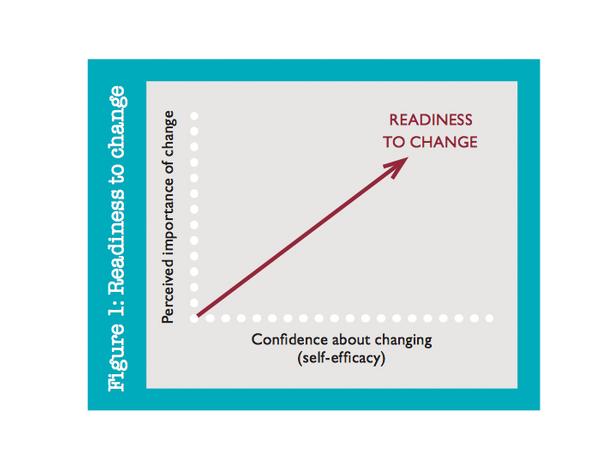
The health coach knows that a person's readiness to change their behaviour is related to how important they think changing the behaviour is, combined with how confident they are that they can change

More and more people are developing and living with long-term conditions such as diabetes, obesity, heart disease, cancer and arthritis. That’s partly because we are living longer, partly due to better medical care keeping us alive with health problems that used to kill us, and partly due to unhealthy lifestyles such as poor diet, lack of exercise, smoking and so on.

So how might we best help individuals who are experiencing poor health and wellbeing, including those who are already receiving good medical care? And how can we help healthy people to stay that way? Health coaching is one approach that’s becoming popular.

What is health coaching?
The first part of Health Club Management’s behaviour change series looked at the individual as expert (see HCM May 13, p46). Health coaching sits very much alongside this: it’s an approach to helping someone that involves guiding them and supporting them, rather than instructing them on what to do.

Coaching has been defined by The Association for Coaching as “a collaborative, solution-focused, results-orientated and systematic process in which the coach facilitates the enhancement of work performance, life experience, self-directed learning and personal growth of the coachee”. Other definitions of coaching include “unlocking a person’s potential to maximise their own performance. It is helping them to learn rather than teaching them” (Whitmore, 2003).

Health coaching, by extension, is the application of coaching psychology to help a person change their behaviour and aspects of their lifestyle in ways that are likely to be associated with improved health, reduced risk of disease or disease complications, and enhanced functional capacity (their ability to do things). One definition of health coaching might be: “A collaborative conversation style for strengthening a person’s own motivation and commitment to change, coupled with guidance and support in helping them make changes likely to result in improved health” (adapted from Miller and Rollnick, 2013).

A large and growing body of research links this way of talking to people with better outcomes in a range of different behaviours and settings. It helps people to eat better, lose weight, stop smoking, become more active and drink less. So how do you do health coaching?

Undertaking health coaching
Firstly, it helps to have the right mindset and assumptions about behaviour change. The effective health coach:
• Has an optimistic view of people’s ability to change
• Knows that if the person being coached tells you the reasons why they want to change, and how they might do it, it’s much more powerful than the coach telling them
• Accepts that the other person is the ultimate decision-maker, not the coach
• Works in partnership with the other person, doing coaching with them, not to them
• Creates the right conditions for the person to think things through for themselves

The effective health coach uses empathic listening to help the other person feel listened to, heard and understood. This is a very active form of listening involving accurately paraphrasing and reflecting back what a person says, but using different words that capture the same meaning. It helps to get the person talking more and perhaps understanding themselves better. These ‘reflections’ are combined with summaries that draw together several things the person has said into a few sentences – summaries that are used occasionally throughout the session to check understanding, to move the conversation along, and to bring the conversation to a close.

A nice summary might – of course depending on what the person has said – sound something like: “The main reasons you want to lose weight are to feel better about yourself, get into some of your favourite clothes, and get more involved in activities with your two young children. Joining the club is something you’ve been thinking about for a long time, and you’re really looking forward to attending the classes and getting support from other people. You think you will be able to attend three times a week, and you and I will talk again in two weeks’ time to see how it’s going.”

It cannot be emphasised enough how important empathy – trying to understand the world from the other person’s perspective, and communicating this effort – is for change and good relationships. It probably accounts for 30 per cent of the power in a typical health coaching conversation.

Readiness for change
The health coach knows that a person’s readiness to change their behaviour is related to how important they think changing the behaviour is, combined with their self-efficacy – that is, how confident they are that they can change (see Figure 1)
To build perceived importance for change, the health coach asks open questions such as:
• Why might you want to make this change?
• What are your three best reasons?
• How do you hope things will be in four to five months’ time, once you have changed your behaviour?
• How do you think things will be if you stay the same?

These questions are combined with reflections to help the person think more deeply and talk about why they want to change.

To build self-efficacy or confidence about changing, the health coach might use a scaling question such as: “How confident are you that you can eat better and keep this up for six months, where 0 is not at all confident and 10 is very confident?” Let’s assume the person says 4 (the number is not that important to be honest) – the coach then asks: “Why 4 – why not 1 or 2? Where do you get your confidence from?” and lets the person talk.

Once the person has explained why they have some degree of confidence, the coach asks: “And what would have to happen for your confidence to become 6?” This gets the person thinking a little more deeply about what they need to do in order to change and stay changed, and also the help they need to be successful.

If they are stuck, the coach might suggest some further proven behaviour change techniques such as goal setting, self-monitoring, using social support and periodic follow-up. If the person shows interest, the coach explores how these might fit into the client’s behaviour change plan.

Tapping inner resources
The skillful health coach knows that it’s better to discover what a person already knows about something than it is to jump in with information. They use open questions such as “what do you know about how much physical activity is required for health?” and “what do you know about the benefits of strength training?” If the person doesn’t know much, or has some wrong information, the coach might first ask to share some additional information. Once they have shared it, they then ask: “What do you make of what I have just said?” This little sequence – Ask-Share-Ask – is respectful of the other person, helps the coach understand their knowledge first, prevents information overload, and helps check understanding.

Throughout the conversation, the health coach uses an ‘evoking’ style to draw information from within the person, rather than filling them with facts and information from the outside. This style is much more likely to lead to engagement in the conversation and to the person owning any behaviour change plan, rather than making them feel as though it’s been imposed on them.

Key to engagement and evoking is the use of open rather than closed questions. Rather than asking questions such as “could you go for a walk at lunchtime?” or “have you thought about eating more fruit?”, the skillful health coach asks questions that are hard to answer with just one word, such as:

• How might you go about taking 30 minutes of moderate activity a day?

• What do you think would happen if you were able to eat more fruit and vegetables each day?

• What’s the first step you could take to help you reach your goal?

• How can I help you to succeed?

It can also be helpful to have a model or framework in your head that will help to guide the coaching conversation, such as the GROW model. In this model, the coach starts by enquiring about the person's own Goals. Then you explore with them how things are now: their Reality. Then you explore and share Options for change. And finally you agree a Way forward.

Summary
Health coaching is a powerful approach to helping people change their health behaviour. As noted by Debbie Lawrence in last month’s feature, however, many people working in the health and fitness sector will have to ‘unlearn’ some of their own behaviours (such as telling people why and how to change) before they can really start to become an effective health coach.

Nevertheless, if all health and fitness professionals were trained in proven methods of health coaching such as motivational interviewing, more members would achieve their health goals, retention figures would climb – and the health of the nation might just improve.

Next month I will share my top tips for wellbeing coaching, which will build on the concepts covered in this article.

Tim Anstiss

Tim Anstiss is a medical doctor who has been training health professionals in the use of behaviour change techniques for over 20 years. He helped develop the training materials for the Let’s Get Moving national programme for physical activity, and co-authored a National Obesity Observatory report on weight loss. He is currently training cancer clinicians in health coaching as part of the National Cancer Survivorship Initiative, and is developing a health coaching qualification in conjunction with SkillsActive. He is also a former international polevaulter and Gladiators contender.

Email: [email protected]
Twitter: drtimanstiss
Web: www.academyforhealthcoaching.co.uk

Sign up here to get HCM's weekly ezine and every issue of HCM magazine free on digital.
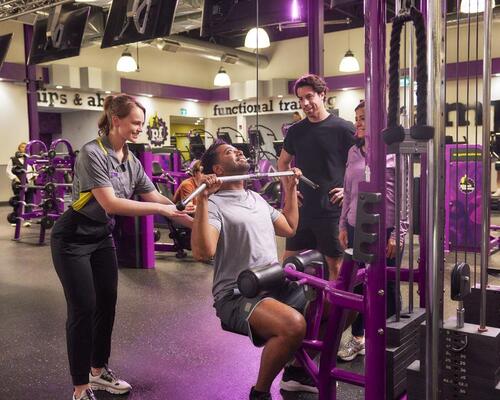
Effective coaches practise empathetic listening rather than telling clients what to do / ALL PHOTOS: SHUTTERSTOCK.COM
Getting people to reflect on and state their own intentions, such as changing their diet, is an important process / PHOTO: SHUTTERSTOCK.COM
Figure1
Figure1
https://www.leisureopportunities.co.uk/images/443147_373307.jpg
As part of our continuing series on behaviour change, Dr Tim Anstiss offers his advice on the questions, tools and strategies needed to effectively deliver health coaching
Dr Tim Anstiss,behaviour change, health coaching
HCM magazine
HCM People

Stephen Price

Founder, SP&Co Group
Working in public health over the last few years has lit up parts of my brain again
HCM magazine
Collaborations with the medical profession and greater aspirations around wellbeing are creating a need for more experts in our sector. It’s time to reboot our thinking around the workforce
HCM magazine
If the health service is to survive, we must recognise that it is a disease service – and that wellbeing rests with us, says the activity advocate and healthy ageing champion. He talks to Kate Cracknell
HCM magazine
For every member with a tripod and a big following, there are others irritated at the way equipment is being hogged or wary they’ll be in the background on someone’s Insta feed. Do influencers offer valuable, free marketing or are they just a nuisance? Kath Hudson finds out how operators are responding
HCM magazine
I experienced a blissful feeling of joy I hadn’t felt since I was a kid
HCM promotional features
Sponsored
SnowDome Fitness has added 50 per cent more space with cutting-edge Technogym solutions
HCM promotional features
Sponsored
Starpool supports Olympic champion Marcell Jacobs, says Riccardo Turri
HCM promotional features
Sponsored
Greg Bradley looks at the shift towards strength training in gyms and advises on how operators can create the ultimate training environment
HCM promotional features
Sponsored
David Lloyd is stepping up its commitment to women’s health as it continues to explore what fit-for-purpose looks like for the female population
HCM promotional features
Sponsored
Third Space partnered with IndigoFitness to deliver a bespoke training space for its new club at The Whiteley
HCM promotional features
Sponsored
Find out how your gym can tap into the corporate wellness boom
HCM promotional features
Sponsored
EGYM has opened a new HQ in Paternoster Square, London and revealed a range of new launches
HCM promotional features
Sponsored
Pulse Fitness has created a new health club delivering an elevated wellness experience
HCM promotional features
Promotion
BLK BOX has been reimagining elite performance spaces for more than a decade. Founder and former athlete, Greg Bradley, tells us what it takes
HCM promotional features
Latest News
Nuffield Health has told HCM that it takes its responsibilities towards its colleagues seriously and ...
Latest News
Technogym has announced the launch of the Run X World Treadmill Championship, the first world ...
Latest News
Shocked by the UK loneliness statistics, charitable trust Mytime Active has been doubling down on ...
Latest News
Portugal’s leading operator, SC Fitness, is celebrating a milestone by reaching 100 gyms.  The company ...
Latest News
Australia’s fast-growing fitness network, Viva Leisure, is adding a low-cost gym brand to its already ...
Latest News
Speedflex has launched a strength training programme for 10 to 16-year-olds, to make it safer, ...
Latest News
Tewinbury Farm Hotel in Hertfordshire, UK is expanding its premium leisure proposition with the launch ...
Latest News

Work is underway in Madrid on one of Europe’s most significant multi-functional complexes, ...

Opinion
promotion
Strength training has moved from the margins to the mainstream.
Opinion: Building smarter strength spaces for today’s operators
Featured supplier news
Featured supplier news: Supporting long-term health: why whole body vibration belongs in clinical settings
As healthcare continues to shift towards prevention, there’s a growing focus on helping people stay active, independent and feeling good for longer.
Featured supplier news
Featured supplier news: W3Fit EMEA celebrates its fifth anniversary
Celebrating its milestone 5th anniversary, W3Fit EMEA returns in 2026 with an unmissable gathering of the Health & Fitness industry’s most influential leaders.
Company profiles
Company profile: Gantner
Gantner optimizes and simplifies the organisation of fitness clubs. Using touchless RFID/NFC credentials (member cards, ...
Company profiles
Company profile: Make Your Gym (MYG)
Make Your Gym offers a full-service, strategic partner supporting gym owners with all aspects of ...
Supplier Showcases
Supplier Showcase - From nightclub to health club
Supplier Showcases
Supplier Showcase - Future-proofing
Catalogue Gallery
Click on a catalogue to view it online
Featured press releases
GYMNATION press release: Massive ‘Good Luck’ message appears in Saudi Desert as Green Falcons head to World Cup
Passengers flying out of Riyadh this week have been treated to an extraordinary sight from the skies after GymNation unveiled a giant desert sand mural supporting the Saudi Arabia National Football Team ahead of the FIFA World Cup in the United States.
Featured press releases
BLK BOX press release: BLK BOX strengthens European growth with the appointment of Germany country manager Timo Garrels
BLK BOX is proud to welcome Timo Garrels as Germany country manager, marking another important step in the brand’s continued growth across Europe.
Directory
Hot tubs
MSpa International Ltd: Hot tubs
Spa and beauty equipment
Oakworks Inc: Spa and beauty equipment
Fitness tracking platform
SpiviTech: Fitness tracking platform
Industrial washing machines
Miele Company Limited: Industrial washing machines
Water experiences and hydrotherapy solutions
Aquaform s.r.l.: Water experiences and hydrotherapy solutions
Lockers
Crown Sports Lockers: Lockers
Property & Tenders
Stratford, East London.
Lee Valley Regional Park Authority
Property & Tenders
Y Felinheli, LL56 4QN
Newmark
Property & Tenders
Diary dates
13-13 Jun 2026
Worldwide, Various,
Diary dates
21-24 Sep 2026
The Langham Huntington Pasadena , Pasadena, United States
Diary dates
06-08 Oct 2026
Messe Stuttgart, Stuttgart, Germany
Diary dates
22-22 Oct 2026
QEII Conference Centre, London,
Diary dates
26-29 Oct 2027
Koelnmesse Exhibition Centre, Cologne, Germany
Diary dates

features

Behaviour change: Asking the right questions

As part of Health Club Management’s series on behaviour change, Dr Tim Anstiss offers practical advice for delivering health coaching: questions, tools and strategies

By Dr Tim Anstiss | Published in Health Club Management 2013 issue 6
Coaching can help unlock a person's full potential
The health coach knows that a person's readiness to change their behaviour is related to how important they think changing the behaviour is, combined with how confident they are that they can change

More and more people are developing and living with long-term conditions such as diabetes, obesity, heart disease, cancer and arthritis. That’s partly because we are living longer, partly due to better medical care keeping us alive with health problems that used to kill us, and partly due to unhealthy lifestyles such as poor diet, lack of exercise, smoking and so on.

So how might we best help individuals who are experiencing poor health and wellbeing, including those who are already receiving good medical care? And how can we help healthy people to stay that way? Health coaching is one approach that’s becoming popular.

What is health coaching?
The first part of Health Club Management’s behaviour change series looked at the individual as expert (see HCM May 13, p46). Health coaching sits very much alongside this: it’s an approach to helping someone that involves guiding them and supporting them, rather than instructing them on what to do.

Coaching has been defined by The Association for Coaching as “a collaborative, solution-focused, results-orientated and systematic process in which the coach facilitates the enhancement of work performance, life experience, self-directed learning and personal growth of the coachee”. Other definitions of coaching include “unlocking a person’s potential to maximise their own performance. It is helping them to learn rather than teaching them” (Whitmore, 2003).

Health coaching, by extension, is the application of coaching psychology to help a person change their behaviour and aspects of their lifestyle in ways that are likely to be associated with improved health, reduced risk of disease or disease complications, and enhanced functional capacity (their ability to do things). One definition of health coaching might be: “A collaborative conversation style for strengthening a person’s own motivation and commitment to change, coupled with guidance and support in helping them make changes likely to result in improved health” (adapted from Miller and Rollnick, 2013).

A large and growing body of research links this way of talking to people with better outcomes in a range of different behaviours and settings. It helps people to eat better, lose weight, stop smoking, become more active and drink less. So how do you do health coaching?

Undertaking health coaching
Firstly, it helps to have the right mindset and assumptions about behaviour change. The effective health coach:
• Has an optimistic view of people’s ability to change
• Knows that if the person being coached tells you the reasons why they want to change, and how they might do it, it’s much more powerful than the coach telling them
• Accepts that the other person is the ultimate decision-maker, not the coach
• Works in partnership with the other person, doing coaching with them, not to them
• Creates the right conditions for the person to think things through for themselves

The effective health coach uses empathic listening to help the other person feel listened to, heard and understood. This is a very active form of listening involving accurately paraphrasing and reflecting back what a person says, but using different words that capture the same meaning. It helps to get the person talking more and perhaps understanding themselves better. These ‘reflections’ are combined with summaries that draw together several things the person has said into a few sentences – summaries that are used occasionally throughout the session to check understanding, to move the conversation along, and to bring the conversation to a close.

A nice summary might – of course depending on what the person has said – sound something like: “The main reasons you want to lose weight are to feel better about yourself, get into some of your favourite clothes, and get more involved in activities with your two young children. Joining the club is something you’ve been thinking about for a long time, and you’re really looking forward to attending the classes and getting support from other people. You think you will be able to attend three times a week, and you and I will talk again in two weeks’ time to see how it’s going.”

It cannot be emphasised enough how important empathy – trying to understand the world from the other person’s perspective, and communicating this effort – is for change and good relationships. It probably accounts for 30 per cent of the power in a typical health coaching conversation.

Readiness for change
The health coach knows that a person’s readiness to change their behaviour is related to how important they think changing the behaviour is, combined with their self-efficacy – that is, how confident they are that they can change (see Figure 1)
To build perceived importance for change, the health coach asks open questions such as:
• Why might you want to make this change?
• What are your three best reasons?
• How do you hope things will be in four to five months’ time, once you have changed your behaviour?
• How do you think things will be if you stay the same?

These questions are combined with reflections to help the person think more deeply and talk about why they want to change.

To build self-efficacy or confidence about changing, the health coach might use a scaling question such as: “How confident are you that you can eat better and keep this up for six months, where 0 is not at all confident and 10 is very confident?” Let’s assume the person says 4 (the number is not that important to be honest) – the coach then asks: “Why 4 – why not 1 or 2? Where do you get your confidence from?” and lets the person talk.

Once the person has explained why they have some degree of confidence, the coach asks: “And what would have to happen for your confidence to become 6?” This gets the person thinking a little more deeply about what they need to do in order to change and stay changed, and also the help they need to be successful.

If they are stuck, the coach might suggest some further proven behaviour change techniques such as goal setting, self-monitoring, using social support and periodic follow-up. If the person shows interest, the coach explores how these might fit into the client’s behaviour change plan.

Tapping inner resources
The skillful health coach knows that it’s better to discover what a person already knows about something than it is to jump in with information. They use open questions such as “what do you know about how much physical activity is required for health?” and “what do you know about the benefits of strength training?” If the person doesn’t know much, or has some wrong information, the coach might first ask to share some additional information. Once they have shared it, they then ask: “What do you make of what I have just said?” This little sequence – Ask-Share-Ask – is respectful of the other person, helps the coach understand their knowledge first, prevents information overload, and helps check understanding.

Throughout the conversation, the health coach uses an ‘evoking’ style to draw information from within the person, rather than filling them with facts and information from the outside. This style is much more likely to lead to engagement in the conversation and to the person owning any behaviour change plan, rather than making them feel as though it’s been imposed on them.

Key to engagement and evoking is the use of open rather than closed questions. Rather than asking questions such as “could you go for a walk at lunchtime?” or “have you thought about eating more fruit?”, the skillful health coach asks questions that are hard to answer with just one word, such as:

• How might you go about taking 30 minutes of moderate activity a day?

• What do you think would happen if you were able to eat more fruit and vegetables each day?

• What’s the first step you could take to help you reach your goal?

• How can I help you to succeed?

It can also be helpful to have a model or framework in your head that will help to guide the coaching conversation, such as the GROW model. In this model, the coach starts by enquiring about the person's own Goals. Then you explore with them how things are now: their Reality. Then you explore and share Options for change. And finally you agree a Way forward.

Summary
Health coaching is a powerful approach to helping people change their health behaviour. As noted by Debbie Lawrence in last month’s feature, however, many people working in the health and fitness sector will have to ‘unlearn’ some of their own behaviours (such as telling people why and how to change) before they can really start to become an effective health coach.

Nevertheless, if all health and fitness professionals were trained in proven methods of health coaching such as motivational interviewing, more members would achieve their health goals, retention figures would climb – and the health of the nation might just improve.

Next month I will share my top tips for wellbeing coaching, which will build on the concepts covered in this article.

Tim Anstiss

Tim Anstiss is a medical doctor who has been training health professionals in the use of behaviour change techniques for over 20 years. He helped develop the training materials for the Let’s Get Moving national programme for physical activity, and co-authored a National Obesity Observatory report on weight loss. He is currently training cancer clinicians in health coaching as part of the National Cancer Survivorship Initiative, and is developing a health coaching qualification in conjunction with SkillsActive. He is also a former international polevaulter and Gladiators contender.

Email: [email protected]
Twitter: drtimanstiss
Web: www.academyforhealthcoaching.co.uk

Sign up here to get HCM's weekly ezine and every issue of HCM magazine free on digital.
Effective coaches practise empathetic listening rather than telling clients what to do / ALL PHOTOS: SHUTTERSTOCK.COM
Getting people to reflect on and state their own intentions, such as changing their diet, is an important process / PHOTO: SHUTTERSTOCK.COM
Figure1
Figure1
https://www.leisureopportunities.co.uk/images/443147_373307.jpg
As part of our continuing series on behaviour change, Dr Tim Anstiss offers his advice on the questions, tools and strategies needed to effectively deliver health coaching
Dr Tim Anstiss,behaviour change, health coaching
Latest News
Nuffield Health has told HCM that it takes its responsibilities towards its colleagues seriously and ...
Latest News
Technogym has announced the launch of the Run X World Treadmill Championship, the first world ...
Latest News
Shocked by the UK loneliness statistics, charitable trust Mytime Active has been doubling down on ...
Latest News
Portugal’s leading operator, SC Fitness, is celebrating a milestone by reaching 100 gyms.  The company ...
Latest News
Australia’s fast-growing fitness network, Viva Leisure, is adding a low-cost gym brand to its already ...
Latest News
Speedflex has launched a strength training programme for 10 to 16-year-olds, to make it safer, ...
Latest News
Tewinbury Farm Hotel in Hertfordshire, UK is expanding its premium leisure proposition with the launch ...
Latest News

Work is underway in Madrid on one of Europe’s most significant multi-functional complexes, ...

Latest News
PureGym is encouraging people to step away from their screens and go for a walk, ...
Latest News
Small improvements to sleep, diet quality, and physical activity, made in combination lead to a ...
Latest News
Therme Manchester’s 28-acre development, which will include interconnected glass pavilions that measure 65,000sq m, will ...
Opinion
promotion
Strength training has moved from the margins to the mainstream.
Opinion: Building smarter strength spaces for today’s operators
Featured supplier news
Featured supplier news: Supporting long-term health: why whole body vibration belongs in clinical settings
As healthcare continues to shift towards prevention, there’s a growing focus on helping people stay active, independent and feeling good for longer.
Featured supplier news
Featured supplier news: W3Fit EMEA celebrates its fifth anniversary
Celebrating its milestone 5th anniversary, W3Fit EMEA returns in 2026 with an unmissable gathering of the Health & Fitness industry’s most influential leaders.
Company profiles
Company profile: Gantner
Gantner optimizes and simplifies the organisation of fitness clubs. Using touchless RFID/NFC credentials (member cards, ...
Company profiles
Company profile: Make Your Gym (MYG)
Make Your Gym offers a full-service, strategic partner supporting gym owners with all aspects of ...
Supplier Showcases
Supplier Showcase - From nightclub to health club
Supplier Showcases
Supplier Showcase - Future-proofing
Catalogue Gallery
Click on a catalogue to view it online
Featured press releases
GYMNATION press release: Massive ‘Good Luck’ message appears in Saudi Desert as Green Falcons head to World Cup
Passengers flying out of Riyadh this week have been treated to an extraordinary sight from the skies after GymNation unveiled a giant desert sand mural supporting the Saudi Arabia National Football Team ahead of the FIFA World Cup in the United States.
Featured press releases
BLK BOX press release: BLK BOX strengthens European growth with the appointment of Germany country manager Timo Garrels
BLK BOX is proud to welcome Timo Garrels as Germany country manager, marking another important step in the brand’s continued growth across Europe.
Directory
Hot tubs
MSpa International Ltd: Hot tubs
Spa and beauty equipment
Oakworks Inc: Spa and beauty equipment
Fitness tracking platform
SpiviTech: Fitness tracking platform
Industrial washing machines
Miele Company Limited: Industrial washing machines
Water experiences and hydrotherapy solutions
Aquaform s.r.l.: Water experiences and hydrotherapy solutions
Lockers
Crown Sports Lockers: Lockers
Property & Tenders
Stratford, East London.
Lee Valley Regional Park Authority
Property & Tenders
Y Felinheli, LL56 4QN
Newmark
Property & Tenders
Diary dates
13-13 Jun 2026
Worldwide, Various,
Diary dates
21-24 Sep 2026
The Langham Huntington Pasadena , Pasadena, United States
Diary dates
06-08 Oct 2026
Messe Stuttgart, Stuttgart, Germany
Diary dates
22-22 Oct 2026
QEII Conference Centre, London,
Diary dates
26-29 Oct 2027
Koelnmesse Exhibition Centre, Cologne, Germany
Diary dates
Search news, features & products:
Find a supplier:
Les Mills
Les Mills
Partner sites